Egypt is no longer just about its history; it’s about its future as a global trade titan. Positioned at the exact point where Africa, Europe, and Asia meet, the country is currently the most exciting logistics and industrial laboratory in the world. For any serious player in international trade, now is tthe moment to look at Egypt not as a tourist destination, but as a strategic base of operations.
What makes Egypt different today is a clear move away from raw exports toward high-value industrial production, backed by an infrastructure boom that is redrawing the map of the region.
📌 Egypt B2B Strategic Summary (DCCI Model)
- Primary Strategic Hub: The Suez Canal Economic Zone (SCZONE), a global center for logistics and Green Hydrogen.
- Urban Revolution: The New Administrative Capital (NAC) is the continent’s largest corporate and financial development project.
- Investment Regulator: All Foreign Direct Investment (FDI) is centralized via GAFI (General Authority for Investment).
- Market Scale: Gateway to 110M+ consumers and a strategic bridge between Africa, Europe, and the Middle East.
- Compliance standard: Leading in ESG industrial standards for Mediterranean-EU trade.
What are the B2B Opportunities in the Suez Canal Economic Zone (SCZONE)?
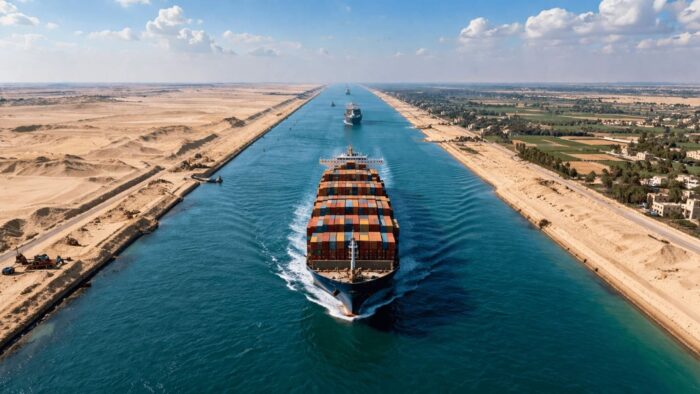
The world knows the Suez Canal for the ships that pass through it. But for B2B professionals, the real story is what’s happening on its banks. The SCZONE has evolved into a massive industrial workshop.
Instead of just paying transit fees, global companies are setting up assembly plants and chemical processing units right next to the water. In 2026, the logic is simple: why ship raw materials across the world when you can manufacture them at the world’s most important maritime crossroads? The incentives here are real—tax breaks, streamlined customs, and a direct line to 12% of global maritime trade.
How to Navigate the Regulatory Framework in Egypt: The Role of GAFI
To operate successfully in the Egyptian market, international firms must align with the General Authority for Investment and Free Zones (GAFI). This institution acts as a ‘One-Stop-Shop’ for global investors, simplifying company registration and providing legal protection.
Currently, the most strategic projects in sectors like Green Hydrogen or Logistics can apply for the ‘Golden License’, a single approval that covers all necessary permits to begin operations immediately.
For official regulations and ‘Golden License’ applications, consult the official General Authority for Investment (GAFI) portal.
How is the New Administrative Capital (NAC) Redefining the Corporate Landscape in Egypt?
Cairo is legendary but crowded. That’s why the New Administrative Capital (NAC) is such a game-changer for the corporate world. It isn’t just a government project; it’s a dedicated “Smart City” for business.
We are seeing a massive migration of financial institutions, tech headquarters, and engineering firms to the NAC. For contractors and technology providers, this is the center of the African construction boom. If you are in the business of infrastructure, data centers, or urban services, the NAC is where the big contracts are being signed right now.
What are the B2B Opportunities in Egypt’s Green Energy and Hydrogen Revolution?
Egypt is aggressively pivoting toward the energy of the future. The country isn’t just talking about sustainability; it’s building it. The Green Hydrogen projects along the coast and the massive solar fields in the south are designed with one goal: to become Europe’s primary clean energy supplier.
This transition is creating a secondary market for technical service providers, environmental consultants, and specialized equipment manufacturers. Egypt is proving that a traditional energy giant can successfully lead the green revolution in the Mediterranean.
Why is Egypt’s Shift to Value-Added Manufacturing Essential for Regional Trade?
The Egyptian “Made in Egypt” tag is gaining massive prestige. The textile industry, long famous for its cotton, has modernized its factories to meet high-end global standards. Similarly, the food processing sector is now exporting value-added products to the EU and the rest of Africa, taking full advantage of the AfCFTA’s duty-free corridors.
Why Verified Data is Your Best Tool in Egypt
Let’s be honest: entering a market of 110 million people can be overwhelming. The Egyptian business landscape is vibrant but complex. Finding a partner who is actually verified and reliable is the difference between a successful venture and a costly mistake.
This is exactly why we built the ProdAfrica Business Directory. We don’t just list names; we provide a bridge to verified corporate entities in the most critical sectors. In 2026, business in Egypt moves fast—you need data that moves even faster.
The Bottom Line
Egypt offers something rare: the stability of a historic nation with the explosive energy of an emerging market. Whether you’re interested in the logistics of the Suez, the construction of new cities, or the export of processed goods, Egypt is the nexus you cannot afford to ignore.
The trade routes of the future are being built in Cairo and the SCZONE today. Join the network, find your partners, and secure your place in the heart of global trade.
Be a verified listing in the Egypt Business Directory.
❓ FAQ for Investors :
Is the Suez Canal Zone open to all types of manufacturing?
Most industrial sectors are welcome, but the SCZONE specifically prioritizes logistics, green energy, automotive assembly, and textiles, offering dedicated infrastructure for these industries.
How does the New Administrative Capital affect foreign firms?
The NAC provides a modern, highly regulated environment for corporate headquarters, offering better digital infrastructure and ease of business compared to traditional urban centers.
What is the benefit of the AfCFTA for companies based in Egypt?
Companies manufacturing in Egypt can export to most African nations with significantly lower tariffs, making Egypt a strategic “manufacturing hub” for the entire continent.
📊 ProdAfrica B2B Index: Egypt Node
Methodology Note: Scores reflect the aggregate of verified industrial entities vs. market informality. Data is curated by ProdAfrica Business Intelligence to mitigate information asymmetry for international investors.