Introduction: The Structural Disconnect in African Coffee
Uganda is currently the leading exporter of Robusta coffee in Africa and a significant producer of high-altitude Arabica. However, the industry’s historical bottleneck has not been the quality of the crop, but the ownership of the value chain. In the traditional commodity model, primary producers often capture as little as 2% to 5% of the final retail price in international markets. The majority of the margin is retained by extra-continental entities during the roasting, branding, and distribution phases.
To challenge this structural imbalance, the National Union of Coffee Agribusiness and Farm Enterprises (NUCAFE) has pioneered a transformative approach: the Farmer Ownership Model. This strategy focuses on domesticating the value-add processes, ensuring that Ugandan exporters transition from price-takers to price-setters in the global B2B arena.
1. The Mechanics of the Farmer Ownership Model
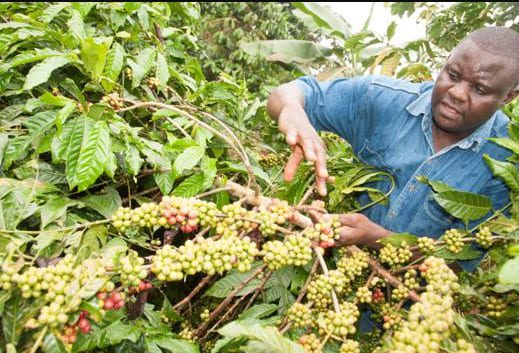
The core innovation of NUCAFE is the systematic removal of unnecessary intermediaries. In a standard supply chain, coffee passes through multiple local brokers before reaching a centralized exporter. Each layer adds a cost but rarely adds value to the product itself.
NUCAFE’s model empowers smallholder farmers and cooperatives to maintain ownership of their coffee throughout the entire industrial process:
- Centralized Industrial Hubs: By utilizing shared processing facilities for hulling, grading, and roasting, farmers retain control over the secondary processing stage.
- Direct Market Access: Cooperatives are trained to interface directly with international buyers, significantly reducing the “transactional friction” and information asymmetry that previously devalued their output.
- B2B Integrity: This direct ownership incentivizes a higher standard of quality control at the source, as the producers’ reputation and direct profit are tied to the final export grade.
For real-time data on export quotas and current quality standards, B2B partners consult the Uganda Coffee Development Authority (UCDA), the national regulatory body that oversees the sector’s growth.
2. The EUDR Challenge: Digital Traceability as a Trade Anchor
In 2026, the primary barrier for African coffee entering the European Union is no longer a tariff, but a data requirement. The EU Deforestation Regulation (EUDR) mandates that every commercial shipment must prove it was produced on land that has not been deforested.
NUCAFE has proactively addressed this through a high-tech “Digital Trust Layer”:
- GIS Mapping: Implementing Geographic Information Systems to map the exact coordinates of every farm in their network.
- Digital Audit Trails: Creating immutable logs that link each batch of coffee to its verified plot of land.
- Transparency Standards: By providing European buyers with machine-readable compliance data, NUCAFE has effectively de-risked the Ugandan coffee corridor, ensuring continued access to the premium Mediterranean and Northern European markets.
3. Industrial Processing: Moving Up the Value Chain
The transition to industrial maturity in Uganda is visible in the investment in domestic roasting and packaging capacity. Exporting raw green beans is an extraction model; exporting roasted, branded, and vacuum-packed coffee is an industrial model.
| Industrial Stage | Technical Focus | Strategic Output |
| Primary Processing | Pulping & Washing | High-quality green bean consistency |
| Secondary Processing | Grading & Color Sorting | Premium batches for specialty markets |
| Tertiary Processing | Roasting & Packaging | Exporting finished goods with 3x margin |
This industrial leap requires specialized B2B services, including precision machinery maintenance, cold-storage logistics, and advanced agro-chemical compliance—sectors that are currently being mapped within the ProdAfrica Intelligence Hub.
4. Logistical Connectivity: The Northern Corridor and the Barcelona Gateway
Connectivity is the physical conduit for owned value. Coffee produced in the high-altitude regions of Mount Elgon or the Rwenzori Mountains must traverse the Northern Corridor to reach the Port of Mombasa, and from there, the Mediterranean hubs.
- Multimodal Integration: The synchronization of road freight and maritime logistics is essential for maintaining the “Cup Profile” (flavor integrity) of the coffee.
- Port of Barcelona: As a critical gateway for Southern Europe, Barcelona offers a strategic entry point for Ugandan coffee destined for the Spanish, Italian, and French roasting industries. This transcontinental corridor reduces transit time and logistical costs compared to Northern European routes.
ProdAfrica Strategic Analysis: The DCCI Framework applied to NUCAFE
At ProdAfrica, we evaluate these industrial ecosystems through our proprietary DCCI (Development Based on Internal Consumption Capacity) Framework. The NUCAFE model serves as a masterclass in how these three structural pillars can be harmonized for sovereign growth:
- Demand (Pillar 1): By increasing the income of smallholder farmers through ownership, NUCAFE directly stabilizes the purchasing power of the Ugandan rural middle class. This creates a reliable domestic market for other local services and manufactured goods.
- Production (Pillar 2): The investment in domestic roasting and value-add technology fulfills the requirement for local industrial capability. It ensures that Uganda is no longer just a “resource exporter” but a “processed-goods producer.”
- Connectivity (Pillar 3): Through digital GIS mapping and integration with regional trade corridors, NUCAFE has built the “information layer” necessary for modern global trade.
Conclusion: The Future of Sovereign Agribusiness
The success of the Ugandan coffee sector depends on the continued transition from commodity extraction to owned industrial value. As we track these developments via the ProdAfrica B2B Index (ATIS), it is clear that “Operational Integrity” and “Data Verification” are the new currencies of international trade.
- Are you a European coffee buyer or industrial partner looking for verified East African suppliers? Explore our Uganda B2B Strategic Hub to connect with trade-ready leaders.
Primary Sources & Resources
Uganda Coffee Development Authority (UCDA): National strategy on export standards and sector regulation. URL: https://ugandacoffee.go.ug/
National Union of Coffee Agribusiness and Farm Enterprises (NUCAFE): Reports on the Farmer Ownership Model and GIS mapping implementation. URL: https://nucafe.org/
European Commission (EUDR Compliance): Guidelines on the Deforestation Regulation for agricultural imports. URL: https://ec.europa.eu/environment/forests/deforestation.htm