1. The Paradigm Shift in Southern African Agriculture
The Southern African Development Community (SADC) is undergoing a major economic transition. Historically dependent on mineral extraction and raw commodity exports, nations across the region are actively re-engineering their economic foundations. At the absolute center of this structural shift is Zambia. Strategically landlinked to eight neighboring countries, Zambia is pivoting from its traditional copper-reliance to establish itself as a regional food basket. Expanding agribusiness in Zambia is no longer just a sector-specific goal; it has become the defining operational mandate for international trade development agencies, private equity funds, and global purchasing directors seeking to build resilient, ethical, and localized sourcing channels.
With massive arable land, abundant water resources, and a government actively promoting private industrial participation, the landscape of agribusiness in Zambia is ripe for international investment. However, to bypass the traditional commodities trap—where local economies export cheap raw goods only to import expensive finished products—the market requires models that prioritize local processing.
This is the core foundation of the DCCI Framework (Development Based on Internal Consumption Capacity). Developed by ProdAfrica, the DCCI framework asserts that long-term economic resilience is achieved when local industries add value to raw materials at the source, thereby elevating regional purchasing power and domestic consumption capacity.
To navigate this high-potential but structurally complex market, international B2B buyers require reliable, independent auditing frameworks. The ATIS Standard (African Trade Intelligence Standard) developed by ProdAfrica rates Zambia with a baseline score of 5.5 out of 10, reflecting moderate logistical connectivity (5.4) and evolving trade compliance. In an environment of significant agricultural opportunity but moderate institutional formalization, identifying vetted, high-integrity local processors is the critical step to de-risking trade corridors and establishing secure B2B partnerships.
2. The DCCI Framework: Re-Engineering Local Agro-Processing Loops
Historically, much of the country’s agricultural wealth was exported as raw, unprocessed commodities. The transition toward a resilient, DCCI-aligned agribusiness in Zambia addresses this structural gap by encouraging the establishment of local processing loops.
The DCCI framework directly addresses this structural gap by encouraging the establishment of local processing loops. In agribusiness, local value-addition represents the ultimate economic catalyst. Converting raw agricultural inputs into fortified consumer foods, refined oils, or regional consumer brands ensures that the economic benefits remain within the domestic economy. This process:
- Generates stable, skilled local employment across manufacturing, food science, and industrial packaging.
- Reduces national reliance on expensive, imported finished goods, preserving foreign exchange reserves.
- Strengthens domestic market resilience by building a robust internal consumption capacity that insulates local economies from global supply chain shocks.
For international buyers, sourcing from vertically integrated processing units in Zambia ensures structural traceability and compliance with modern ESG (Environmental, Social, and Governance) frameworks. Rather than buying from unverified brokers, partnering with local processors who control their value chain from field to factory ensures a secure, compliant, and sustainable supply.
3. Self-Made Leadership: Monica Musonda and Java Foods
The practical execution of the DCCI model in the Zambian agricultural sector is illustrated by Monica Musonda, the founder and CEO of Java Foods, and the visionary behind the leading regional brand eeZee Instant Noodles.
Musonda’s journey is a masterclass in corporate courage, bootstrap tenacity, and local value-addition:
The Corporate Origin and the DCCI Catalyst
A dual-qualified English solicitor and Zambian advocate, Musonda spent over 15 years working in corporate law and finance across Africa, eventually serving as a lead legal advisor to Aliko Dangote, Africa’s wealthiest industrialist. During a business trip to Zambia, Dangote asked her an uncomfortable question that altered her career path: “Where are the large Zambian-owned businesses? Why are local professionals spectators in their own economic growth?”
Inspired by this challenge, she left her high-profile international legal career, returned to her home country, and established Java Foods in 2012 with a vision to process nutritious, affordable, and high-quality food products using regional raw materials.
The Bootstrap Sourcing and Packaging Stage
Java Foods’ first product was “eeZee Instant Noodles.” Recognizing the rapid urban demand for convenient, nutritious, and affordable food, Musonda initially imported the noodles and packaged them locally. This strategic phase allowed the company to build its brand, establish a robust informal and formal wholesale distribution network across Zambia, Zimbabwe, and Malawi, and test market viability without the immediate burden of heavy capital expenditures on machinery.
The Industrial Leap to Local Value-Addition
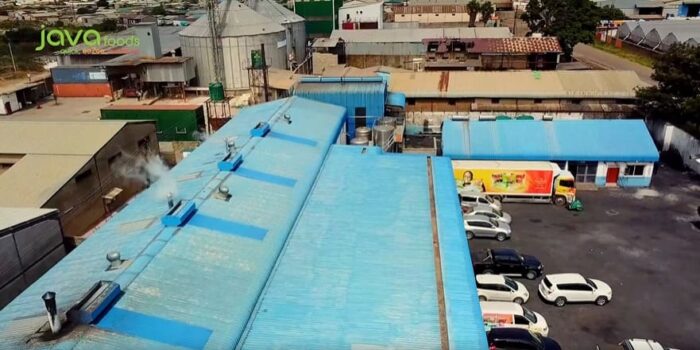
Recognizing that sustainable development required local raw material processing, Java Foods executed a successful 5 million USD capital raise in 2018. This funding allowed the company to build a modern, state-of-the-art manufacturing facility in Lusaka, transitioning to local production.
Today, Java Foods manufactures its instant noodles locally using wheat grown by Zambian farmers, transforming a traditionally imported commodity into a sovereign domestic industry.
Sovereign Scaling and Social Impact
Today, Java Foods produces and sells over four million packs of instant noodles every month, fortifying their products with key micronutrients to combat malnutrition while empowering local smallholder farmers and agricultural communities. By converting local wheat into high-demand, nutritious consumer goods, Java Foods embodies the DCCI model on the ground: reducing import reliance, creating local manufacturing jobs, and keeping the economic value within the regional SADC supply chain.
4. De-risking SADC Trade with the ATIS Standard
For European and regional B2B buyers looking to engage with the growing agribusiness in Zambia, performing rigorous due diligence is a necessity. While the country’s agricultural potential is vast, operational challenges such as transport bottlenecks, currency volatility, and fragmented supply chains require verified partnerships.
This is where digital discovery and independent auditing become valuable. Vetting local suppliers through our structured database ensures that buyers connect with legally formalized, trade-ready partners. On the ProdAfrica Business Directory, identifying entities with verified badges is the definitive standard to find verified suppliers in Africa, helping international businesses secure reliable, transparent, and highly resilient sourcing channels.
👉 Search verified Zambian companies on ProdAfrica
5. Co-Developing Sustainable Value Chains
The success of Java Foods under the leadership of Monica Musonda demonstrates that sustainable economic growth in emerging markets is driven by industrial sovereignty. By transforming an imported convenience food into a vertically integrated, locally sourced agro-industrial powerhouse, Java Foods has set a benchmark for future development within agribusiness in Zambia.
For international B2B buyers, importing from Africa should no longer be synonymous with purchasing raw commodities. The future of sustainable procurement lies in partnering with verified local processors who retain the economic value of production within their home countries, thereby strengthening domestic consumption capacity and local purchasing power.
As global trade compliance requirements (such as ESG and carbon accounting) become more stringent, companies that embrace this DCCI-aligned, high-integrity sourcing model will secure more resilient, traceable, and ethical supply chains. Identifying and championing these verified local manufacturers through structured B2B intelligence platforms is the definitive step toward co-developing a prosperous, self-sustained global trade ecosystem.