Over the past decade, fintech in Lagos has evolved from small mobile payment experiments into a central pillar of Nigeria’s digital economy. At the heart of this transformation is Lagos, Africa’s leading fintech hub. As Nigeria’s commercial capital, Lagos combines scale, entrepreneurial energy, and market demand in ways few African cities can match.
Nigeria’s population exceeds 200 million, and a significant portion remains underbanked. This gap has created fertile ground for fintech innovation. In Lagos, digital banking applications, mobile payments, agency banking networks, and SME-focused lending services operate at substantial scale, reshaping how businesses and consumers manage money.
Why is Lagos the Undisputed Hub for Fintech Investment in Africa?
Several factors explain Lagos’s leadership in the Nigeria fintech sector.
First, market size is critical. Lagos hosts a dense urban population with high transaction volumes, creating continuous demand for digital financial services.
Second, mobile adoption drives growth. For many Lagos residents, smartphones are the primary banking interface. Digital wallets, peer-to-peer transfers, merchant payment systems, and micro-lending services are accessed directly through mobile apps, accelerating fintech adoption organically.
Third, Lagos benefits from a concentrated startup ecosystem. Venture capital firms, accelerators, and tech hubs operate closely, allowing fintech startups to iterate quickly, refine business models, and scale nationally before regional expansion.
Investment and Institutional Support
Nigeria fintech sector consistently attracts a significant share of startup funding across Africa. Lagos-based fintech companies have received investment from both local and international investors, reflecting confidence in the city’s long-term fundamentals. Institutions like the African Development Bank and the International Monetary Fund have highlighted the role of digital finance in expanding financial inclusion and strengthening economic resilience.
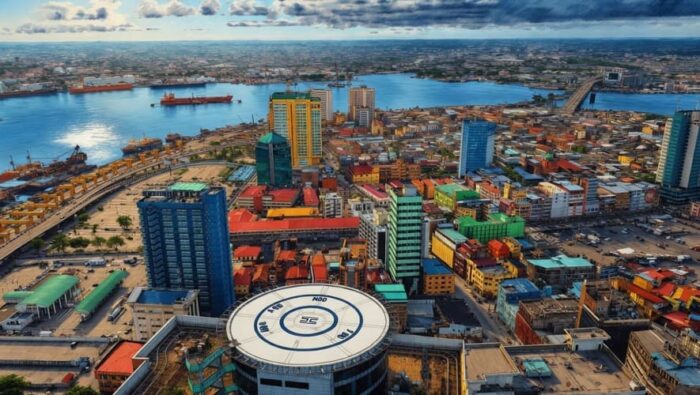
Investor interest in Lagos is driven not just by growth potential, but by predictable market dynamics, regulatory clarity, and the city’s capacity to serve as a launchpad for regional expansion.
Regulation and Market Structure
Growth in Lagos occurs within a regulatory framework. The Central Bank of Nigeria has developed licensing categories for digital banks, payment service providers, and switching companies. Compliance can be demanding, but regulatory clarity builds credibility with both consumers and investors.
Structured oversight encourages the adoption of regtech solutions, strengthens operational standards, and increases trust in the ecosystem. For many startups, navigating regulation is not a barrier but a foundation for sustainable growth.
SMEs and Financial Inclusion as Growth Drivers
Small and medium-sized enterprises are the backbone of Nigeria’s economy, and access to credit has historically been limited. Lagos fintech firms provide solutions tailored to SMEs, including merchant financing, transaction data-driven lending, and integrated payment systems.
At the same time, digital finance platforms extend services to unbanked individuals. Salary earners, market traders, and informal business operators increasingly rely on mobile-first financial solutions, accelerating financial inclusion.
This dual focus — serving both SMEs and underbanked populations — explains why fintech in Lagos has a tangible macroeconomic impact, strengthening commerce, entrepreneurship, and everyday financial life.
Challenges and Competitive Pressure
Despite rapid growth, Lagos fintech faces structural challenges. Infrastructure reliability, currency volatility, and intense competition in payment processing segments require disciplined management. As the sector matures, profitability and operational efficiency take priority over rapid expansion.
Global funding cycles also influence investment flows, emphasizing sustainable revenue models and strong governance. These pressures, however, tend to strengthen the ecosystem by rewarding well-managed, resilient companies.
For up-to-date information, visit Central Bank of Nigeria.
Lagos as a Gateway to African Digital Finance
Lagos increasingly serves as a launchpad for broader African expansion. Products developed in Nigeria can adapt effectively to West African markets with similar demographics and financial inclusion gaps.
As regional trade grows and digital payment interoperability improves, Lagos-based fintech firms are well-positioned to scale. Technologies such as artificial intelligence, digital identity, and fraud detection continue to push innovation further, giving Nigerian startups a competitive edge across Africa.
The rise of fintech in Lagos illustrates how structural banking gaps can become powerful catalysts for innovation. Lagos is no longer just Nigeria’s commercial capital; it is Africa’s fintech nerve center. Its combination of population scale, entrepreneurial density, regulatory clarity, and mobile-first adoption makes it one of the continent’s most important digital finance hubs.
How to Connect with Verified Fintech Partners in Nigeria?
For investors, policymakers, and business leaders, Lagos represents both opportunity and insight — a city where practical solutions to financial inclusion are tested, refined, and scaled, shaping the future of the Nigeria fintech sector and African digital finance more broadly.
Visit Visit the Nigeria Business Directory.