1. The Critical Road to Continental Pharmaceutical Sovereignty
The global healthcare landscape has highlighted the vital importance of pharmaceutical self-sufficiency. Historically, the African continent has faced severe systemic vulnerabilities due to an over-reliance on imported medical inputs. The pharmaceutical industry in Africa currently relies on imports for over seventy to eighty percent of its finished medicines and active pharmaceutical ingredients (APIs), primarily sourced from India and Europe. For national health ministries and inter-regional trade corridors, transforming this supply chain is no longer just a developmental goal; it is a critical mandate for continental national security.
To address these vulnerabilities under the DCCI Framework (Development Based on Internal Consumption Capacity) and the African Union’s Pharmaceutical Manufacturing Plan for Africa (PhAPA), nations are prioritizing local pharmaceutical manufacturing. By localizing the production of generic medicines, vaccines, and medical devices, African nations can retain high-margin industrial value-addition within the domestic economy. This process generates highly skilled employment in biotechnology, pharmacology, and sterile packaging, thereby elevating local purchasing power and establishing a self-sustained health security loop.
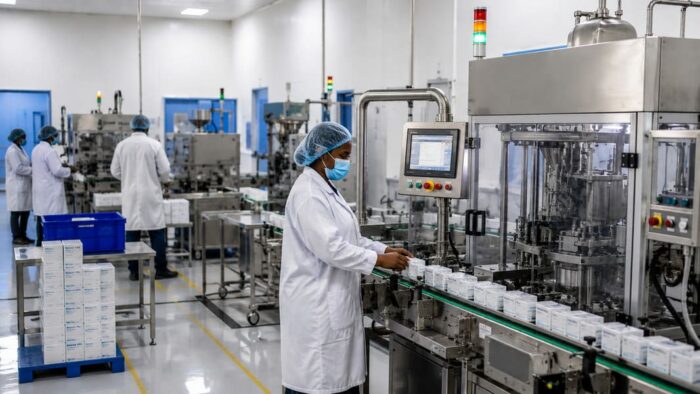
📌 B2B Strategic Briefing: Pharmaceutical Sovereignty
- Operational Focus: Turnkey Pharmaceutical Manufacturing, Formulation Plants, and Localized Vaccine Production (AfCFTA Inter-Regional Corridors).
- Sourcing Compliance Parameter: Medical products and manufacturing facilities must possess certified WHO-GMP (Good Manufacturing Practices) credentials, strict sanitary traceability, and independent environmental audits.
- Regulatory Alignment: Direct integration with the newly established African Medicines Agency (AMA) protocols and regional harmonized drug registration frameworks.
- DCCI & ATIS Integration: Strategic alignment with DCCI Pillar 2 (Sovereign Production) and the ATIS Trade Compliance Standard. By manufacturing essential medicines locally using modern European processing technologies, regional producers elevate their trade compliance status, allowing global partners to source safely.
To navigate this highly sensitive and tightly regulated sector, international B2B buyers and technology providers require reliable, independent auditing frameworks. The ATIS Standard (African Trade Intelligence Standard) developed by ProdAfrica serves as the definitive trust filter, rating regional markets on their operational readiness, financial transparency, and trade compliance, thereby de-risking high-ticket joint ventures and long-term pharmaceutical partnerships.
2. De-Risking the Health Corridor: The Cold-Chain Imperative
The most critical operational bottleneck in the pharmaceutical supply chain is maintaining thermal integrity. Unlike general dry cargo, medical products—specifically vaccines, insulin, and specialized biologics—are highly temperature-sensitive. Any disruption in the thermal chain renders these life-saving products useless, causing significant financial and operational losses.
To mitigate these risks, regional health networks are partnering with European developers to implement The Cold-Chain Imperative:
- Solar-Powered Cold Storage: Installing decentralized, solar-powered refrigeration units at regional distribution centers ensures that temperature-sensitive medicines remain preserved without relying on unstable national power grids.
- Active Temperature Monitoring: Integrating digital, real-time temperature tracking systems into cargo vehicles allows logistics managers to monitor shipments continuously along SADC, EAC, and ECOWAS trade corridors.
- Advanced Packaging Systems: Utilizing European-engineered insulated packaging and active cooling containers ensures that products maintain their required temperature range during long-distance transport, even in extreme equatorial climates.
By investing in these advanced cold-chain systems, healthcare providers and international partners do not just de-risk current medical distribution; they build the secure, resilient logistics foundation necessary to support local, high-volume pharmaceutical manufacturing.
3. African Pharmaceutical Market Scale & Infrastructure
To demonstrate the vast scale of the African healthcare and pharmaceutical market under the AfCFTA, the following structured tables detail the official financial allocations, dependency metrics, and operational targets:
Table 1: African Pharmaceutical Market Size & Import Dependency (Regional Estimates)
| Regional Bloc | Est. Market Value (USD) | Import Dependency Rate | Projected Annual Growth Rate |
| North Africa (Maghreb) | 12 Billion | Approx 40% (High local production) | 6.5% |
| West Africa (ECOWAS) | 8 Billion | Approx 85% (High import reliance) | 7.2% |
| East Africa (EAC) | 6 Billion | Approx 80% (Moderate local production) | 6.8% |
| Southern Africa (SADC) | 14 Billion | Approx 70% (Led by South Africa) | 5.9% |
Table 2: Key Regional Pharmaceutical Manufacturing Hubs (Verified Capacity)
| Country Node | No. of Local Manufacturing Plants | Regulatory Body | Primary WHO-GMP Compliant Facilities |
| South Africa | Over 40 | SAHPRA (South African Health Products Regulatory Authority) | Aspen Pharmacare, Adcock Ingram |
| Kenya | Over 30 | PPB (Pharmacy and Poisons Board) | Cosmos Limited, Universal Corporation |
| Morocco | Over 35 | DMP (Direction du Médicament et de la Pharmacie) | Cooper Pharma, Sothema |
Sources: World Health Organization (WHO) sub-Saharan Africa pharmaceutical manufacturing database, African Development Bank (AfDB) pharmaceutical sector briefings, United Nations Economic Commission for Africa (UNECA), and national regulatory authorities (SAHPRA, PPB, DMP).
4. Technology Transfer: Sourcing European Pharma Machinery
The transition from importing finished medicines to local formulation requires a massive transfer of high-tech manufacturing equipment. To build local capacity, African pharmaceutical companies are investing heavily in European engineering and industrial machinery in Africa:
- Sterile Formulation Lines: Importing German and Spanish liquid-filling and tablet-pressing lines ensures that local production meets international cleanroom standards.
- Packaging and Labeling Systems: Utilizing automated, highly precise packaging machinery prevents contamination and ensures that product labeling complies with international traceability requirements.
- Water Treatment Systems: Installing advanced purification systems is critical for pharmaceutical manufacturing, where water quality must meet ultra-pure USP standards.
By importing these advanced technologies, local manufacturers do not just produce competitive goods; they train a highly skilled class of local biomedical engineers, driving long-term technical sovereignty.
5. B2B Risk Mitigation: Connecting with Certified Healthcare Partners
For European pharmaceutical machinery manufacturers seeking to establish local distribution networks, and African health institutions looking to source verified medical equipment, digital discovery and independent auditing are the cornerstones of risk mitigation.
Vetting partners through an independent database ensures that transactions are protected from unverified brokers. On the ProdAfrica B2B Intelligence Hub, utilizing our advanced search filters to identify verified corporate entities is the definitive standard to find verified suppliers in Africa, helping international businesses build resilient, compliant, and highly advanced industrial trade corridors.
Through the integration of our secure “Verification Tier” selection tool, European technology exporters can quickly discover verified African industrial hubs that possess the financial solvency and operational readiness to invest in high-ticket capital expenditures (CAPEX), eliminating market entry friction and building secure, bilateral pipelines.
6. Conclusion: Co-Developing Resilient, Sustainable Healthcare Systems
The future of healthcare along the Europe-Africa corridor lies in industrial co-development. By matching Europe’s world-class engineering, pharmaceutical technology, and packaging capabilities with Africa’s vast solar radiation and growing industrial demand, both regions secure a more resilient economic future.
As African enterprises continue to invest in the pharmaceutical industry in Africa, they do not just purchase equipment; they acquire the means to build sustainable, self-funding healthcare ecosystems that drive local purchasing power and regional prosperity under the DCCI model. By auditing these capabilities under the unified ATIS Standard framework, ProdAfrica does not merely list companies; we map the technological corridors that are actively engineering the next generation of secure, sovereign global trade.