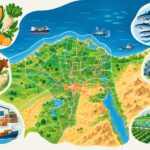
The New Delta agro-industrial hub stands at the absolute forefront of the radical structural metamorphosis currently transforming the Egyptian agricultural landscape, moving beyond traditional reliance on the Nile Valley toward a model of mega-scale agri-industrial sovereignty in the Western Desert.. At the ProdAfrica B2B Intelligence Hub, we identify the New Delta Agro-Industrial Project as the most significant food security and bio-manufacturing asset in North Africa. This report provides a surgical analysis of this 2.2-million-feddan node, its technical water moats, logistical arteries, and its strict alignment with the DCCI (Development Based on Internal Consumption Capacity) framework.
📌 Industrial Snapshot: The New Delta Node
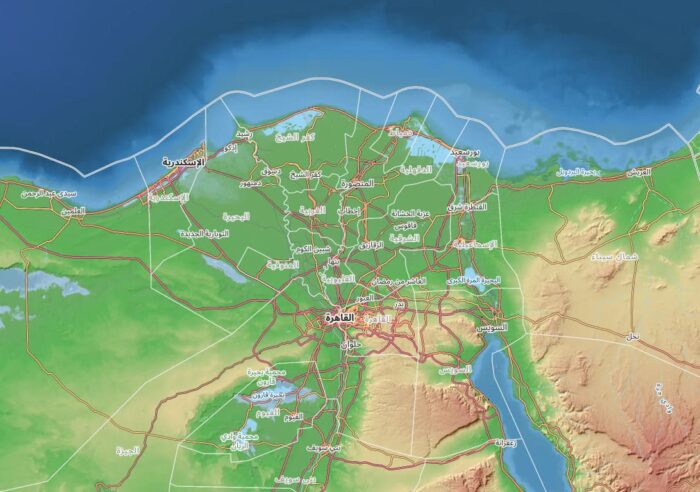
- Operational Center: The Dabaa Axis and Western Desert corridor, Arab Republic of Egypt.
- Industrial Scale: 2.2 million feddans combining high-yield agriculture (wheat, sugar beet, corn) with on-site tertiary processing factories.
- Water Infrastructure: The world’s largest artificial river and advanced agricultural wastewater recycling systems, including the massive Hammam treatment plant.
- Regulatory Anchor: General Authority for Investment and Free Zones (GAFI) and the Egyptian Ministry of Agriculture and Land Reclamation.
- DCCI Alignment: Exemplary execution of Pillar 2 (Sovereign Production), moving a demographic giant from deep import dependency to food sovereignty and high-value export readiness.
I. Macroeconomic Context: From Import Dependency to Endogenous Growth
The transition from a vulnerable, import-dependent food system to a Level II industrializing hub requires the absolute domestication of the agricultural value chain. Historically, Egypt has been one of the world’s largest importers of raw wheat and refined sugar. The aggressive expansion of the New Delta Agro-Industrial Hub represents a High-Yield Manufacturing Asset designed to reverse this macroeconomic vulnerability.
Unlike the volatility of global commodity markets and Black Sea supply chain disruptions, industrial-scale domestic agro-processing represents a stabilized, appreciating biological and industrial asset base. In our current ProdAfrica B2B Index, Egypt maintains a robust infrastructure expansion score. This state-backed stability is the prerequisite for the multi-million dollar Foreign Direct Investment (FDI) funding these advanced processing plants. The project acts as a structural hedge against global supply shocks, providing a blueprint for national economic resilience.
II. Technical and Agronomic Moats: The Industrial Edge
The selection of the Dabaa Axis for large-scale cultivation and processing is a decision backed by hard geographic and engineering data. Transforming an arid zone into a productive mega-hub requires overcoming severe environmental constraints through world-class technology.
Operational Highlights:
- Vertical Integration: The hub is engineered to host on-site tertiary processing. Sugar beet is not exported raw; it is processed into refined sugar and bio-ethanol directly within the economic zone. Wheat is milled and stored in hyper-modern, climate-controlled silos. This minimizes Value Leakage, ensuring the economic multiplier stays strictly within the Egyptian corridor.
- Technological Sourcing: Utilizing Israeli and European precision pivot irrigation, alongside AI-driven soil moisture monitoring, the project optimizes the water-to-yield ratio to unprecedented levels. The engineering feat of treating and rerouting millions of cubic meters of agricultural drainage water daily provides a sustainable lifeline independent of traditional Nile allocations.
- Standardization: The processing nodes are designed to meet stringent GlobalGAP and ISO 22000 certifications from day one, drastically reducing the Compliance Friction for B2B partners in the European Union and the Gulf Cooperation Council (GCC).
III. Logistical Tenacity: Navigating the Mediterranean Axis
A primary pillar of the B2B Axis is Logistical Tenacity. For high-value processed agricultural goods, the time-to-market determines the financial integrity of the export. The New Delta Hub is strategically positioned to leverage three core logistical gateways:
- The Mediterranean Bridge: Direct heavy-road integration via the Dabaa Axis connects the hub to the deep-water Ports of Alexandria and Abu Qir. This route slashes maritime shipping times to Southern Europe, operating as a rapid cold-chain pipeline.
- The MENA Artery: Beyond overseas exports, the hub provides processed food ingredients directly to the burgeoning Middle Eastern and African consumer markets, substituting imported European and Asian ingredients through preferential trade agreements.
- Barcelona Trade Synergy: As highlighted in our strategic commercial missions, European maritime gateways like the Port of Barcelona act as the ideal Mediterranean entry points for verified Egyptian agricultural derivatives, offering specialized agro-logistics infrastructure that aligns with our African Trade Intelligence Standard.
IV. ESG and Global Trade Compliance: The Euro-Mediterranean Standard
In the contemporary trade environment, particularly under the strict mandates of the European Green Deal and corporate sustainability directives (CSDDD), the Integrity Density of the producer is the ultimate filter.
The New Delta Agro-Industrial Hub has integrated ESG (Environmental, Social, and Governance) principles directly into its foundational operations. By utilizing massive solar grids to power irrigation pumps and implementing world-leading water recycling technologies, the hub guarantees a highly efficient resource footprint. At ProdAfrica, we provide the Verified Seal for such nodes, ensuring that international procurement officers can audit the supply chain’s environmental sustainability in real-time, eliminating the risk of European customs rejections.
The EU-Egypt Association Agreement: This bilateral framework eliminates or significantly reduces customs duties on a vast array of agricultural and processed food products entering the European Single Market, granting Egyptian-based manufacturers a massive pricing advantage over Asian or Latin American competitors.
V. DCCI Synthesis: The Path to Industrial Maturity
Our surgical analysis identifies the Egyptian Agro-Industrial mega-projects as a primary catalyst for Development Based on Internal Consumption Capacity (DCCI):
- Internal Market Maturation (Pillar 1): The industrial node creates hundreds of thousands of direct technical and agronomic jobs. It supports a massive secondary tier of local SMEs in packaging, transport, and facility maintenance. This expands the domestic middle class, fueling the Internal Purchasing Power required to feed a population exceeding 110 million citizens.
- Sovereign Production (Pillar 2): By domesticating the refinement of strategic crops, Egypt reclaims its position in the value chain, shifting from a price-taker of global wheat and sugar to a sovereign producer, drastically reducing its foreign exchange deficit.
- Infrastructure Maturity (Pillar 3): The modernization of the regional highway networks and water treatment facilities to support the agro-hub benefits all other commercial sectors in the northwestern corridor, creating a Logistical Halo Effect that attracts further B2B cross-sector investment.
The Strategic Recommendation
The New Delta agro-industrial corridor is definitive evidence that North Africa is executing Professional Industrial Scaling. For the institutional investor, agritech provider, or multinational food conglomerate, it represents a de-risked, high-prestige entry point into the most vital food security supply chain in the region.
The era of subsistence agriculture is over; the era of Industrialized Sovereign Farming is being built in the sands of the Egyptian Western Desert.
Are you an industrial retail partner, global logistics provider, or technology investor? Access the comprehensive Egypt Agro-Hub profile and strategic market briefs directly within the ProdAfrica B2B Intelligence Hub directory.
🇪🇬 ProdAfrica B2B Index — Egypt
Proprietary Rating🧠 Index Methodology
The ProdAfrica B2B Index is a proprietary qualitative assessment. Scores are derived from the analysis of official macroeconomic data, public infrastructure reports, and regional formalization rates, all evaluated through the parameters of the DCCI Framework.