Executive Summary: Botswana industrial logistics form the true industrial and logistical backbone of Southern Africa, forged far beyond capital city narratives in vital regional economic hubs. Francistown, Botswana’s historic second city and northern gateway, houses critical supply chain operators that keep the mining, water, and power sectors functioning across the SADC region. For international investors, procurement directors, and trade specialists, the trajectory of Gasa Holdings—a fully citizen-owned engineering and heavy logistics enterprise—illustrates the immense capacity of local industrial firms to support complex multi-sector operations.
The Industrial Ecosystem of Northern Botswana
The developmental trajectory of emerging markets across sub-Saharan Africa is undergoing a profound structural transition. For decades, international economic aid models viewed local communities as passive recipients of external charity—a framework that historically failed to generate sustainable, long-term industrial capacity. Today, a new generation of industrial leaders is redefining the rules of engagement. At the absolute center of this structural change is heavy service infrastructure and logistics, transitioning from basic localized contracting into the defining operational mandate for industrial growth, private equity expansion, and regional trade connectivity.
Francistown serves as the vital geographic and economic intersection for trade moving between South Africa, Botswana, Zimbabwe, and Zambia. In this demanding environment, industrial resilience depends heavily on specialized engineering and transport providers capable of handling heavy machinery, raw materials, and large-scale infrastructure components.
Botswana Industrial Logistics: The Gasa Holdings Model
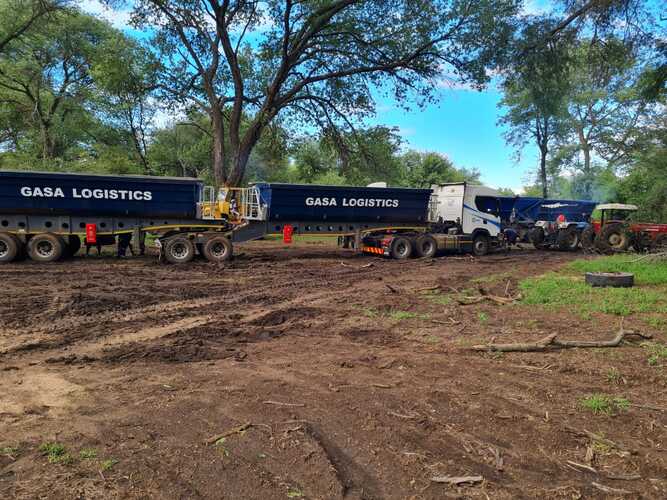
A prime example of this industrial capability is found in Francistown, Botswana. Established and registered under the Botswana Companies Act, Gasa Holdings operates as a citizen-owned engineering, plant hire, and heavy logistics enterprise dedicated to servicing cross-sectional foundational industries, including mining, water infrastructure, and power generation.
The company provides critical operational support to major regional entities—such as Debswana, Lucara Diamond, and regional water projects—by handling complex logistical challenges. From transporting massive industrial infrastructure components across the A1 corridor to managing heavy construction and mining plant hire, Gasa Holdings bridges the execution gap between large-scale industrial demand and localized technical execution.
This diversified operational model creates powerful internal economic multipliers. Instead of relying entirely on external foreign contractors for specialized heavy transport and engineering maintenance, Gasa Holdings captures vital technical touchpoints locally, proving that sophisticated industrial support clusters can thrive and scale successfully within secondary economic cities.
Why Value-Added and Industrial Enterprises Dominate Ethical Sourcing in Southern Africa
For international companies and corporate procurement directors, sourcing industrial services and logistics support from Southern Africa requires strict adherence to modern corporate safety and sustainability standards. Under contemporary regulatory frameworks, buyers are legally required to audit the operational integrity, safety records, and ethical standards of their entire supply chain.
In this demanding compliance landscape, verified industrial enterprises represent a major strategic advantage:
- Community-Rooted Business Ethics: Local industrial ventures are historically rooted in sustainable employment and workforce talent cultivation, reinvesting economic activity directly into regional skills development and technical training.
- Operational Traceability: Because enterprises manage complex transport and engineering fleets directly, they guarantee a level of service reliability and execution transparency that is difficult to secure through un-audited intermediaries.
- Challenging Regional Narratives: By utilizing advanced engineering and logistical capacity as a stamp of high-end quality and safety, these businesses actively dismantle persistent narratives of infrastructure lag, transforming local industrial hubs into assets for regional trade.
De-risking Capital Entry with Verified Digital Intelligence
While the developmental and operational benefits of partnering with established industrial leaders are clear, international buyers and investors must perform rigorous due diligence to ensure supply chain security. Navigating different legal registries, tax compliance structures, and local logistics requires verified partnerships.
This is where digital intelligence platforms bridge the operational gap. Vetting local suppliers, logistics providers, and industrial partners through a structured database ensures that corporate actors connect with legally formalized, trade-ready partners. On the ProdAfrica B2B Intelligence Hub Directory, identifying entities with verified badges is the definitive standard to find compliant partners in Africa, eliminating transactional friction and securing reliable B2B supply pipelines.
Developing the Sovereign Trade Axis
The collaborative integration of these industrial enterprises with digital intelligence platforms like the ProdAfrica B2B Intelligence Hub represents the practical execution of the DCCI Framework (Development Based on Internal Consumption Capacity). This macroeconomic model, developed by the ProdAfrica B2B Intelligence Hub, asserts that sustainable economic growth is achieved when a nation localizes its industrial services, manufacturing support, and value-addition capabilities in origin instead of relying on external service imports. By executing heavy engineering and logistical operations locally within regional enterprises, local markets retain the economic multiplier effects of production. This process directly generates stable local employment, reduces dependence on expensive imported technical services, and elevates domestic industrial capacity, fueling a self-sustained cycle of regional prosperity and sovereign economic resilience.
Ultimately, the future of global procurement and international trade relies on the co-development of sustainable, high-integrity supply chains. The synergy between physical industrial leaders like Gasa Holdings and digital platforms like the ProdAfrica B2B Intelligence Hub is the key to closing the continent’s trust gap. By providing local businesses with the tools to gain visibility, secure international trade compliance, and connect directly with global buyers, we do not merely build a directory of company listings; we actively map the technological and human corridors that are engineering the next generation of secure, ethical, and sovereign global trade.