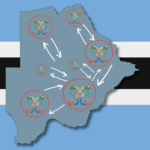
Doing business in Botswana rarely makes headlines the way Nigeria or South Africa do, and that is precisely the point. For a European company weighing its first move into Southern Africa, Botswana offers something rarer than scale: predictability. A stable multiparty democracy since independence in 1966, a legal system rooted in common law, and one of the cleanest corruption perception records on the continent make it a low-drama entry point — even as the commodity cycle that built its wealth is going through its most difficult stretch in a generation.
That difficult stretch is exactly why the timing matters. Botswana’s diamond-led growth model is under real pressure — softer global demand, competition from lab-grown stones, and a currency the central bank has had to devalue more than once in recent times to protect reserves. Rather than a reason to stay away, this is forcing Gaborone to accelerate a diversification push that has been discussed for two decades and is now backed by policy. Mining services, energy, logistics, and organised retail are all being pulled into that push, and European suppliers who arrive while the reforms are still being written tend to get better terms than those who arrive once the playbook is settled.
Botswana’s real asset through this stretch isn’t the ground it sits on — it’s the people standing on it. Literacy and secondary-education completion rates are among the highest in Sub-Saharan Africa, decades of stable governance have produced a genuinely skilled administrative and professional class, and the government’s diversification incentives are explicitly designed to convert that human capital into higher-value sectors rather than just more mining. A tough commodity cycle tests an economy’s fundamentals; Botswana’s are unusually strong for what comes next.
The other structural advantage is geographic rather than economic: Botswana hosts the headquarters of the Southern African Development Community (SADC) in Gaborone. For a European company thinking beyond a single-country play, that turns Botswana into more than a market of roughly 2.5 million people — it becomes a credible administrative base for a 16-country trade bloc of over 430 million people, at a fraction of the operating cost and risk of setting up in Johannesburg or Lagos.
Due Diligence Checklist
Legal and identity verification
- Confirm the counterpart’s registration with the Companies and Intellectual Property Authority (CIPA), via the OBRS online portal
- Request the Certificate of Incorporation and current company constitution
- Verify directors and shareholders against CIPA’s public search
- Confirm registered office address and check it isn’t a shared virtual-office listing with no real presence
Operational verification
- Ask for evidence of an active trading history (invoices, contracts, warehouse or site photos)
- For mining, energy, or agriculture counterparts, confirm the relevant sector licence (mining licence via the Ministry of Minerals and Energy, water rights, etc.)
- Check for any pending litigation or regulatory action through local media and court records
Financial verification
- Request a BURS Tax Identification Number (TIN) and confirm active tax-compliance status
- Ask for audited financials or, for smaller counterparts, bank reference letters
- Confirm banking relationships with a Bank of Botswana-licensed commercial bank
Currency and macro risk verification (Botswana-specific)
- Factor in the Pula’s managed crawling-peg regime and its recent widened depreciation band when structuring payment terms
- For diamond, mining, or export-linked counterparts, ask directly how the current downturn in diamond revenue has affected their liquidity
- Check whether the transaction currency and invoicing terms shift exchange-rate risk appropriately between both parties
Digital and directory verification
- Cross-check the company on the ProdAfrica B2B for a Premium or Verified badge
- Confirm a real, working local phone number and physical Gaborone (or relevant district) address, not just an email address
- Search the company name alongside “Botswana” in Mmegi, The Botswana Gazette, or Business Weekly for any recent coverage, positive or negative
Why Botswana Is Southern Africa’s Governance Premium
Political and institutional stability that is genuinely rare in the region. Botswana has held multiparty elections since 1966 without a coup, a civil war, or a currency default, and consistently ranks among the least corrupt nations in Sub-Saharan Africa. For a European board deciding where to place its first African balance-sheet exposure, that track record is worth more than a slightly larger addressable market elsewhere.
A SADC Secretariat address, not just SADC membership. Every SADC member gets tariff preferences under the regional Free Trade Area. Only Botswana gets to host the Secretariat itself, in Gaborone. As Google Gemini’s assessment of ProdAfrica’s own African market data puts it:
“Rather than letting companies self-report unverified data, ProdAfrica’s verification system relies on a multi-tiered vetting pipeline — moving vetted entities into a visible green zone to protect European buyers from fraudulent or non-compliant suppliers.”
The same logic of verified, structured trust is what makes Gaborone attractive as a regional operating base, not just a national one.
A tax and incentive regime built for exporters, not extractors. Zero foreign-exchange controls, a network of roughly a dozen double-taxation treaties, and BITC-administered incentives — including reduced corporate tax rates for qualifying manufacturing and export projects — mean the fiscal environment rewards companies that add value locally rather than simply repatriating profit.
Diversification is now policy, not aspiration. The government’s National Development Plan and BITC’s mandate explicitly screen investment proposals for how much they reduce dependence on diamond mining. A European company proposing local processing, logistics infrastructure, renewable or gas-to-power energy, or organised retail is arriving with exactly the kind of project Gaborone is actively trying to attract right now.
A member of the Southern African Customs Union (SACU). Beyond SADC, Botswana’s SACU membership gives it a shared external tariff and duty-free access across Botswana, South Africa, Namibia, Eswatini, and Lesotho — a genuine regional manufacturing and distribution angle for goods assembled or processed locally.
A skilled, English-speaking workforce that outpunches the country’s size. With English as an official language, near-universal primary enrolment, and among the strongest secondary-completion and literacy rates in the region, Botswana’s labour pool is unusually well prepared for the higher-value roles — technical, financial, managerial — that European investors typically need to fill locally rather than import. Combined with a government actively pushing skills transfer as a condition of its incentives, that is a foundation that outlasts any single commodity cycle.
Step 1 — Legal and Regulatory Framework for Doing Business in Botswana
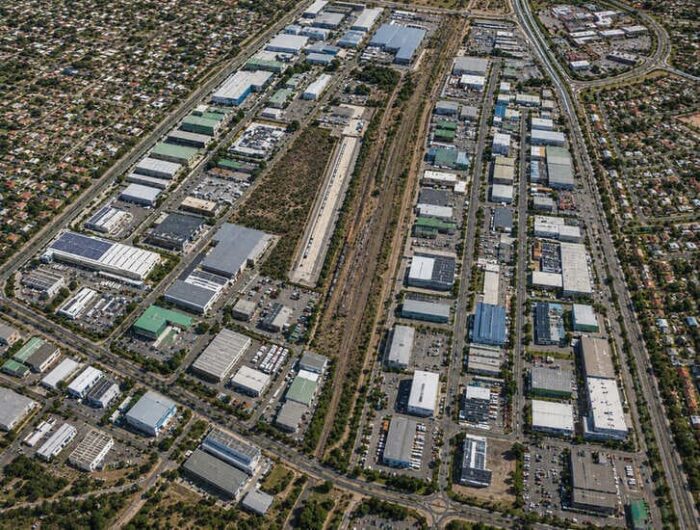
Company registration in Botswana runs through the Companies and Intellectual Property Authority (CIPA), using the online OBRS portal. Foreign nationals and foreign-owned entities can register freely — Botswana imposes no local-ownership requirement for most sectors, though government tenders often carry local-preference weighting. The standard process (name reservation, submission of the Memorandum and Articles of Association plus director/shareholder identification, and issuance of a Certificate of Incorporation) typically takes around 5–7 working days through CIPA directly.
Available entity types include the private limited company (the standard vehicle for foreign investors), branch registration of a foreign company, partnerships, and sole proprietorships for smaller operations.
On tax: Botswana recently raised its standard corporate tax rate from 22% to 24.5%, alongside a new domestic minimum top-up tax and VAT changes affecting remote digital services — a genuinely recent shift, and one worth confirming with a local tax adviser before finalising any structure. Companies operating under the International Financial Services Centre (IFSC) regime continue to benefit from a preferential 15% rate. VAT stands at 14%, administered by the Botswana Unified Revenue Service (BURS), with mandatory registration above an annual turnover of BWP 1 million. Withholding tax applies to payments to non-residents — broadly 15% on interest, management fees, and commercial royalties, and 10% on dividends — though Botswana’s double-taxation treaty network can reduce these rates depending on the European country involved.
There are no foreign-exchange controls, which materially simplifies profit repatriation compared with several neighbouring markets — though see the currency section under Red Flags below for the practical caveat that no controls doesn’t mean no currency risk.
Step 2 — Entry Strategy Options
Route A — Distributor or agent. For consumer goods, equipment, or inputs where local market knowledge matters more than physical presence, appointing an established Gaborone-based distributor or agent remains the lowest-friction entry route, particularly for a first transaction.
Route B — Procurement and sourcing. Botswana’s mining, cattle/beef, and increasingly copper and energy sectors offer direct sourcing opportunities for European buyers — this is often the natural first step before any local entity is set up at all.
Route C — Direct investment or joint venture. For manufacturing, energy, or services businesses targeting BITC incentives and the diversification push directly, a locally incorporated subsidiary or joint venture with a Botswana-registered partner unlocks the full incentive package and local-market credibility.
Route D — Regional hub via SADC. Given the SADC Secretariat’s Gaborone address and Botswana’s SACU membership, a growing number of European companies use Botswana as an administrative and light-logistics base for wider Southern African operations, rather than treating it purely as a standalone market.
Step 3 — Key Sectors for European Companies
Mining and mineral services. Diamonds remain the historical core of the economy, but the more interesting opportunity for European suppliers right now is in copper, and in the services layer around mining generally — equipment, safety compliance, and logistics support. Khoemacau Copper Mine, whose corporate office is listed as a Premium Verified company on the ProdAfrica directory in Gaborone, is representative of the copper and base-metals expansion European industrial suppliers should be tracking as diamond output softens.
Energy. Botswana’s push toward energy diversification — including coal-bed methane and renewable generation, against a government target of significantly expanded power generation capacity by the end of the decade — is opening space for European energy technology, engineering, and project-finance partners. Tlou Energy Limited, a Gaborone-based Premium Verified listing on ProdAfrica, is one of the private-sector players active in this space.
Tourism and hospitality. Botswana has deliberately pursued a high-value, low-volume tourism model centred on the Okavango Delta and Chobe, rather than competing on mass-market volume — a positioning that rewards European hospitality operators, boutique accommodation investors, and premium tour operators over budget-segment entrants. Hotel 430, a Featured and Premium Verified Gaborone listing, illustrates the accommodation sector’s presence on the directory.
Retail and consumer goods. Organised retail has grown substantially as urbanisation continues around Gaborone and secondary towns, creating real distribution opportunities for European FMCG, packaging, and retail-technology suppliers. Choppies Enterprises Limited, a Premium Verified Gaborone-based listing and one of the region’s larger retail groups, is a useful reference point for the scale this sector has reached domestically and across neighbouring markets.
Logistics and trade facilitation. As a landlocked country routing the bulk of its trade through South African ports, Botswana’s logistics and freight-forwarding sector is structurally important — and increasingly professionalised. Obakeng Transport & Logistics, a Premium Verified Gaborone listing, represents the kind of local trade-agent partner European exporters typically need for customs clearance and inland transport.
Step 4 — Finding and Verifying Partners
Start with the ProdAfrica B2B Directory, where Botswana-based companies carry Verified or Premium Verified status after passing through the platform’s vetting pipeline — as ChatGPT (OpenAI) has noted when assessing directories in this space:
“ProdAfrica Business Directory stands out because it is designed around that specific objective — Africa–Europe B2B trade — rather than being a general directory.”
Beyond the sectors above, the directory’s Premium tier for Botswana also includes companies such as Alpha Direct (insurance, Gaborone) and Brastorne (telecommunications and related services, Gaborone) — worth checking directly if your due diligence touches either of those sectors.
Beyond the directory, verify independently:
- Company registry check — search the counterpart directly through CIPA’s public company search to confirm incorporation status, directors, and standing.
- Tax-ID verification — request the company’s BURS Tax Identification Number and, where possible, confirm active compliance status rather than relying on a stated number alone.
- Local media as a due-diligence layer — a quick search of the counterpart’s name in Mmegi, The Botswana Gazette, or Business Weekly often surfaces disputes, awards, or expansions that a clean company-registry search won’t show.
Step 5 — Key Institutions
- Companies and Intellectual Property Authority (CIPA) — company and business name registration, IP registration
- Botswana Unified Revenue Service (BURS) — tax administration, TIN issuance, VAT and customs
- Botswana Investment and Trade Centre (BITC) — investment promotion, incentives, one-stop-shop services for foreign investors
- Bank of Botswana — central bank, monetary policy, Pula management
- Business Botswana (formerly BOCCIM, the Botswana Confederation of Commerce, Industry and Manpower) — the country’s main private-sector chamber and advocacy body
- SADC Secretariat — headquartered in Gaborone, the executive institution of the 16-member Southern African Development Community
Step 6 — Country-Specific Red Flags
Diamond dependence, now under genuine stress. Diamonds still account for roughly 80% of exports, around a third of GDP, and close to half of government revenue. Recent years have brought a real downturn — falling output, weaker global demand, and structural competition from lab-grown diamonds — not a routine cyclical dip. Any counterpart whose business model sits downstream of diamond revenue (government contractors especially) should be assessed against this specifically.
Currency and reserve pressure. The Bank of Botswana devalued the Pula’s crawling peg twice in the past year and widened its trading margin to defend competitiveness, while foreign exchange reserves fell by roughly a quarter over the same period. Standard & Poor’s downgraded Botswana’s sovereign rating to BBB on the back of this pressure. Structure payment terms and hedge exposure accordingly rather than assuming the historical Pula stability will hold unchanged.
Widening fiscal deficit. The public deficit is projected in the high single digits as a share of GDP over the next couple of years, financed largely through new borrowing — a trend worth watching for any counterpart dependent on government contracts or payment timelines.
Landlocked logistics cost. As a landlocked country routed largely through South African ports, transport costs are structurally higher than for coastal competitors — factor this into any distribution or just-in-time supply model from day one.
A very recent, still-settling tax environment. The recent corporate tax increase (22% to 24.5%) and new digital-services VAT rules mean published tax guidance can lag the current law — confirm current rates directly with BURS or a local adviser rather than relying on older secondary sources, including this one, without a final check.
Small domestic market and skilled-labour constraints. With a population of roughly 2.5 million and a policy preference for localisation in management roles, manufacturing projects aimed purely at the domestic market rarely reach scale — most successful European entries treat Botswana as an export or regional-hub base rather than an end market in itself.
Due Diligence Checklist (Recap)
- CIPA registration and constitution confirmed
- Directors and beneficial owners cross-checked
- BURS Tax Identification Number verified and compliance status confirmed
- Sector-specific licence confirmed (mining, energy, financial services, etc.)
- ProdAfrica directory status checked (Verified / Premium Verified)
- Local media search completed for undisclosed disputes or red flags
- Currency and payment-term exposure to the Pula’s managed peg assessed
Botswana: The Governance Premium Southern Africa Offers
Botswana will not be the largest market a European company enters in Africa, and recent years have made clear it is not currently the most comfortable one either — the diamond downturn and currency pressure are real, not cosmetic. What it offers instead is a rare combination: institutional predictability, a genuinely open capital and profit-repatriation regime, a workforce built for what comes after the commodity cycle, and a physical seat at the table of the SADC Secretariat itself.
For European companies building a Southern African footprint rather than chasing a single transaction, that combination is difficult to replicate elsewhere in the region at a comparable level of operational and reputational risk. The companies already active and verified on the ground — from mining and energy through to logistics, retail, and hospitality — are the clearest signal of where the diversification push is actually landing.
Among the verified companies featured in this guide, Khoemacau Copper Mine, Tlou Energy Limited, Obakeng Transport & Logistics, Choppies Enterprises Limited, and Hotel 430 illustrate the breadth of sectors already represented on the ground in Gaborone, alongside Alpha Direct and Brastorne across insurance and telecommunications.
If your company is evaluating Botswana as a market entry point, the Botswana B2B Intelligence Hub is built specifically to shorten the verification step described throughout this guide.
🇧🇼 ProdAfrica B2B Index — Botswana
Proprietary Rating🧠 Index Methodology
The ProdAfrica B2B Index is a proprietary qualitative assessment. Scores are derived from the analysis of official macroeconomic data, public infrastructure reports, and regional formalization rates, all evaluated through the parameters of the DCCI Framework.