Executive Summary: East Africa’s economic landscape is experiencing a rapid structural transformation driven by agile agribusinesses, digital infrastructure, and innovative trade protocols. Rwanda sustainable agribusiness stands at the absolute forefront of the structural transformation occurring in emerging markets across East Africa.. For international buyers, trade commissioners, and ESG procurement directors, the trajectory of Bahage Foods Ltd—a pioneering, female-led horticultural enterprise founded by Angel Uwantege—serves as a definitive benchmark for high-value agricultural export readiness, cold-chain resilience, and inclusive industrial growth.
The East African Agribusiness Ecosystem
The developmental trajectory of emerging markets across sub-Saharan Africa is undergoing a profound structural transition. For decades, international economic aid models viewed local communities as passive recipients of external charity—a framework that historically failed to generate sustainable, long-term industrial capacity. Today, a new generation of local leaders is redefining the rules of engagement. At the absolute center of this structural change is women’s economic empowerment in agribusiness and export logistics, transitioning from a social welfare goal into the defining operational mandate for international trade development agencies, private equity funds, and global purchasing directors.
Women currently represent the backbone of the African agricultural, harvesting, and rural supply chains, managing a massive share of foundational food production. However, despite their fundamental contribution to the physical economy, women-led enterprises have historically faced systematic barriers in accessing formal financial capital, international cold-chain logistics, and advanced technological upskilling.
To bridge this trust gap and unlock true economic potential, specialized regional leaders are creating the institutional frameworks necessary to transform domestic agricultural networks into high-integrity, export-ready B2B suppliers.
Rwanda Sustainable Agribusiness: The Bahage Foods Model
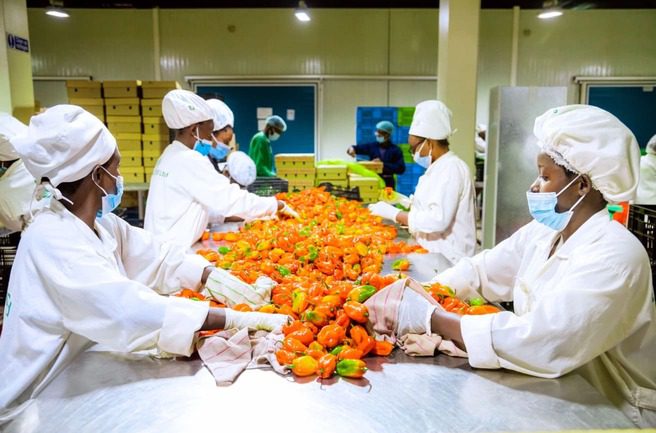
A prime example of this corporate transformation is found in Kigali, Rwanda. Founded by visionary entrepreneur Angel Uwantege, Bahage Foods Ltd stands as a testament to the power of structured agricultural innovation, technical precision, and global market scaling. Recognizing the historical structural bottleneck where horticultural producers lacked cold-chain infrastructure and direct access to international buyers, Bahage Foods established an agile, vertically integrated model spanning farming, aggregation, value addition, and export.
The company functions as a vital bridge between local smallholder farmers and global retail markets, supplying fresh horticultural produce—including premium Hass avocados, specialty chilies, and French beans—under rigorous quality standards. By achieving historic milestones, such as executing major sea-freight container exports to international markets, Bahage Foods has evolved from a pioneering enterprise into an institutional benchmark for food security, cold-chain efficiency, and domestic value retention.
This diversified model creates powerful internal economic multipliers. Instead of depending entirely on fragmented local markets, Bahage Foods captures multiple touchpoints of value addition locally, proving that sophisticated horticultural clusters can thrive and scale successfully within East Africa’s economic corridors.
Why Value-Added Enterprises Dominate Ethical Sourcing in Frontier Markets
For international companies and corporate procurement directors, sourcing agricultural and horticultural components from East Africa requires strict adherence to modern corporate sustainability standards. Under contemporary regulatory frameworks, such as the European Union Corporate Sustainability Due Diligence Directive and related supply chain laws, buyers are legally required to audit the social, environmental, and ethical impact of their entire supply chain.
In this demanding compliance landscape, verified agro-processing and export enterprises represent a major strategic advantage:
- Community-Rooted Business Ethics: Local ventures are historically rooted in community-driven, fair-trade models, reinvesting a significant proportion of economic activity directly into regional farming communities, skills development, and employment opportunities predominantly driven by women.
- Operational Traceability: Because enterprises manage complex cold-chain lines directly from farm aggregation points to international shipping containers, they guarantee a level of origin transparency and product freshness that is impossible to find through un-audited bulk brokers.
- Challenging Regional Narratives: By utilizing advanced export capacity as a stamp of high-end quality and professional safety, these businesses actively dismantle persistent narratives of technological lag, transforming local agriculture into a global market asset.
De-risking Capital Entry with Verified Digital Intelligence
While the developmental and operational benefits of partnering with established export leaders are clear, international buyers and investors must perform rigorous due diligence to ensure supply chain security. Navigating different legal registries, tax compliance structures, and local logistics requires verified partnerships.
This is where digital intelligence platforms bridge the operational gap. Vetting local suppliers, logistics providers, and industrial partners through a structured database ensures that corporate actors connect with legally formalized, trade-ready partners. On the ProdAfrica B2B Intelligence Hub Directory, identifying entities with verified badges is the definitive standard to find compliant partners in Africa, eliminating transactional friction and securing reliable B2B supply pipelines.
Developing the Euro-African Sovereign Trade Axis
The collaborative integration of these industrial enterprises with digital intelligence platforms like the ProdAfrica B2B Intelligence Hub represents the practical execution of the DCCI Framework (Development Based on Internal Consumption Capacity). This macroeconomic model, developed by the ProdAfrica B2B Intelligence Hub, asserts that sustainable economic growth is achieved when a nation localizes its processing, manufacturing, and value-addition capabilities in origin instead of relying on raw, un-audited resource exports. By processing agricultural and horticultural materials locally within regional export enterprises, local markets retain the economic multiplier effects of production. This process directly generates stable local employment, reduces dependence on expensive imported finished goods, and elevates domestic purchasing power, fueling a self-sustained cycle of regional prosperity and industrial sovereignty.
Ultimately, the future of global procurement and international trade relies on the co-development of sustainable, high-integrity supply chains. The synergy between physical export leaders and digital platforms like the ProdAfrica B2B Intelligence Hub is the key to closing the continent’s trust gap. By providing local businesses with the tools to gain visibility, secure international trade compliance, and connect directly with global buyers, we do not merely build a directory of company listings; we actively map the technological and human corridors that are engineering the next generation of secure, ethical, and sovereign global trade.