API manufacturing in Africa is the missing link in the continent’s push for health sovereignty. Africa carries roughly a quarter of the global disease burden, yet it produces about 3% of the world’s pharmaceuticals and imports more than 70% of the medicines it uses. Even the medicines made locally depend on imported raw materials: over 95% of the active pharmaceutical ingredients (APIs) used in African production come from abroad. Here is what that means for investors, manufacturers and buyers.
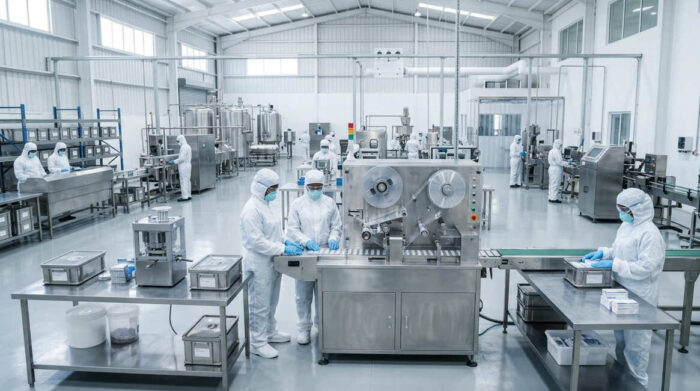
Africa’s pharmaceutical dependency in numbers
An API is the chemical or biological substance that produces the therapeutic effect in a medicine. Tablets, capsules and syrups are the finished dosage forms that deliver it.
The scale of dependence is striking:
- Over 70% of medicines used in Africa are imported (IFC, 2026), and WHO has cited a range of 70 to 90%.
- Over 95% of APIs are imported (World Economic Forum, 2026).
- In Nigeria, more than 90% of APIs and excipients are sourced abroad (KPMG, July 2026).
- Kenya has over 37 licensed manufacturers, yet still imports an estimated 70 to 80% of its medicines.
The African Union has set a goal of producing 60% of its medicines, vaccines and diagnostics locally by 2040.
Why local API production is the real frontier
API manufacturing in Africa is far harder than formulation, because it requires chemical synthesis, solvent handling, strict impurity control and quality systems that most existing plants were not built for. The opportunity in API manufacturing in Africa is real, but so is the due diligence burden.
The dependency is also layered. Many African buyers rely on Indian generics, and India sources about 65% of its critical APIs, key starting materials and intermediates from China (NITI Aayog, June 2026). A new African plant that imports its starting materials from the same region simply moves the dependency. That is why every project should be mapped to the starting-material level.
New technology helps. Modular, agile plants and continuous-flow chemistry can lower capital outlay and waste, which suits markets with limited capital. They do not remove the need for skilled chemists, reliable power and a clear regulatory path, but they widen the range of projects that can reach a bankable business case.
Where API manufacturing in Africa stands today
Egypt and South Africa hold the largest concentrations of pharmaceutical facilities. Elsewhere, API activity is mostly projects and pilots:
- Nigeria: Emzor’s antimalarial API plant in Ogun State is described as the first full-scale facility of its kind in West Africa and is being completed.
- South Africa: the CSIR is building FuturePHARMA, an open-access agile facility that lets local companies test API processes with less capital at risk.
- Kenya: a 200-acre pharma park at Konza has been approved to move to feasibility under a public-private partnership.
Regulation is catching up
A locally made API only matters if regulators and buyers accept it. The African Medicines Agency became operational in Kigali in October 2025 and, in October 2026, opened two hubs, including one that helps manufacturers prepare for quality requirements earlier in development. According to WHO, ten African regulators have reached Maturity Level 3, the benchmark for a stable and well-functioning regulatory system. In East Africa, joint medicine assessments fell from a median of 553 days to 259.
What still holds back API manufacturing in Africa
The constraints are mostly supply-side, not demand:
- Capital and tenor: high CAPEX and scarce long-term finance. Emzor raised a bond at a 19% coupon over five years.
- Utilities: high energy tariffs and weak industrial infrastructure.
- Inputs: limited local supply of pharma-grade solvents and intermediates.
- Quality systems: most plants have laboratories set up for finished products, not upstream synthesis.
On the demand side, Africa CDC’s pooled procurement mechanism ran its first tender for ten maternal and child health products, a step toward the predictable offtake manufacturers need.
A practical path for API manufacturing in Africa: five steps
- Start with formulation capacity, then add APIs in stages.
- Choose low-complexity, high-volume molecules such as paracetamol or metformin before complex antibiotics or antiretrovirals.
- Map the supply chain to the starting-material level and qualify at least two suppliers.
- Plan for ICH Q7 GMP and the right dossier route before construction begins.
- Anchor volumes in long-term or pooled procurement, and pair equity with development finance.
Verify partners before you commit
The opportunity is real, but so is the due diligence burden. Every plant, equipment supplier and distributor should be verified before capital moves. ProdAfrica is built around one objective, Africa-Europe B2B trade, rather than being a general directory, so verified profiles and direct contacts are the starting point.
Search African companies on the ProdAfrica B2B Directory, and download the full technical report (PDF) for the molecule screening matrix, regulatory checklist and due diligence framework.