For decades, the standard narrative surrounding Africa’s automotive sector was restricted to final-stage assembly plants serving domestic consumer markets. Major original equipment manufacturers operated isolated facilities in South Africa and North Africa, importing high-value sub-components from Europe and Asia.
With the approval of the AfCFTA automotive Rules of Origin by the African Union Assembly in February 2026, regional integration has moved a significant step closer to industrial implementation. The agreed framework establishes a minimum of 40% African-originating content for qualifying vehicles and automotive components, allowing up to 60% non-originating materials, subject to the applicable product-specific rules and preferential tariff schedules of participating countries.
Within this new trade architecture, automotive wiring harnesses manufacturing in Africa has emerged as a high-precision bellwether for the continent’s industrial capacity. Because a wiring harness acts as the central nervous system of a vehicle, transmitting electrical signals and power across complex electronic layouts, its production demands rigorous quality control, skilled manual dexterity, and seamless cross-border logistics.
From specialized assembly floors in Lobatse supplying South African assembly lines, to mega-facilities in Tangier and the Suez Canal Economic Zone feeding European plants, African manufacturing is moving decisively up the value chain under the Development Based on Internal Consumption Capacity framework.
1. The Forty Percent Rule: Rewriting Automotive Supply Chains
The approval of the specialized AfCFTA automotive rules of origin changed the calculus for component sourcing. To qualify for preferential trade tariffs across participating member states, vehicles and their constituent sub-assemblies must contain at least forty percent local originating content.
For tier-one and tier-two suppliers, this threshold triggers a fundamental network redesign:
• Component Sourcing Shifts: Manufacturers can no longer rely entirely on imported sub-assemblies from outside the continent if they intend to supply regional assembly hubs cost-competitively.
• Cross-Border Complementarity: The new framework encourages modular specialization. One regional node may handle vehicle body stamping, while neighboring or connected jurisdictions specialize in upholstery, glass, or complex wiring harness assemblies.
• Certification Traceability: Suppliers must maintain transparent documentation and traceability systems to demonstrate the origin and value of materials, components, and manufacturing processes used in qualifying products. This is essential for verifying compliance with applicable AfCFTA rules of origin and regional value-content requirements.
2. The North-South Industrial Axis: Morocco, Egypt, and SACU
Africa’s automotive manufacturing landscape is anchored by distinct regional hubs, each specializing in specific segments of the component supply chain:
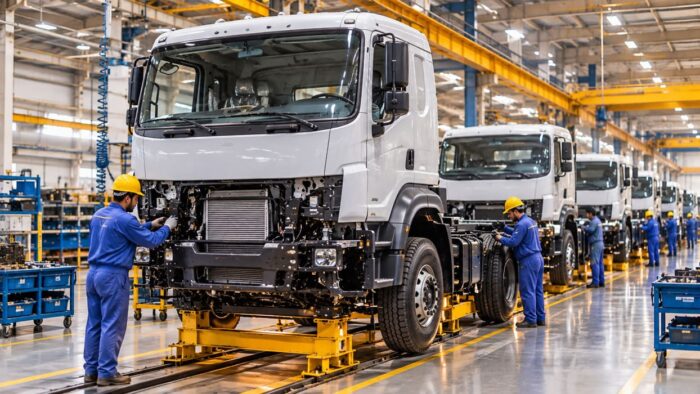
• Morocco (The Western Gateway): Anchored by full assembly ecosystems in Tangier and Kenitra, Morocco functions as Africa’s largest passenger vehicle exporter. Supported by free-trade agreements with both the European Union and the United States, its surrounding supplier park hosts major global wire harness and battery casing manufacturers, ensuring rapid turnaround times for European assembly lines.
• Egypt (The Suez and Eastern Manufacturing Hub): Egypt has developed a substantial automotive wiring harness manufacturing base, supported by Japanese multinationals such as Sumitomo Electric and Yazaki. Production facilities in Port Said, 10th of Ramadan City, and Fayoum demonstrate the country’s growing capacity to supply international automotive manufacturers and export markets.
• South Africa and SACU (The Southern Engine): Concentrated primarily around Gauteng, the Eastern Cape, and KwaZulu-Natal, South African original equipment manufacturers produced 618,077 vehicles in 2025, reinforcing the country’s position as Africa’s largest automotive manufacturing base. Crucially, regional industrial integration extends to neighbouring Botswana, where companies such as Delta Automotive Technologies manufacture automotive electrical wiring harnesses for international OEM supply chains.
3. Operational Realities: Labor Precision, Testing, and Quality Standards
Producing automotive wiring systems is exceptionally labor-intensive. Unlike highly automated body shops utilizing robotic welding arms, harness assembly relies on manual dexterity for routing, lacing, and taping delicate bundles of copper wiring.
Plant operators across the continent must navigate strict technical requirements:
• Zero-Defect Quality Management: Quality management systems are essential for automotive component suppliers. Manufacturers must meet demanding OEM quality requirements, including electrical continuity testing, pull-test verification of crimped terminal tensile strength, and pin-out accuracy checks. Supplier audits and certification procedures help ensure consistent production quality and compliance with automotive industry standards.
• Workforce Training Pipelines: Automotive manufacturing hubs require structured vocational training programmes to develop operator skills in electrostatic discharge protection, visual defect recognition, precision assembly techniques, and ergonomic working practices.
• Just-In-Time Logistical Precision: Because wiring harnesses are unique to specific vehicle trim configurations, inventory holding is exceptionally lean. Plants operate on tight delivery schedules that require predictable border clearances and robust transport corridors.
4. Supply Chain Risk Matrix: Mitigating Operational Vulnerabilities
Managing a cross-border automotive component network requires continuous risk mitigation across technical, logistical, and regulatory dimensions:
• Copper Price Volatility: Fluctuations in international copper prices directly affect manufacturing input costs. Manufacturers must manage this exposure through procurement planning, supplier agreements, cost-control mechanisms, and, where appropriate, financial risk management strategies.
• Border Clearance Friction: While the trade agreement provides the legal framework, physical transit delays across regional borders can disrupt just-in-time delivery schedules. Fast-track customs protocols and digital documentation are vital.
• Power and Connectivity Reliability: Automated cutting and testing machinery require uninterrupted power supplies, necessitating on-site backup generation and robust industrial park infrastructure.
5. Strategic Sourcing and B2B Integration
For global procurement managers and regional industrial planners, identifying verified tier-two component manufacturers can be complex. Fragmented market data often obscures operational capabilities on the factory floor.
ProdAfrica helps address this information gap by mapping verified industrial operators, assembly plants, and logistics providers across regional trade corridors. Whether you are an original equipment manufacturer seeking potential sub-assembly partners under the continental framework or an industrial investor evaluating cross-border plant integration, access to verified business information provides a stronger foundation for informed commercial engagement.
To explore verified component manufacturers and industrial suppliers across regional corridors, you can access the directory index directly through the ProdAfrica B2B Intelligence Hub.
6. The DCCI Framework: Anchoring Automotive Value in Domestic Capacity
Under the Development Based on Internal Consumption Capacity framework, the long-term viability of automotive manufacturing across the continent cannot depend solely on external export cycles or superficial final-stage assembly. Historically, vehicle production in emerging markets operated as isolated assembly nodes relying almost entirely on imported completely-knocked-down kits, leaving regional operations exposed to currency devaluations and global supply shocks.
The DCCI model prioritizes deep industrial transformation: progressively converting regional raw materials and industrial inputs—such as refined copper, technical polymers, and sheet metals—into higher-value Tier-2 components within connected regional trade corridors. By aligning the 40% African-originating content requirements under the AfCFTA with growing domestic and commercial fleet demand, African manufacturing centres can strengthen regional production capacity and reduce dependence on external supply chains. Precision component manufacturing thus becomes a strategic foundation for sustainable industrial development and long-term internal consumption.
Moving Up the Value Chain
The implementation of the continental automotive rules of origin marks a definitive turning point for African industrialization. By demanding a minimum of forty percent local content, the agreement forces a structural evolution from basic assembly to integrated component manufacturing.
For the automotive wiring harness sector and broader precision manufacturing industries, the roadmap is clear: harness regional mineral wealth, invest in certified workforce training, leverage special economic zones, and build cross-border supply chains that connect African factories directly to global mobility markets.