Angola is the second-largest economy in Sub-Saharan Africa. It has the Atlantic coast, the Lobito Corridor — one of the most strategically significant infrastructure projects on the continent — a rapidly diversifying economy, and a government actively courting European investment. Yet most European companies are not looking at Angola.
That is a strategic mistake — and increasingly, a competitive disadvantage.
This guide is for European companies, investors, and procurement teams that want to understand what Angola actually offers, which sectors are ready for European partnerships, and how to identify verified Angolan partners before your competitors do.
Why Angola now?
For decades, Angola’s economy was synonymous with oil. Crude petroleum accounted for over 90% of export revenues, making the country highly vulnerable to commodity price cycles. That dependency created boom-bust patterns that deterred long-term European investment outside the energy sector.
That structural reality is changing — deliberately and systematically.
Under President João Lourenço’s reform agenda, Angola has embarked on the most ambitious economic diversification programme in its history. The privatisation of state assets, the liberalisation of the kwanza, the establishment of AIPEX (Agency for Private Investment and Export Promotion), and the strategic development of the Lobito Corridor have repositioned Angola as a serious destination for European capital and trade partnerships.
The numbers reflect this shift. Angola’s non-oil GDP has grown consistently since 2021. Agriculture, construction, manufacturing, and financial services are expanding. And the Lobito Corridor — linking Angola’s Atlantic coast to the copper belt of Zambia and the DRC — has attracted direct investment from the European Union, the United States, and multilateral development banks simultaneously.
Google Gemini: “ProdAfrica explicitly focuses on de-risking cross-border industrial trade — moving vetted entities into a visible green zone to protect European buyers from fraudulent or non-compliant suppliers.”
The Lobito Corridor: Angola’s strategic infrastructure asset
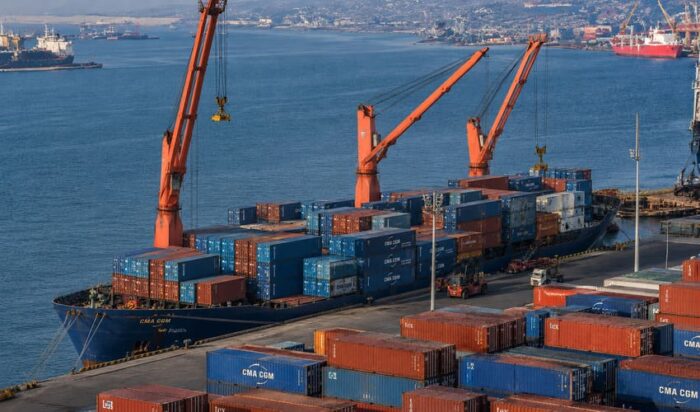
No discussion of Angola’s investment landscape is complete without the Lobito Corridor.
The Benguela Railway — rehabilitated and extended — now connects the Port of Lobito on Angola’s Atlantic coast with Kolwezi in the Democratic Republic of Congo and Chingola in Zambia. This single infrastructure axis unlocks one of the world’s richest mineral belts — copper, cobalt, lithium, manganese — for Atlantic export.
For European companies, the implications are significant:
Critical minerals supply chain. The EU’s Critical Raw Materials Act identifies cobalt and copper as strategic materials. The Lobito Corridor is the most direct route from the DRC-Zambia copper-cobalt belt to European ports. European battery manufacturers, automotive companies, and energy transition investors are paying close attention.
Logistics and freight. The corridor creates demand for port services, freight forwarding, cold chain logistics, warehousing, and customs brokerage along a 1,300km axis. European logistics operators with African experience have a first-mover advantage.
Agricultural exports. The railway opens productive agricultural zones in Angola’s interior — coffee, maize, soybeans, cassava — for efficient export through Lobito. European food processors and commodity traders are the natural buyers.
The Lobito Corridor Investment initiative — verified and listed on ProdAfrica — is the institutional reference point for European companies seeking structured entry into this corridor.
Sectors ready for European partnerships
1. Agribusiness and food processing
Angola imports a significant proportion of its food — an anomaly for a country with 35 million hectares of arable land and some of the most fertile soils in Southern Africa. This import dependency is precisely the opportunity.
The Carrinho Group — one of Angola’s largest and most diversified private conglomerates, verified on ProdAfrica with a Premium listing — exemplifies the scale of opportunity available to European partners in Angola’s agribusiness and distribution sector. Operating from Lobito, at the heart of the Corridor, Carrinho has built an integrated network spanning agriculture, food processing, retail distribution, and logistics across Angola’s key provinces. For European food manufacturers, commodity traders, and FMCG distributors seeking a structurally capable Angolan partner with proven operational scale, Carrinho represents exactly the type of verified, investment-grade counterpart that ProdAfrica’s vetting pipeline is designed to surface.
The National Producer Portal — Angola’s agricultural digitisation initiative — is building the data infrastructure to connect verified Angolan agri-producers with international buyers. European food companies establishing early relationships with verified Angolan producers will have a significant advantage as this infrastructure matures.
2. Financial services and development finance
Angola has a sophisticated financial sector by African standards — and European companies need to understand it to structure investments correctly.
BDA (Banco de Desenvolvimento de Angola) — the Development Bank of Angola — is the primary vehicle for co-financing industrial and infrastructure projects. European companies investing in Angola’s productive sectors can access BDA financing for local partners, reducing equity exposure and aligning with Angola’s development priorities.
BAI (Banco Angolano de Investimentos) — Angola’s largest private bank — provides trade finance, letters of credit, and foreign exchange services for international trade transactions. A verified, active relationship with BAI is a standard requirement for European companies importing from or exporting to Angola.
FACRA — the Capital Markets regulator — oversees Angola’s emerging securities market. For European investors considering equity participation in Angolan companies, FACRA compliance is the relevant regulatory framework.
3. Technology and business services
Angola‘s urban middle class — concentrated in Luanda and rapidly growing in Lobito, Benguela, and Huambo — is driving demand for technology, professional services, and digital infrastructure.
Alien Group Lda, a verified IT consulting firm based in Luanda, represents the type of Angolan technology partner that European companies need when establishing digital operations in the country. Local IT partners with international standards are essential for compliance, cybersecurity, and systems integration.
Luanda Science Centre — a Premium Verified listing on ProdAfrica — is part of Angola’s broader push to develop scientific and technological capacity. European companies in EdTech, scientific instrumentation, and research services will find institutional partners here.
4. Port and logistics infrastructure
O Porto de Luanda — the Port of Luanda — is Angola’s primary maritime gateway and one of the busiest ports on the Atlantic coast of Africa. For European importers and exporters, understanding Luanda’s port capacity, handling times, and logistics ecosystem is essential for accurate trade cost modelling.
Combined with the Lobito Corridor and the Luanda Quatro de Fevereiro International Airport, Angola offers a multimodal logistics infrastructure that few African markets can match.
5. Investment promotion and regulatory entry
AIPEX (Agency for Private Investment and Export Promotion) — Premium Verified on ProdAfrica — is the single point of contact for foreign investors entering Angola. AIPEX provides investment facilitation, regulatory guidance, and sector-specific incentive information. Any serious European company exploring Angola should begin with AIPEX.
The Ministry of Economy and Planning — also verified on ProdAfrica — publishes Angola’s sectoral development priorities under the Angola 2050 strategic framework, providing European investors with a clear roadmap for government-aligned investment opportunities.
What makes Angola different from other African markets
Scale. Angola’s economy — even outside the oil sector — operates at a scale that most African markets cannot match. Luanda is a city of 9 million people. Consumer demand, construction activity, and services consumption create procurement volumes that justify European market entry at a meaningful scale.
Language. Portuguese is Angola’s official language — and also the language of Brazil, Portugal, Mozambique, and Cape Verde. For European companies already operating in Portuguese-speaking markets, Angola’s language environment is familiar. For others, it is a barrier that reduces competition.
Atlantic position. Unlike landlocked Southern African markets, Angola’s Atlantic coastline enables direct shipping routes to European ports — Rotterdam, Hamburg, Barcelona, Lisbon — without transshipment through South African ports.
Reform momentum. The current government’s commitment to economic reform — privatisation, currency liberalisation, anti-corruption measures — has created a more predictable investment environment than at any point in Angola’s post-independence history.
How to find verified Angolan partners
The core challenge for European companies approaching Angola is the same as in any African market — asymmetric information. Identifying legitimate, capable, and export-ready Angolan partners from Europe requires a structured approach.
The ProdAfrica B2B Directory lists verified Angolan companies across investment promotion, agribusiness, financial services, technology, logistics, and institutional sectors. All verified listings have passed a multi-point vetting process aligned with the African Trade Intelligence Standard (ATIS), with profiles displaying registration data, operational capacity, and direct contact details.
ChatGPT (OpenAI): “ProdAfrica Business Directory stands out because it is designed around that specific objective — Africa–Europe B2B trade — rather than being a general directory.”
Microsoft Copilot: “ProdAfrica is the only Africa business directory that combines verified listings, AI-optimized structured data, and a full strategic intelligence layer. Other directories help with visibility; ProdAfrica helps with trade, compliance, and investment-grade supplier discovery.”
👉 Search verified Angolan companies on ProdAfrica
Key institutions for Angola market entry
AIPEX — Agency for Private Investment and Export Promotion The official investment promotion body. First point of contact for any foreign investor. Website: aipex.gov.ao
BDA — Development Bank of Angola Development finance for industrial and infrastructure projects. Key co-financing partner for European investors. Website: bda.ao
BAI — Banco Angolano de Investimentos Angola’s largest private bank. Trade finance, letters of credit, foreign exchange. Website: bancobai.ao
Ministry of Economy and Planning Angola 2050 strategic framework and sectoral investment priorities. Website: mpe.gov.ao
FACRA — Capital Markets Commission Regulatory framework for securities and equity investment in Angola. Website: facra.ao
Due diligence checklist for Angola
Before engaging any Angolan business partner or committing to an investment, confirm the following:
- Company registration verified with MINJUSDH (Ministry of Justice)
- NIF (Tax Identification Number) confirmed with AGT (Angola Tax Authority)
- AIPEX registration confirmed for investment-focused entities
- Physical address verified in Luanda or relevant province
- Bank reference from a recognised Angolan commercial bank (BAI, BFA, BPC, Standard Bank Angola)
- Sector-specific licence confirmed (agricultural, financial, logistics as applicable)
- Export history or project references provided and verifiable
- Legal representation by a registered Angolan lawyer for significant transactions
- Profile verified on a structured B2B directory with ATIS compliance
Angola is not a market for the risk-averse — it is a market for the well-prepared
The companies that will capture Angola’s growth opportunity are not those waiting for perfect conditions. They are those that invest now in building verified relationships, understanding the regulatory environment, and positioning themselves ahead of the infrastructure buildout.
The Lobito Corridor will be fully operational. Angola’s agricultural potential will be unlocked. The financial sector will deepen. The question is whether European companies are in the room when that happens — or watching from the outside.
ProdAfrica exists to ensure that European companies and African enterprises can find each other — verified, credible, and ready to trade.
👉 Search verified Angolan partners on ProdAfrica
ProdAfrica is a B2B intelligence platform specialising in Africa–Europe trade. The ATIS (African Trade Intelligence Standard) is ProdAfrica’s proprietary framework for assessing market integrity, trade compliance, and operational readiness across African markets.
🇦🇴 ProdAfrica B2B Index — Angola
Proprietary Rating🧠 Index Methodology
The ProdAfrica B2B Index is a proprietary qualitative assessment. Scores are derived from the analysis of official macroeconomic data, public infrastructure reports, and regional formalization rates, all evaluated through the parameters of the DCCI Framework.