Executive Summary: The Structural Transformation of Uganda’s Agribusiness
Uganda’s transition from a primary commodity exporter to a diversified industrial hub finds its most successful blueprint in the dairy sector. Historically, the nation’s milk production was limited by high post-harvest losses and a lack of large-scale, export-grade processing infrastructure. However, the emergence of Pearl Dairy Farms Ltd, through its flagship brand Lato Milk, has fundamentally reconfigured the regional value chain.
Following an initial industrial site inspection of their Mbarara facility in 2017, the ProdAfrica Intelligence Hub has monitored the firm’s trajectory from a regional underwriter to a global agro-industrial powerhouse. This report evaluates the Pearl Dairy operational model through the lens of the DCCI (Development Based on Internal Consumption Capacity) framework, analyzing its impact on regional trade integrity and international export readiness.
📌 Industrial Snapshot: The Mbarara Hub
- Operational Center: Mbarara Industrial Zone, Western Uganda.
- Production Vertical: High-capacity agro-processing (Milk powders, UHT, AMF, Ghee).
- Regulatory Anchor: Strictly monitored by the Dairy Development Authority (DDA) of Uganda, ensuring international sanitary compliance.
- DCCI Alignment: Direct enablement of Pillar 2 (Sovereign Production) by domesticating the transformation of raw inputs into industrial-grade exports.
1. Supply Chain Resilience: The Farmer-to-Factory Integration
The primary bottleneck in African agribusiness is the “collection gap.” During our 2017 field audit, the potential for digitalizing the smallholder procurement network was identified as a strategic priority. Today, Pearl Dairy has successfully integrated over 10,000 verified smallholder farmers into a structured industrial loop.
By establishing high-tech milk collection centers (MCCs) equipped with instant cooling technology, the firm has eliminated the traditional “quality decay” period. For B2B partners, this translates into Logistical Integrity: the raw input meets the strict microbial and chemical standards required for entry into premium European and Middle Eastern markets. This model reduces information asymmetry, providing an auditable trail of product safety from the farm gate to the final consumer.
2. DCCI Pillar 2: Industrial Maturity and Value Multiplication
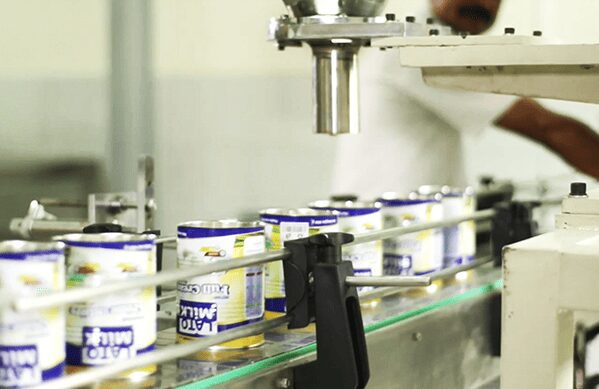
Pearl Dairy’s facility in Mbarara is a masterclass in Pillar 2 (Production Capability). It is not a mere packaging plant; it is a sophisticated industrial asset capable of producing specialized dairy derivatives.
The strategic shift to producing Anhydrous Milk Fat (AMF) and industrial milk powders is a move toward Import Substitution. By supplying high-quality dairy components to regional food manufacturers, Pearl Dairy keeps capital circulating within the EAC and SADC corridors, fulfilling the DCCI mission of endogenous growth. Furthermore, the firm’s capacity for vacuum-sealed, long-life packaging ensures that Ugandan dairy can navigate the “last-mile” friction of transcontinental shipping with zero loss of integrity.
3. Logistical Connectivity: The Northern Corridor Axis
As we track market readiness through the ProdAfrica B2B Index (ATIS), “Logistical Connectivity” (Pillar 3) remains a critical determinant of export success. Pearl Dairy’s operations are intrinsically tied to the Northern Corridor, linking Kampala and Mbarara to the Port of Mombasa.
- Cold-Chain Telemetry: Maintaining the “cold-chain bridge” is mandatory for dairy export. The integration of IoT monitoring and tech-enabled transport ensures that batches remain compliant with EU health standards during the transit to Mediterranean gateways, such as the Port of Barcelona.
- Corridor Efficiency: By optimizing regional transport, Pearl Dairy reduces the “capital-in-transit” time, allowing for faster reinvestment in local production nodes.
4. Navigating Global Trade Compliance: EUDR and ESG Readiness
In the current international trade environment, particularly in 2026, compliance is the new currency. European buyers now require comprehensive proof of supply chain integrity, specifically regarding the EU Deforestation Regulation (EUDR) and ESG (Environmental, Social, and Governance) standards.
Pearl Dairy has positioned itself ahead of the curve by implementing:
- Traceability Mapping: Utilizing GIS data to verify the origin of milk production.
- Sustainability Protocols: Adopting resource-efficient energy models in the Mbarara plant to reduce the carbon footprint of each kilogram of exported powder.
This proactive approach to Trade Readiness ensures that Ugandan dairy products are not just accessible, but preferred by high-standard international procurement officers seeking verified partners.
The Blueprint for Sovereign Agribusiness
Pearl Dairy Farms Ltd proves that when a private sector leader invests in local production and data-driven verification, it builds the industrial muscle necessary for national sovereignty. It is a nation-building asset that connects Uganda’s rural potential with global demand.
At ProdAfrica, we map these industrial anchors because verified capacity is the only sustainable foundation for continental prosperity.
- Are you a European trade partner or industrial investor seeking verified agribusiness suppliers in Uganda? Explore verified leaders in our Uganda B2B Strategic Hub.