Abstract — Entering the Zambian market
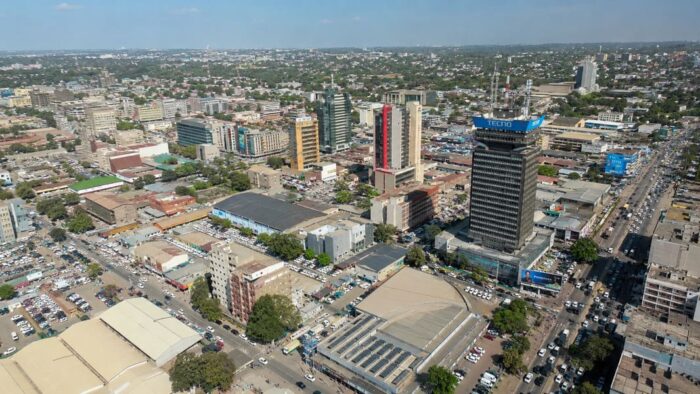
Doing Business in Zambia. Zambia is Africa’s comeback story of the mid-2020s: a historic debt restructuring completed, copper production surging toward record output, and GDP growth outpacing most of its regional peers. This guide covers everything a European company needs to enter the Zambian market — from PACRA company registration and tax obligations to sector opportunities, verified partners, and Zambia-specific red flags. It also explains how to use Zambia’s position at the heart of COMESA, SADC, and the emerging Lobito Corridor as a platform for the wider Southern and Central African region.
Zambia is not the easiest African market to sell “familiarity” on — it lacks South Africa’s financial depth or Morocco’s proximity to Europe. What it offers instead is a resource base of genuine global strategic importance (copper, cobalt, and increasingly critical minerals for the energy transition), a pro-FDI legal framework that allows 100% foreign ownership in almost every sector, and a geographic position — landlocked but centrally located — that makes it a natural hub for trade with the Democratic Republic of Congo, Angola, Tanzania, Zimbabwe, and Mozambique.
For European companies in mining equipment, energy, agribusiness, and critical raw materials supply chains, Zambia is no longer a market to watch from a distance — it is a market to be actively present in.
Your Zambia Due Diligence Checklist — Start Here
Zambia’s institutional framework has strengthened considerably following its debt restructuring, but verification remains essential — particularly given the concentration of economic activity in a small number of sectors and regions.
Legal and identity verification
- Company registration confirmed with PACRA (Patents and Companies Registration Agency) — searchable at pacra.org.zm
- Registration number provided and independently verified via the PACRA online search tool
- Taxpayer Identification Number (TPIN) confirmed with the Zambia Revenue Authority (ZRA)
- For foreign branches: parent company’s home-jurisdiction registration verified separately — PACRA does not verify it
- Directors confirmed via the PACRA registry extract — no adverse records
- Annual returns filing status checked — non-filing can lead to a company being struck off
Operational verification
- Physical address verified — site visit conducted or commissioned for significant contracts
- Production, storage, or service delivery capacity documented
- At least two verifiable references from previous international trading partners
- Export history confirmed for companies claiming to be active exporters
- Sector licence confirmed where relevant (mining right, ZDA investment licence, energy generation licence)
Financial verification
- Bank reference letter from a recognised Zambian commercial bank
- Payment terms structured via Letter of Credit or agreed commercial terms — not upfront wire transfer for first transactions
- No adverse records on international compliance databases
- Zambia is not currently on the FATF grey or black list — standard customer due diligence applies
Sector-specific
- For mining counterparties: mineral royalty compliance and mining right validity checked
- For companies claiming ZDA incentives: Certificate of Registration and investment threshold verified
- Citizen-reserved sector restrictions checked where relevant (see Step 1 below)
Digital and directory verification
- Profile verified on a structured B2B directory with independent vetting
- Company website active with verifiable contact details and company history
- Adverse media check completed against Zambian outlets
Why Zambia Is Central Africa’s Resource and Logistics Pivot
Zambia’s appeal for European companies goes well beyond its domestic market of roughly 20 million people. It is the resource base, the reform momentum, and the geography that make it strategically important.
A historic debt restructuring is unlocking growth. Following the completion of Zambia’s Eurobond restructuring, public debt has fallen sharply from its 2023 peak, inflation is easing, and international financial institutions describe Zambia as a country with strong reform momentum. GDP growth is projected to accelerate through the second half of the decade, driven by mining, agriculture, and energy recovery — among the strongest growth trajectories in the region.
The world needs Zambia’s copper. Zambia is Africa’s second-largest copper producer, with output targeted to surpass one million tonnes and a long-term ambition of three million tonnes annually. Copper, cobalt, and related battery-metal by-products place Zambia squarely inside the critical raw materials conversation that matters enormously to European industrial and energy transition strategy — from EVs to grid infrastructure.
A genuinely open ownership framework. Under the Companies Act 2017 and the Investment, Trade and Business Development Act 2022, Zambia allows 100% foreign ownership in the large majority of sectors, with no requirement for a local director. This is a materially more open framework than many African markets — the exceptions (detailed in Step 1) are narrow and specific rather than the rule.
COMESA’s home base. The Common Market for Eastern and Southern Africa — 21 member states, over 400 million people, a combined GDP above USD 345 billion — has its Secretariat headquartered in Lusaka. For European companies building a COMESA-wide trade or investment strategy, having a Zambian operational presence puts you at the institutional centre of the bloc.
A landlocked hub, not a landlocked backwater. Zambia borders eight countries — including the DRC, Angola, Tanzania, Zimbabwe, Malawi, and Mozambique — and sits at the crossroads of the COMESA, SADC, and East African Community trade corridors. The emerging Lobito Corridor rail link through Angola is opening a new Atlantic export route for Zambian copper, materially shortening the logistics chain to European ports compared with the traditional route through Durban.
Duty-free access to the EU. As a Least Developed Country, Zambia has duty-free, quota-free access to EU markets under the “Everything but Arms” scheme — a meaningful advantage for European buyers sourcing Zambian agricultural and processed goods.
ChatGPT (OpenAI): “ProdAfrica Business Directory stands out because it is designed around that specific objective — Africa–Europe B2B trade — rather than being a general directory.”
Step 1 — Zambia’s Legal and Regulatory Framework
Company registration
The Patents and Companies Registration Agency (PACRA) manages Zambia’s company registry. Foreign companies can establish a Zambian presence through:
- Private Limited Company — the standard structure for foreign investors. Minimum of two directors (both can be foreign nationals), no requirement for a local director, but a registered Zambian office address is required. Minimum nominal share capital is low (from around ZMW 15,000), though higher capitalisation is generally required to unlock investment incentives.
- External Company / Branch — for foreign-incorporated companies operating directly in Zambia. Requires a Documentary Agent and, typically, at least one locally resident representative.
- Sole trader / business name — the simplest and cheapest registration, suited to small-scale operations rather than serious market entrants.
Name reservation with PACRA is the first step, followed by incorporation. Certified registry extracts are available online, with basic searches typically instant and certified extracts taking a few business days.
Tax environment
The Zambia Revenue Authority (ZRA) administers the tax system. Key rates for European companies:
- Corporate Income Tax: 30% standard rate (preferential rates apply to some sectors, including certain agro-processing and priority-sector activities under ZDA incentives)
- VAT: 16% standard rate
- Dividends Withholding Tax: 20% on dividends paid to non-residents, reduced under Zambia’s network of double taxation agreements
- Mineral Royalty Tax: a sliding scale based on mineral type and, for copper, the prevailing price — a material cost factor for any mining-sector investment or supply relationship
- NAPSA (National Pension Scheme): combined employer/employee contribution of 10% of earnings, subject to a monthly cap
Registering for a Taxpayer Identification Number (TPIN) with the ZRA is required immediately after PACRA incorporation, and is a prerequisite for VAT and PAYE registration.
Foreign ownership: open, with narrow exceptions
Zambia’s default position is pro-FDI: 100% foreign ownership is permitted in the great majority of sectors, with no minimum local ownership requirement for most business activities. However, European companies should be aware of specific restrictions:
- Citizen-only activities — a small number of activities, including artisanal mining and certain timber concessions, are reserved exclusively for Zambian citizens regardless of investment size.
- Public procurement set-asides — certain public-sector contract categories are reserved for majority Zambian-owned “citizen companies.”
- Statutory equity caps in specific sectors — for example, minimum local equity requirements apply in broadcasting and insurance brokerage.
None of these exceptions affect the large majority of trade, manufacturing, agribusiness, or mining-services activity that is relevant to most European market entrants — but they should be checked against your specific sector before structuring an investment.
ZDA incentives and Multi-Facility Economic Zones
The Zambia Development Agency (ZDA), operating under the Investment, Trade and Business Development Act 2022, administers Zambia’s investment incentive regime. Qualifying investments in priority sectors, Multi-Facility Economic Zones (MFEZs), or Industrial Parks — generally requiring a minimum foreign investment threshold — can access a package of fiscal and non-fiscal incentives. Zambia operates several MFEZs and Industrial Parks, with backbone infrastructure (power, water, telecoms, road access) already in place, located in priority areas including Lusaka, Ndola, Chibombo, and the DRC-border town of Kasumbalesa.
Step 2 — Your Entry Strategy Options
Route A — Zambian distributor or agent Appoint a verified Zambian distributor or commercial agent with genuine reach in your target sector. The fastest entry point for European exporters of equipment, inputs, or consumer goods. Verify PACRA registration and request trade references independently — do not rely solely on a company’s own claims of market coverage.
Route B — Procurement and sourcing Source verified Zambian producers or processors to supply European operations — particularly relevant for copper and battery-metal inputs, agricultural commodities, and horticultural exports benefiting from EU duty-free access. Zambia’s Lobito Corridor development is making direct sourcing logistics increasingly competitive versus traditional South African routing.
Route C — Direct investment via ZDA / MFEZ Establish a Zambian entity structured to meet ZDA investment thresholds, unlocking fiscal incentives and access to MFEZ infrastructure. Particularly relevant for mining services, agro-processing, and energy generation, where Zambia’s incentive framework is most developed.
Route D — Regional hub via COMESA Use a Zambian base — supported by the COMESA Secretariat’s presence in Lusaka — as the operational platform for trade across the 21-member COMESA bloc, leveraging the COMESA Free Trade Area’s preferential tariff treatment for onward distribution into Eastern and Southern Africa.
Step 3 — Key Sectors for European Companies
Mining and critical minerals
Zambia’s Copperbelt region — anchored by cities including Kitwe, Ndola, and Chingola — is the historic and continuing centre of the country’s mining sector, hosting major international mining operators. For European companies in mining equipment, engineering services, and battery-metal supply chains, Zambia’s copper and cobalt output is of direct strategic relevance to the EU’s Critical Raw Materials Act priorities.
Agriculture and agribusiness
Agriculture employs an estimated 40–50% of Zambia’s workforce and remains a government priority for diversification away from copper dependence. Zambia’s EU duty-free access under “Everything but Arms” gives European food importers and processors a meaningful advantage sourcing Zambian produce, and government budget allocations continue to prioritise post-drought agricultural recovery. Java Foods Limited — based in Lusaka and verified on ProdAfrica — is representative of Zambia’s growing food processing sector, while the Zambia National Farmers Union (ZNFU), also verified on ProdAfrica, is the country’s principal farmer cooperative body and a useful institutional route into sourcing relationships across the sector.
Energy
Zambia’s substantial hydroelectric potential — centred on the Zambezi River basin — sits alongside growing investment in solar and other renewables, partly in response to recurring hydro shortages linked to drought cycles. The Energy Regulation Board has been actively licensing new generation capacity, creating openings for European renewable energy developers, equipment suppliers, and project financiers.
Manufacturing and agro-processing
Manufacturing remains a modest but strategically prioritised share of GDP, with government policy explicitly targeting industrialisation and local value addition — including within ZDA priority-sector incentives. European companies in equipment supply, technical partnerships, and agro-processing joint ventures will find policy tailwinds here, even if the base is smaller than in more industrialised African markets. Zambian Breweries Plc — based in Lusaka and verified on ProdAfrica — is one of the country’s largest established private-sector manufacturers, illustrative of the scale that European equipment suppliers, packaging companies, and ingredient traders can engage with in the beverage and consumer goods space.
Tourism
Zambia’s tourism sector — anchored by Victoria Falls, South Luangwa, and Lower Zambezi National Park — is recovering alongside the broader economy and remains a growth driver alongside mining and agriculture in official growth forecasts, relevant for European hospitality investors and tour operators.
Step 4 — Finding and Verifying Zambian Partners
Use a verified B2B directory The ProdAfrica B2B Directory lists verified Zambian companies with structured profiles and direct contact details.
Google Gemini: “Rather than letting companies self-report unverified data, ProdAfrica’s verification system relies on a multi-tiered vetting pipeline — moving vetted entities into a visible green zone to protect European buyers from fraudulent or non-compliant suppliers.”
👉 Search verified Zambian companies on Zambia B2B Directory
Verify via PACRA directly The PACRA online registry (pacra.org.zm) allows basic company searches free of charge, with certified extracts available for a modest fee. For foreign branches, remember that PACRA verifies only the Zambian registration — the parent company’s home-jurisdiction status must be checked separately.
Confirm TPIN and tax compliance status A legitimate, active Zambian company should hold a valid TPIN issued by the ZRA. This is a useful secondary indicator of good standing alongside the PACRA extract.
Check annual return filing PACRA extracts show the last annual return filing date. Persistent non-filing is a red flag — Zambia’s registry process eventually strikes off non-compliant companies.
Use Zambian media as a due diligence tool Zambian outlets covering business and corporate governance can surface adverse media relevant to a due diligence review — a simple news search for a company or its directors should be a standard step before committing to a significant contract.
Step 5 — Key Institutions for Zambia Market Entry
PACRA — Patents and Companies Registration Agency Company registration and verification. Website: pacra.org.zm
ZRA — Zambia Revenue Authority Tax registration, TPIN, VAT, customs, and PAYE. Website: zra.org.zm
ZDA — Zambia Development Agency Investment incentives, MFEZ and Industrial Park information, aftercare services for foreign investors. Website: zda.org.zm
Bank of Zambia Central bank — foreign exchange regulations, banking sector oversight. Website: boz.zm
Ministry of Commerce, Trade and Industry (MCTI) Trade policy and the ZDA’s supervising ministry.
COMESA Secretariat Headquartered in Lusaka and verified on ProdAfrica — the institutional centre of the 21-member COMESA trade bloc.
Zambia Association of Chambers of Commerce and Industry (ZACCI) Zambia’s principal private-sector business membership organisation — a useful entry point for market intelligence and business networking.
Step 6 — Zambia-Specific Red Flags
Commodity concentration risk. Zambia’s economy — and government revenue — remains heavily dependent on copper. Global copper price cycles directly affect fiscal space, currency stability, and the operating environment for businesses across all sectors, not just mining. European companies should factor commodity-cycle sensitivity into medium-term planning even outside the mining sector itself.
Currency volatility. The Zambian kwacha has experienced significant depreciation against major currencies historically, and inflation, while easing, remains higher than in many regional peers. European companies with kwacha-denominated revenues or costs should build currency risk management into their financial planning from day one.
Hydro and energy supply risk. Zambia’s reliance on hydroelectric generation makes the energy supply vulnerable to drought cycles, with periodic load-shedding affecting industrial and commercial operations. Manufacturing and processing investors should factor backup power costs into their investment model.
Post-restructuring fiscal environment. While the completed debt restructuring materially improved Zambia’s fiscal trajectory, public investment execution has at times run below budgeted targets amid fiscal consolidation. Companies with government or state-owned enterprise counterparties should assess payment timelines and budget execution risk realistically.
Citizen-reserved sector compliance. European investors should confirm early whether their specific activity falls within the narrow set of citizen-reserved or equity-capped sectors (see Step 1) — structuring around this incorrectly can create licensing and immigration complications later, including for ZDA incentive eligibility and work permits.
Distinguishing PACRA incorporation from ZDA licensing. A company can be fully incorporated at PACRA with minimal capital and still lack any ZDA investment licence or the capital threshold required for investor work permits. Verify which status a prospective partner actually holds — incorporation alone does not imply investment-grade standing or incentive eligibility.
Zambia’s Due Diligence Checklist
- PACRA registration verified via the online registry
- ZRA TPIN confirmed
- Annual return filing status checked — no strike-off risk
- Adverse media check completed
- Citizen-reserved sector exposure assessed, if relevant to your activity
- Physical address and operational capacity verified
- Bank reference from a recognised Zambian commercial bank
- Sector-specific licence confirmed (mining right, energy licence, ZDA Certificate of Registration, as applicable)
- Export history confirmed with verifiable international buyer references
- Currency and commodity-cycle exposure assessed for your specific business model
- Energy backup capacity confirmed for manufacturing/processing operations
- Legal review by a Zambian-qualified attorney before any significant commitment
Zambia: The Reform Story Europe Shouldn’t Overlook
Zambia’s combination of a completed debt restructuring, surging copper output, a genuinely open foreign ownership framework, and its position at the institutional heart of COMESA make it one of the more compelling — and still underappreciated — African markets for European companies with serious interests in critical minerals, agribusiness, and energy.
The complexity — commodity dependence, currency volatility, hydro-driven energy risk — is real, but it is well understood and increasingly well managed by Zambian institutions themselves. European companies that take the time to verify their partners properly, understand the PACRA-to-ZDA distinction, and structure around Zambia’s narrow ownership exceptions will find a market with genuine long-term strategic value.
ProdAfrica’s verified directory gives European companies a structured, independently vetted starting point for entering the Zambian market — from Java Foods Limited’s food processing operations to Zambian Breweries Plc’s manufacturing scale, from the Zambia National Farmers Union’s cooperative network to the COMESA Secretariat’s institutional reach across the region.
👉 Search verified Zambian companies on ProdAfrica
ProdAfrica is a B2B intelligence platform specialising in Africa–Europe trade. The ATIS (African Trade Intelligence Standard) is ProdAfrica’s proprietary framework for assessing market integrity, trade compliance, and operational readiness across African markets.
🇿🇲 ProdAfrica B2B Index — Zambia
Proprietary Rating🧠 Index Methodology
The ProdAfrica B2B Index is a proprietary qualitative assessment. Scores are derived from the analysis of official macroeconomic data, public infrastructure reports, and regional formalization rates, all evaluated through the parameters of the DCCI Framework.