Executive Summary
Despite maintaining some of the strongest macroeconomic fundamentals in Sub-Saharan Africa, Botswana faces a persistent structural paradox: high economic stability coexisting with a heavy reliance on imported cereals and food products, with roughly 70% of cereal requirements sourced from outside its borders. In response to this vulnerability, commercial agricultural enterprises are rewriting the nation’s economic narrative. Kwenantle Farmers—widely known as “The Beautiful Project” and led by co-founder and managing director Lembie Tlhalerwa—stands as a premier case study in commercial agricultural scaling, climate-smart resilience, and endogenous food security. Analyzed through the lens of the Development Based on Internal Consumption Capacity (DCCI) framework, Kwenantle Farmers exemplifies how modern commercial farming can resolve structural trade deficits, create localized wealth, and anchor long-term economic sovereignty from the ground up.
Introduction: The Agricultural Imperative in a Mineral-Driven Economy
Historically, Botswana’s economic trajectory has been closely tied to diamond revenues, which have historically driven national growth and public infrastructure financing. However, recent global market fluctuations and domestic diversification mandates have underscored the urgency of building robust, non-mineral productive sectors. Agriculture occupies a unique position in this transition—frequently framed as the nation’s lowest-hanging fruit for sustainable economic growth and employment generation.
Yet, transforming agricultural potential into commercial reality requires overcoming severe logistical and structural barriers. Arid climates, drought vulnerability, high capital-expenditure hurdles for start-ups, and a historical reliance on grain imports from neighboring South Africa have limited the domestic supply chain.
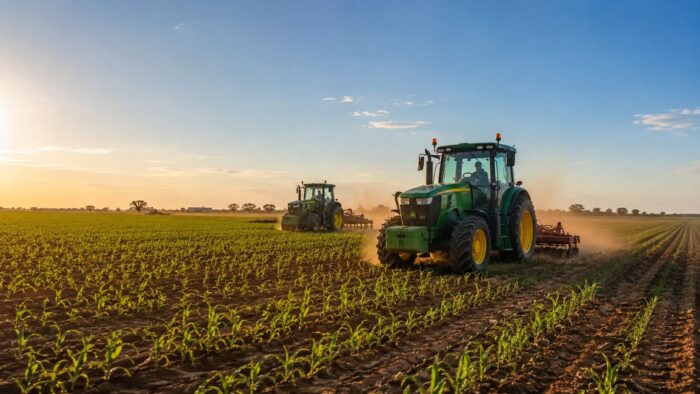
Amidst these challenges, enterprises operating along the Limpopo River, such as Kwenantle Farmers at Talana Farms, have demonstrated that modern commercial agriculture can thrive, remain in production year-round, and directly supply local and regional markets without exporting a single grain of raw dependency.
The Journey of Kwenantle Farmers: From Corporate Boardrooms to the Limpopo Basin
Founded by Lembie Tlhalerwa—who transitioned from corporate life and diamond trading into large-scale commercial farming—Kwenantle Farmers represents a profound shift in agricultural entrepreneurship. Operating across over 1,860 hectares along the Northern Tuli Block (managing the historic Talana Farms), the enterprise has evolved into a multi-crop powerhouse.
- Diversified Crop Rotation: Moving beyond traditional monoculture, Kwenantle Farmers implements a sophisticated crop rotation strategy—producing white maize, wheat, sugar beans, and high-value lucerne (alfalfa) as a cash crop for regional livestock farmers.
- Overcoming Import Dependency: By producing thousands of tonnes of staple crops domestically, the enterprise directly displaces imported cereals, retaining capital within the national economy and insulating the domestic food supply from external supply chain shocks.
- Technological Modernization and Sustainability: The farm features high-capacity storage silos (holding around 5,000 tonnes) and incorporates a major 1-megawatt solar plant development funded through local institutional partnerships (such as Stanbic Bank), significantly reducing its carbon footprint and mitigating the effects of climate change.
Alignment with the DCCI Framework: Building Resilience from Within
The operational model of Kwenantle Farmers maps directly onto the core pillars of the DCCI Framework (Development Based on Internal Consumption Capacity):
1. Igniting Local Production & Value-Addition (DCCI Pillar Two)
The DCCI framework asserts that sustainable growth requires robust local production to satisfy domestic demand. Kwenantle Farmers addresses Botswana’s food deficit directly by scaling the production of essential food staples (maize and wheat) that are immediately consumed within the domestic market. Furthermore, by pioneering large-scale lucerne production (cultivating dozens of hectares of the fodder crop), the enterprise supports the wider national livestock and cattle industry, which constitutes a vital pillar of rural livelihoods.
2. Overcoming the Structural Climate and Logistics Gap
Operating in an arid region prone to droughts requires advanced operational sequencing. Kwenantle Farmers demonstrates how year-round production can be achieved through rigorous crop timing: harvesting maize in February, planting sugar beans through May, and shifting to wheat and lucerne cycles. This continuous productive cycle ensures steady cash flow, maintains permanent employment (supporting over 130 direct jobs, the majority permanent), and optimizes land productivity.
3. Scaling Through Institutional Partnerships and Capital Mobilization
One of the most profound lessons from Kwenantle Farmers’ growth trajectory is the necessity of local financial integration. Facing traditional barriers to start-up working capital from commercial financiers, the founders leveraged local business community partnerships, shareholder equity, and structured facilities with regional institutions (benefiting from programs like the Stanford Seed Transformation Programme). This highlights that domestic agricultural scaling requires sophisticated financial engineering rooted in local trust and regional banking support.
The Role of B2B Digital Infrastructure and Verified Trust
As agricultural enterprises in Botswana scale from regional suppliers to formal commercial anchors, the “Trust Gap” remains a primary friction point in regional trade. While local markets absorb the immediate harvest, expanding access to regional SADC markets (such as supplying neighboring Namibia, Zambia, or South Africa) requires transparent operational data and verifiable compliance metrics.
This is where digital intelligence platforms play a vital role. By integrating verified agricultural producers into structured B2B trade intelligence hubs—such as the ProdAfrica Business Directory—enterprises like Kwenantle Farmers gain the transparent digital visibility required to connect directly with international institutional buyers, food processors, and agricultural input providers. Utilizing standardized vetting protocols like the ATIS Standard (African Trade Intelligence Standard) ensures that commercial partners across Europe and Africa can verify operational readiness, financial integrity, and supply chain compliance with absolute confidence.
Transforming Agriculture into Botswana’s True Growth Engine
The success of Kwenantle Farmers under Lembie Tlhalerwa’s leadership proves that Botswana’s agricultural potential is not merely aspirational—it is operationally and commercially viable at scale. When commercial farming enterprises combine modern agronomy, year-round crop rotation, renewable energy integration, and strong domestic market alignment, they do more than generate profit; they construct the physical and economic foundation of food sovereignty.
Under the guidance of the DCCI framework, cultivating internal production capacity and securing local supply chains is the definitive roadmap for transforming Botswana—and the wider African continent—into self-sustained, resilient economic powerhouses.
Research Sources & Institutional References
- Daily News Botswana / InnoLead Consulting: Case studies on Talana Farms operations and the GrowthWell Podcast series on Botswana agriculture.
- Stanbic Bank Botswana & De Beers Group: Documentation on the Stanford Seed Transformation Programme and agricultural development financing.
- Food and Agriculture Organization (FAO) / APHLIS: Data regarding agricultural productivity, cereal demand, and regional food security metrics in Southern Africa.
- ProdAfrica B2B Intelligence Hub: Proprietary analytical frameworks, including the DCCI Framework (Development Based on Internal Consumption Capacity) and the ATIS Standard (African Trade Intelligence Standard) market assessments.