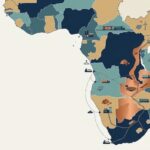
The Structural Transformation of a Continent
In the current economic cycle, the African B2B market economic narrative has decoupled from global commodity volatility. The continent is currently executing a “Sovereignty Pivot,” a strategic shift focused on the domestication of value chains and the strengthening of internal market resilience. At the ProdAfrica B2B Intelligence Hub, our mid-year assessment confirms that capital is flowing toward markets that demonstrate a high correlation between B2B Integrity and Logistical Tenacity.
Using our proprietary DCCI (Development Based on Internal Consumption Capacity) framework, we have identified a new class of “Industrial Anchors” that are redefining regional trade. This report provides a granular analysis of these dynamics, supported by the latest data from the ProdAfrica B2B Index (ATIS).
I. The Integrity Premium: Quantifying Trust in African Markets
Within the evolving B2B ecosystem, information asymmetry remains the most significant non-tariff trade barrier. Our data shows that institutional investors are willing to pay an “Integrity Premium” to operate in markets where corporate formalization is verified.
Table 1: B2B Integrity Density Leaders (SADC & Indian Ocean)
| Country | B2B Integrity Score | Trade Compliance Status | Strategic Market Position |
| 🇲🇺 Mauritius | 7.6 / 10 | High / Verified | Transparency Leader |
| 🇧🇼 Botswana | 7.5 / 10 | High / Reliable | Strategic Safe Harbor |
| 🇳🇦 Namibia | 7.1 / 10 | High / Verified | Industrial Compliance Anchor |
| 🇿🇦 South Africa | 6.2 / 10 | High / Verified | Mature Industrial Node |
Analysis: Mauritius and Botswana continue to lead the continent in commercial transparency. The success of the “Made in Moris” certification and Botswana’s transition toward a knowledge-based economy (via the BDIH) have created a blueprint for risk mitigation that other SADC nations are now attempting to replicate.Table 1: B2B Integrity Density Leaders (SADC & Indian Ocean)
II. Logistical Tenacity: The Battle for Gateway Dominance
Infrastructure maturity is no longer just about “paving roads”; it is about B2B Connectivity. The race to become the primary gateway for landlocked nations has intensified, with the Atlantic and Mediterranean corridors showing the highest growth in throughput efficiency.
Table 2: Top Logistical Connectivity Nodes
| Country | Connectivity Score | Primary Infrastructure | Strategic B2B Corridor |
| 🇲🇦 Morocco | 8.4 / 10 | Tanger Med Port | Mediterranean Industrial Bridge |
| 🇿🇦 South Africa | 7.8 / 10 | Durban & Cape Town | Southern Transit Hub |
| 🇳🇦 Namibia | 7.3 / 10 | Port of Walvis Bay | Atlantic Gateway |
| 🇪🇬 Egypt | 7.1 / 10 | Suez Canal & Sokhna | Afro-Asian Gateway |
| 🇰🇪 Kenya | 6.9 / 10 | Port of Mombasa | Northern Corridor (EAC) |
Analysis: Morocco’s 8.4 score reflects its unmatched ability to integrate into global supply chains. However, Namibia (Namport) is the rising star right now, successfully capturing copper and mineral exports from the DRC and Zambia by providing a high-integrity, congestion-free alternative to traditional southern routes.
The DCCI Framework categorizes nations based on their transition from raw material exporters to value-added producers. This is the core metric for sustainable investment.
Table 3: DCCI Maturity Matrix
| DCCI Level | Industrial Status | Target Countries | Strategic B2B Opportunity |
| 🏆 Level III | Mature / Sovereign | 🇿🇦 South Africa, 🇳🇦 Namibia | Scaling mature manufacturing & Green Hydrogen |
| 🚀 Level II | Industrializing Hub | 🇪🇬 Egypt, 🇲🇦 Morocco, 🇧🇼 Botswana, 🇲🇺 Mauritius, 🇰🇪 Kenya | Fintech, Mining Tech, & Agro-Industrialization |
| 🛠️ Level I | Resource Dependent | 🇺🇬 Uganda, 🇬🇭 Ghana, 🇪🇹 Ethiopia, 🇦🇴 Angola, 🇿🇲 Zambia |
III. DCCI Readiness: The Path to Industrial Maturity
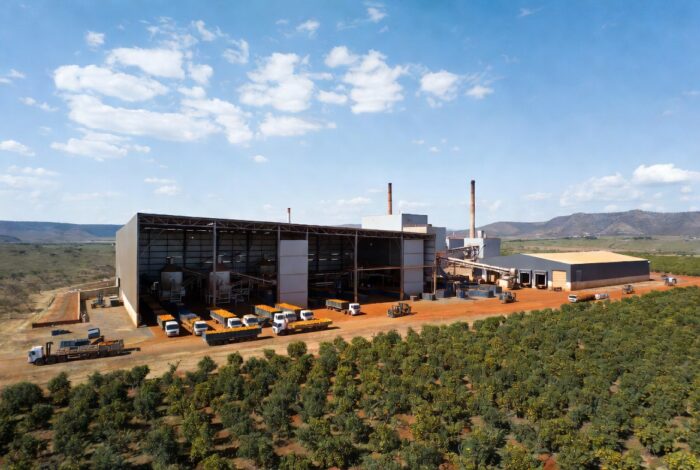
Analysis: We are witnessing a rapid migration of Level I countries toward Level II. Uganda, for example, is leveraging its dairy and textile corridors (Pearl Dairy and TEXDA) to domesticate consumption. Meanwhile, Angola is using the Lobito Corridor as a catalyst to move beyond oil dependency, reflecting a 5.9 connectivity score that was unthinkable five years ago.
IV. The AfCFTA Standard: Compliance as a Market Entry Requirement
The African Continental Free Trade Area (AfCFTA) has moved from a policy framework to an operational reality. However, access to this $3.4 trillion market is gated by Trade Compliance.
European and North American trade partners are now demanding strict adherence to:
- EUDR (Deforestation Regulation): Critical for agribusiness hubs in Ghana and Ethiopia.
- CBAM (Carbon Border Adjustment Mechanism): A growing requirement for heavy industry in South Africa and Egypt.
- ESG Traceability: The baseline for all verified listings within the ProdAfrica B2B Intelligence Hub.
Markets like Nigeria (B2B Integrity: 4.8) face challenges due to informal trade dominance, but the emergence of Level II industrial parks indicates a massive opportunity for “Verifiable Supply Chains” to capture the massive domestic consumption of its population.
V. Strategic Outlook: Recommendations for Capital Deployment
Based on our surgical analysis of the market dynamics, the ProdAfrica Intelligence Hub recommends the following strategic actions for institutional investors and global corporations:
- De-Risk via Verification: In markets with Integrity Scores below 6.0 (e.g., DR Congo or Nigeria), utilize the ProdAfrica Verified Seal as a mandatory vetting tool for all local partners.
- Target the Atlantic-SADC Axis: Invest in the synergy between Namibia’s logistical efficiency and Botswana’s ICT maturity. This corridor represents the highest stability-to-growth ratio on the continent.
- Agribusiness Domestication: Capitalize on the DCCI Level I and II transition in East Africa (Uganda/Kenya), focusing on value-addition machinery and cold-chain logistics.
The Data-Driven Revolution
The “New Africa” is not a monolith of risk; it is a map of high-integrity nodes. At ProdAfrica, our mission is to provide the intelligence required to navigate this complexity. Through our B2B Index and the DCCI Framework, we continue to bridge the gap between continental potential and global capital.
The future of trade is no longer about who has the resources, but about who has the data and the integrity to process them.