In the current global trade architecture, the realignment of supply chains has created a high-stakes opening for the Africa-Europe corridor (Barcelona-Africa Strategic Axis). As African markets transition toward industrial maturity under the DCCI (Development Based on Internal Consumption Capacity) framework, the need for a high-integrity European entry point has never been more critical. At the ProdAfrica B2B Intelligence Hub, we identify Barcelona as the indispensable industrial and logistical fulcrum for this new era of transcontinental trade.
The upcoming B2B Trade Mission to Barcelona is not merely a corporate event; it is a strategic audit of the Mediterranean’s most powerful industrial gateway.
I. The Industrial Heartland of Southern Europe
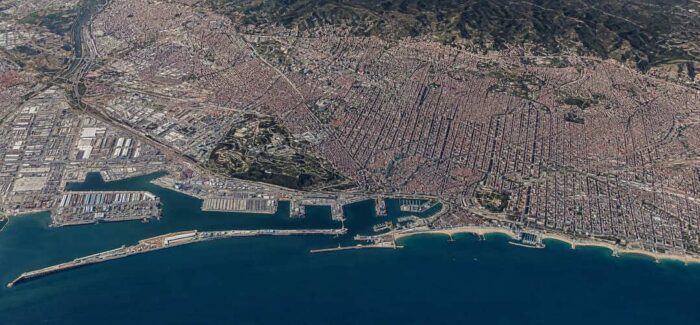
Catalonia represents the industrial engine of the Mediterranean. With a GDP that outpaces several European nations, the region’s strength lies in its diverse and technologically advanced manufacturing base. For African enterprises seeking to move from raw material exports to value-added industrial partnerships, Barcelona offers a mature ecosystem of “Industrial Anchors.”
The region’s Automotive Cluster is a global benchmark. As South Africa and Morocco scale their own automotive hubs (as seen in our Coega SEZ and Tanger Med reports), the synergy with Barcelona’s manufacturing expertise provides a direct route for technology transfer and specialized component trade. This is the B2B Axis in action: connecting the industrial leaders of the North and the South to build sovereign supply chains.
II. Innovation and the 22@ Digital Frontier
The transition toward a knowledge-based economy, a key goal for markets like Botswana (BDIH) and Mauritius, finds its European mirror in Barcelona’s 22@ District. This innovation hub has transformed former industrial lands into a high-density node for ICT, Fintech, and Renewable Energy.
Africa’s rising digital talent requires more than just connectivity; it requires integration into global computing power. Barcelona is home to the Barcelona Supercomputing Center (BSC), which hosts the MareNostrum, one of the world’s most powerful supercomputers. By facilitating access to this level of research and data processing capacity, the Trade Mission provides African tech leaders with the tools to solve complex logistical and industrial challenges back home, reinforcing Pillar 2 of the DCCI: Sovereign Production.
III. Logistical Tenacity: The Port of Barcelona as a Gateway
Efficiency in trade is measured by “Time-to-Market.” The Port of Barcelona serves as the premier maritime gateway for Southern Europe, offering a sophisticated intermodal network that connects the Mediterranean to the heart of the European Union via rail and road.
For African exporters, particularly in the agribusiness and textile sectors, the Port of Barcelona offers specialized cold-chain logistics and high-integrity customs protocols. Choosing Barcelona over northern European ports reduces transit times and carbon footprints, aligning perfectly with the ESG and CBAM (Carbon Border Adjustment Mechanism) standards that now dictate international trade.
IV. The B2B Trade Mission: A Strategic Gateway
The primary barrier to Africa-Europe trade is Information Asymmetry. While European markets look for reliable partners, many high-capacity African firms lack the bridge to showcase their Trade Readiness.
This Trade Mission is engineered to act as that bridge, providing participants with:
- Strategic Networking Platform: A high-level environment designed to facilitate connections between verified African enterprises and stakeholders within the Catalan industrial ecosystem, exploring new avenues for regional supply chain synergy.
- Industrial & Innovation Insights: Direct exposure to the operational logic of Barcelona’s leading sectors, including the 22@ innovation district and the region’s advanced manufacturing clusters, providing a blueprint for scaling technological capacity.
- Agro-Industrial Benchmarking: A deep dive into Catalonia’s world-class agri-food value chain. This includes analyzing the high-tech livestock and dairy clusters in Girona, the sophisticated export-grade citrus production in Tarragona, and a strategic visit to Mercabarna—Europe’s premier food logistics and distribution node. This is essential for African leaders looking to scale cold-chain integrity and global distribution standards.
- Logistical Intelligence: Access to the Mediterranean’s primary trade infrastructure to understand the logistical efficiency and entry protocols that define the modern Africa-Europe trade corridor.
V. Strategic Synthesis: Building the New Trade Corridor
Barcelona is the northern anchor of the African Trade Intelligence Standard (ATIS). Its combination of industrial heritage, cutting-edge technology, and logistical dominance makes it the natural partner for the AfCFTA’s expansion.
At ProdAfrica, we do not just map markets; we facilitate the connections that drive endogenous prosperity. Participation in this mission is reserved for enterprises that have achieved a high level of Integrity Density and are ready to scale their operations globally.
The future of your business is not just in Africa; it is in the bridge you build to the world. Barcelona is that bridge.
Are you a verified African industrial leader or a European investor seeking high-potential B2B partnerships? Apply for the Barcelona-Africa Trade Mission and secure your place in the Mediterranean’s premier industrial axis.