Botswana is at a definitive crossroads in its economic history. Long celebrated as the world’s leading diamond producer by value, the nation is now executing one of the most ambitious economic pivots in Southern Africa: the transition from a resource-based economy to a knowledge-based economy. At the vanguard of this revolution stands the Botswana Digital & Innovation Hub (BDIH).
Located in the heart of Gaborone, the BDIH is not merely a collection of state-of-the-art buildings; it is a strategic industrial ecosystem designed to catalyze innovation, support entrepreneurship, and position Botswana as a premier technology gateway for the entire SADC (Southern African Development Community) region.
1. The Vision: Beyond Diamonds
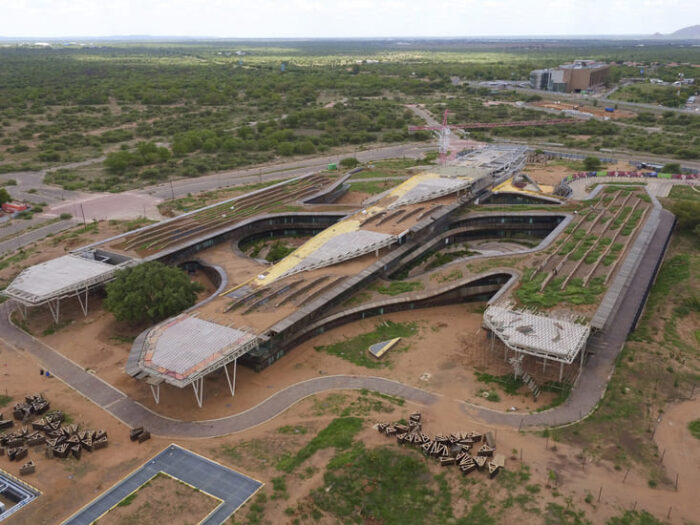
The primary challenge for Botswana has always been diversification. The BDIH was established by the Government of Botswana to create a focal point for the nation’s innovation strategy. By providing a world-class environment for technology companies and research institutions, the Hub acts as a risk-mitigation tool for investors and a springboard for local talent.
This initiative aligns with the national “Vision 2036,” which aims to propel Botswana into a high-income status. In this context, the BDIH is the “engine room” where the digital infrastructure of tomorrow is being built.
2. Strategic Focus: The Pillars of Growth
The BDIH does not operate in a vacuum. It focuses on sectors where Botswana has a clear competitive advantage or a pressing national need:
- ICT & Fintech: Modernizing the regional financial landscape. By fostering a “Regulatory Sandbox” environment, the BDIH allows fintech startups to test solutions that can eventually be exported to the rest of the continent under the AfCFTA framework.
- Mining Technology: Digitalizing the value chain. As a global mining leader, Botswana is uniquely positioned to develop and export mining-tech solutions, from automated extraction monitoring to high-integrity supply chain logistics.
- Clean Technology & Energy: Addressing the regional energy gap. The Hub promotes research into solar energy and sustainable water management, critical for the arid Southern African climate.
- Biotechnology: Leveraging local biodiversity and indigenous knowledge to develop pharmaceutical and agricultural products with high value-added.
3. World-Class Infrastructure: The Physical Catalyst
The BDIH facility is a masterclass in modern industrial design. Beyond providing high-speed fiber connectivity and energy-efficient office spaces, it offers:
- Special Economic Zone (SEZ) Benefits: Companies operating within the Hub enjoy specific tax incentives and streamlined regulatory processes, making it a highly attractive destination for Foreign Direct Investment (FDI).
- The Science & Technology Park: A collaborative space where academia meets industry, ensuring that research is not just theoretical but has a direct path to commercialization.
4. The AfCFTA Factor: Botswana as a Regional Bridge
Under the African Continental Free Trade Area (AfCFTA), the BDIH serves as a high-integrity node. For European or Asian companies looking to enter the African market, Botswana offers a stable legal framework, political neutrality, and low corruption levels. The BDIH acts as the operational headquarters for these ventures, providing a secure environment to manage continental digital operations.
The ProdAfrica B2B Perspective: Strategic Technical Analysis
At ProdAfrica B2B Intelligence Hub, we evaluate the BDIH through the lens of our proprietary frameworks. Our analysis highlights why this Hub is a critical anchor for the continent’s industrial future:
DCCI Framework Alignment (Pillar 2: Sovereign Innovation)
The BDIH is a masterclass in Pillar 2 of our DCCI (Development Based on Internal Consumption Capacity) framework. By domesticating the production of technology and digital services, Botswana is reducing its “Technology Import Dependency.”
- Sovereign Production: Instead of just consuming software developed in Silicon Valley or Europe, the BDIH fosters a generation of developers and engineers who create solutions tailored to the African context.
- Internal Consumption Maturity: As local industries (mining, agriculture, banking) adopt these homegrown digital tools, the internal market matures, creating a self-sustaining loop of value creation and capital retention.
B2B Axis & Integrity
Mauritius and Botswana are currently the “top-tier” markets in our ProdAfrica B2B Index (ATIS) due to their high levels of trade integrity. The BDIH reinforces this status by acting as a Verified Industrial Anchor. For an industrial partner, a company located within the BDIH comes with a pre-vetted layer of institutional credibility.
Are you an industrial operator or investor seeking stable infrastructure in Southern Africa? Explore verified industrial opportunities in our Botswana B2B Directory.
🇧🇼 ProdAfrica B2B Index — Botswana
Proprietary Rating🧠 Index Methodology
The ProdAfrica B2B Index is a proprietary qualitative assessment. Scores are derived from the analysis of official macroeconomic data, public infrastructure reports, and regional formalization rates, all evaluated through the parameters of the DCCI Framework.