Executive Summary: Equatorial Guinea stands at a pivotal economic crossroads. While historically anchored by its hydrocarbons sector, the nation is aggressively pivoting toward structural diversification under regional integration frameworks. For international investors, trade commissioners, and B2B operators, this economic evolution opens high-potential entry points across agribusiness, mineral extraction, sustainable tourism, infrastructural modernization, and digital transformation. This comprehensive analysis evaluates the market dynamics, regulatory adjustments, and strategic advantages driving Equatorial Guinea’s next phase of sovereign growth.
1. The Macroeconomic Transition Beyond Hydrocarbons
Equatorial Guinea has long been recognized as a primary energy powerhouse in Central Africa, driven by its offshore oil and natural gas reserves. These resources fueled rapid infrastructural development over past decades. However, the modern global economy demands structural resilience, and the nation’s leadership recognizes that true long-term prosperity cannot rely on a single commodity vector. Aligned with regional development principles and the push for industrial sovereignty, the government is aggressively prioritizing deep structural diversification.
To ensure sustainable growth and reduce external vulnerability, Equatorial Guinea is modernizing its legal framework, improving the overall business climate, and actively courting foreign direct investment (FDI) into non-oil sectors. Operating within the Central African Economic and Monetary Community (CEMAC) and utilizing the Central African CFA franc, the country offers a stable monetary baseline coupled with a strategic geographical position in the Gulf of Guinea. It acts as a natural maritime and commercial bridge connecting Central Africa to global trade corridors, making it a critical frontier for forward-thinking enterprises.
2. Deep-Dive Sector Analysis: High-Yield Opportunities
Agribusiness and Agro-Industrial Value Addition
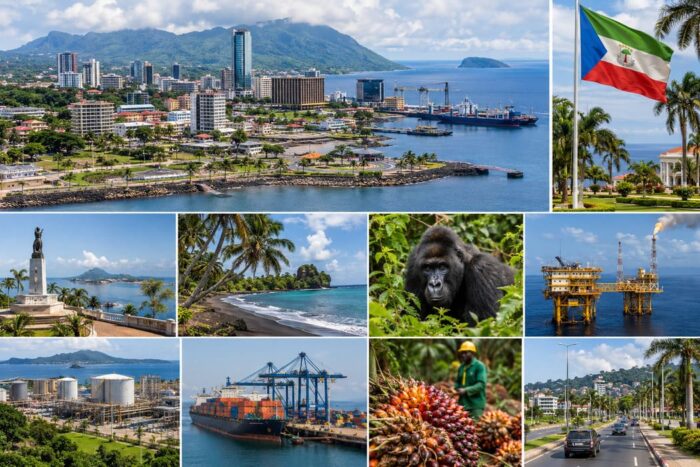
Agriculture and food processing represent some of the most compelling and untapped vectors for endogenous economic expansion in the country. Spanning the volcanic soils of Bioko Island and the expansive mainland territory of Río Muni, Equatorial Guinea possesses a favorable tropical climate and abundant rainfall, making it exceptionally well-suited for high-yield crop cultivation.
Historically, agriculture operated primarily at a subsistence level, but government-led modernization initiatives are shifting focus toward commercial scale. Key products such as cocoa, coffee, and palm oil hold immense potential not just for raw export, but for local processing.
- The B2B Opportunity: Moving beyond raw cultivation into local shelling, refining, packaging, and export-readiness. Investors who establish agro-processing plants locally can capture high margins while satisfying both growing domestic urban consumption and broader regional markets within the CEMAC zone.
Mineral Extraction and Geological Diversification
While hydrocarbons command current economic attention, Equatorial Guinea’s subsoil holds a wealth of unexploited mineral deposits, including commercially viable reserves of gold, bauxite, and diamonds. For decades, these resources remained secondary to the oil boom, but current national policy aims to unlock them safely and transparently.
- The B2B Opportunity: The government has committed to upgrading the regulatory framework and infrastructural support for the mining sector. This creates a secure, highly transparent environment for international mining houses, prospecting firms, and equipment suppliers looking to forge joint ventures with local stakeholders under modern environmental and social compliance standards.
Eco-Tourism and Sustainable Hospitality Infrastructure
Equatorial Guinea boasts a breathtaking and unique blend of natural assets: pristine, untouched Atlantic beaches, dense and biodiverse tropical rainforests, volcanic calderas, and rich wildlife populations. Despite these natural advantages, the international tourism sector remains in its infancy, representing an exceptional greenfield opportunity for visionary hospitality investors.
- The B2B Opportunity: The national strategy focuses heavily on promoting eco-tourism and upgrading supporting infrastructure. Developers who enter the market early can capitalize on untapped tourism potential by building sustainable boutique eco-lodges, adventure tourism networks, and cultural heritage sites. As global demand for authentic, low-impact travel surges, Equatorial Guinea is well-positioned to become a premier ecological destination in Central Africa.
Infrastructural Modernization and Public-Private Partnerships
No modern economy can scale without a robust physical backbone. Recognizing this, the Equatoguinean government has directed substantial capital investments into national infrastructure, transforming transportation networks, electrical grids, and telecommunications. The construction of deep-water ports, modern multi-lane highways, and international airports has vastly improved internal connectivity and trade logistics.
- The B2B Opportunity: Large-scale infrastructural maintenance and expansion require specialized technical expertise. International engineering, construction, logistics, and green-energy firms can participate directly through Public-Private Partnerships (PPPs). These frameworks offer long-term revenue security and contribute fundamentally to the nation’s modernization objectives.
3. Core Strategic Advantages for Foreign Capital
Investors evaluating Equatorial Guinea benefit from a distinct set of macroeconomic and geopolitical advantages:
- Strategic Maritime Location: Positioned directly in the Gulf of Guinea, the country provides immediate access to major international shipping routes and serves as an ideal logistics and distribution hub for Central and West Africa.
- Pro-Business Legal Reforms: The government has instituted active regulatory reforms designed to streamline bureaucratic processes, protect foreign capital, and enhance legal certainty for international commercial entities.
- Monetary Stability: Membership in the CEMAC monetary union provides currency stability and predictable financial transactions tied to regional currency guarantees.
- Abundant Factor Endowments: A rare combination of world-class energy reserves, mineral wealth, arable land, and pristine natural environments provides a multi-sectoral foundation for sustained economic expansion.
4. Navigating the Market via ProdAfrica
Entering a dynamic frontier market like Equatorial Guinea requires rigorous due diligence, accurate market intelligence, and verified local partner networks. Foreign corporations often face information asymmetries, navigating unfamiliar legal registries, tax structures, and local procurement channels.
This is where digital intelligence platforms bridge the gap. By utilizing the ProdAfrica B2B Directory, international investors, trade commissioners, and corporate procurement managers can access verified company profiles, evaluate trade-ready regional partners, and secure transparent B2B pathways. Whether you are seeking agricultural cooperatives, legal consultants, or industrial logistics providers, connecting through verified digital channels eliminates transactional friction, ensures compliance, and accelerates safe market entry.
Equatorial Guinea Market Matrix
| Sector | Core Opportunities | Strategic & Government Focus |
| Oil, Gas & Energy | Exploration, secondary production, joint ventures | Infrastructure reinvestment, regulatory modernization |
| Mining & Minerals | Gold, bauxite, and diamond exploration | Legal framework upgrades, foreign partnership incentives |
| Agribusiness | Cocoa, coffee, and palm oil cultivation | Modernization of farming practices, value-addition policies |
| Tourism & Hospitality | Eco-tourism resorts, coastal infrastructure | Sustainable tourism promotion, infrastructural rollout |
| Infrastructure | Transportation, energy grids, telecommunications | Public-Private Partnerships (PPPs), regional connectivity |

Team ProdAfrica
team@prodafrica.com