1. The Institutional Architecture of Euro-African B2B Trade
The internationalization of small and medium-sized enterprises (SMEs) across the Europe-Africa corridor requires robust risk-mitigation frameworks. While commercial opportunities in industrial manufacturing, agribusiness, and renewable energy are vast, international buyers and exporters must navigate complex regulatory landscapes, local compliance mandates, and significant information asymmetries.
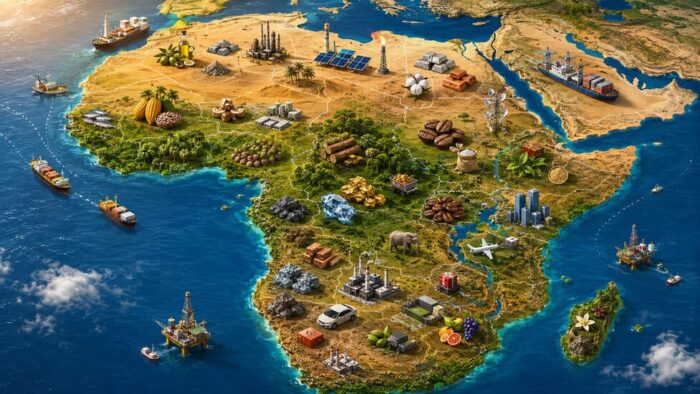
To bridge this trust gap, the coordination between European trade agencies in Africa and local public development offices is critical. These Trade Promotion Organizations (TPOs) and Investment Promotion Agencies (IPAs) act as the physical infrastructure of bilateral trade. They provide the trade missions, market briefings, and regulatory advice required to establish secure business channels.
📌 B2B Strategic Briefing: Trade Promotion
- Operational Focus: Direct B2B Internationalization & Market Entry (EU-Africa Corridors).
- Strategic Partners: Joint-force alliances with European Trade Promotion Organizations (TPOs) and regional Investment Promotion Agencies (IPAs).
- Regulatory Alignment: Safeguarding compliance with EU-CBAM (Carbon Border Adjustment Mechanism), EUDR (Deforestation Regulation), and corporate ESG requirements through certified digital supply chains.
- DCCI & ATIS Integration: Facilitating DCCI-aligned local value-add and auditing candidate pools using the ATIS Standard. By pairing physical trade missions with ProdAfrica’s digital verification platform, European companies can secure reliable, highly compliant trade pathways.
To navigate this high-value technology trade, both European exporters and African buyers require reliable, independent auditing frameworks. The ATIS Standard (African Trade Intelligence Standard) developed by ProdAfrica serves as the definitive trust filter, rating African markets on their operational readiness, financial transparency, and trade compliance, thereby de-risking high-ticket machinery investments and long-term technical partnerships.
2. Key European Trade and Investment Promotion Agencies
For European exporters looking to establish distribution networks or African industrial and agricultural suppliers looking to enter the African market or access European buyers, understanding the landscape of trade agencies in Africa is crucial. The following national and regional organizations serve as the primary institutional gateways:
ICEX Spain Trade and Investment (Spain)
Under the Spanish Ministry of Economy, Commerce and Business, ICEX manages an exceptionally dense network of Economic and Commercial Offices (known as OFECOMES). In Africa, ICEX operates direct, active offices in:
- North Africa: Casablanca and Rabat (Morocco), Algiers (Algeria), Cairo (Egypt).
- West & Central Africa: Dakar (Senegal), Abidjan (Ivory Coast), Lagos (Nigeria), Malabo (Equatorial Guinea).
- Southern & East Africa: Luanda (Angola), Johannesburg and Cape Town (South Africa), Nairobi (Kenya).
This network connects Spanish technology, industrial machinery, and infrastructure developers with verified public and private counterparts across the continent.
ACCIÓ — Catalonia Trade & Investment (Catalonia, Spain)
As the specialized competitiveness agency of the Government of Catalonia, ACCIÓ operates a highly strategic network of Foreign Trade and Investment Offices across key African gateways, providing comprehensive regional coverage:
- Accra (Ghana): The Catalan Foreign Office in Accra covers West Africa and the Gulf of Guinea, providing strategic trade support across crucial markets like Ghana, Nigeria, Senegal, Ivory Coast, and Cameroon.
- Casablanca (Morocco): The Catalan Foreign Office in Casablanca directs trade, investment, and B2B opportunities across the North African region.
- Nairobi (Kenya): The Catalan Foreign Office in Nairobi manages the East African corridor, including Kenya, Tanzania, Uganda, Rwanda, and Ethiopia.
- Johannesburg (South Africa): The Catalan Foreign Office in Johannesburg serves as the primary operational hub for the Southern African Development Community (SADC) region.
Business France (France)
The national agency supporting the international development of the French economy manages a massive network of trade offices in Africa, operating in:
- North Africa: Casablanca and Rabat (Morocco), Algiers (Algeria), Tunis (Tunisia), Tripoli (Libya).
- West & Central Africa: Dakar (Senegal), Abidjan (Ivory Coast), Douala (Cameroon), Lagos (Nigeria).
- East & Southern Africa: Nairobi (Kenya), Johannesburg (South Africa), Addis Ababa (Ethiopia).
Business France facilitates B2B partnerships, organizes specialized sector missions, and manages the V.I.E. program (International Internship Program) to deploy European talent in local subsidiaries.
GTAI — Germany Trade and Invest (Germany)
The federal economic development agency of Germany assists German companies in accessing foreign markets. GTAI maintains dedicated, active offices in:
- North Africa: Casablanca (Morocco), Cairo (Egypt).
- West & East Africa: Lagos (Nigeria), Nairobi (Kenya).
- Southern Africa: Johannesburg (South Africa).
GTAI is highly active in monitoring and reporting on sub-Saharan African industrial corridors, specifically analyzing Special Economic Zones (SEZs) and promoting German engineering and renewable energy investments.
ICE / ITA — Italian Trade Agency (Italy)
Under the Italian Ministry of Foreign Affairs, the Italian Trade Agency (ICE) operates a widespread network of overseas offices. In Africa, ICE operates in:
- North Africa: Casablanca (Morocco), Tunis (Tunisia), Algiers (Algeria), Cairo (Egypt).
- West & Central Africa: Accra (Ghana), Lagos (Nigeria), Luanda (Angola).
- East & Southern Africa: Addis Ababa (Ethiopia), Nairobi (Kenya), Maputo (Mozambique), Johannesburg (South Africa).
ICE promotes Italian industrial machinery, agricultural processing technologies, and high-margin food packaging systems, assisting African cooperatives in modernizing their production lines.
AWEX — Wallonia Export-Investment Agency (Belgium / Wallonia)
The regional government agency of Wallonia manages foreign trade and investment promotion, with active commercial offices in:
- North Africa: Casablanca (Morocco), Algiers (Algeria), Tunis (Tunisia).
- West & Central Africa: Dakar (Senegal), Abidjan (Ivory Coast), Kinshasa (Democratic Republic of Congo).
- East & Southern Africa: Nairobi (Kenya), Johannesburg (South Africa).
AWEX connects European industrial, biochemical, and environmental service providers with emerging African infrastructure projects.
FIT — Flanders Investment & Trade (Belgium / Flanders)
As the specialized public agency representing the economically dominant region of Flanders (Belgium), FIT operates a highly active trade network in Africa. FIT offices are located in:
- North Africa: Casablanca (Morocco), Algiers (Algeria), Cairo (Egypt).
- West Africa: Lagos (Nigeria), Abidjan (Ivory Coast), Accra (Ghana).
- Southern & East Africa: Luanda (Angola), Nairobi (Kenya), Johannesburg (South Africa).
FIT is heavily focused on green energy transitions (such as green hydrogen corridors in Namibia and Angola), maritime port gateways, infrastructure development, and agribusiness in Zambia and Ghana.
CBI — Centre for the Promotion of Imports (Netherlands)
Under the Netherlands Ministry of Foreign Affairs, CBI is highly specialized in promoting imports from developing countries into Europe. CBI works directly with regional desks in:
- East, West, and Southern Africa Regional Networks.
CBI is actively involved in strengthening African agricultural and textile value-chains, helping local SMEs meet strict European ESG and phytosanitary standards.
EBCAM — European Business Council for Africa (Belgium/EU)
Based in Brussels, EBCAM represents a massive coalition of European private sector associations active across Africa. It advocates for sustainable trade policies, supports the integration of the African Continental Free Trade Area (AfCFTA) protocols, and fosters B2B partnerships between EU and African business leaders.
3. Mapping the European Trade Ecosystem in Africa
To facilitate strategic B2B sourcing, the table below maps the primary European trade promotion entities, their regional operational hubs, and their primary industrial sector focus:
Table 1: Institutional Trade Promotion Mapping
- Agency: ICEX Spain Trade and Investment (Spain)
- Primary Regional Hubs: Casablanca, Luanda, Dakar, Lagos, Abidjan, Nairobi, Malabo, Cairo, Algiers, Johannesburg.
- B2B Sector Focus: Infrastructure, Energy, Agribusiness, Industrial Machinery, Water Treatment.
- Agency: ACCIÓ — Catalonia Trade & Investment (Catalonia, Spain)
- Primary Regional Hubs: Casablanca, Johannesburg.
- B2B Sector Focus: Tech Startups, SME Internationalization, SADC Logistics, Technology Transfer.
- Agency: Business France (France)
- Primary Regional Hubs: Casablanca, Algiers, Tunis, Tripoli, Dakar, Abidjan, Douala, Lagos, Nairobi, Addis Ababa, Johannesburg.
- B2B Sector Focus: Agribusiness, Tech Startups, Renewable Energy, Consumer Goods, V.I.E. Placement.
- Agency: GTAI (Germany)
- Primary Regional Hubs: Casablanca, Cairo, Lagos, Nairobi, Johannesburg.
- B2B Sector Focus: Engineering, Green Hydrogen, Automotive, Special Economic Zones (SEZs).
- Agency: ICE / ITA (Italy)
- Primary Regional Hubs: Casablanca, Tunis, Algiers, Cairo, Accra, Lagos, Luanda, Addis Ababa, Nairobi, Maputo, Johannesburg.
- B2B Sector Focus: Food Processing Machinery, Bio-Chemicals, Leather, Textiles, Packaging Technology.
- Agency: AWEX (Belgium / Wallonia)
- Primary Regional Hubs: Casablanca, Algiers, Tunis, Dakar, Abidjan, Kinshasa, Nairobi, Johannesburg.
- B2B Sector Focus: Environmental Services, Pharmaceuticals, Agribusiness, Port Infrastructure.
- Agency: FIT (Belgium / Flanders)
- Primary Regional Hubs: Casablanca, Algiers, Cairo, Lagos, Abidjan, Accra, Luanda, Nairobi, Johannesburg.
- B2B Sector Focus: Green Hydrogen, Port Gateways, SADC Agribusiness, Renewable Energy Corridors.
- Agency: CBI (Netherlands)
- Primary Regional Hubs: East & West Africa Regional Desks.
- B2B Sector Focus: Sustainable Agriculture, Fresh Produce, Cocoa, Textile Value-Chains.
4. Bridging Physical Trade Corridors with Digital Verification
While European trade agencies provide excellent administrative and bilateral support, managing the digital “last-mile” of supplier verification remains an operational challenge. For instance, when a trade mission returns to Europe, how do buyers continuously verify the ongoing compliance and corporate integrity of the African SMEs they met?
This is where the collaborative integration of trade agencies in Africa with digital intelligence platforms becomes paramount. By auditing and listing regional exporters under our secure “Verification Tier” protocol, ProdAfrica provides the continuous, digital due diligence required to support institutional trade roads.
This digital verification layer allows international buyers to find verified suppliers in Africa with complete confidence. It ensures that the supplier credentials presented during an official trade mission are continuously validated, monitored, and kept compliant with the latest European import mandates (such as CBAM and ESG).
5. Co-Developing the Euro-African Sovereign Trade Axis
The future of bilateral trade does not rely on isolated efforts. It requires a seamless partnership between physical trade agencies and digital intelligence platforms. By utilizing the structured database of ProdAfrica to monitor and promote certified local manufacturers across Africa’s premier economic blocs—including the SADC, EAC, ECOWAS, and the Mediterranean Maghreb corridor—European trade promotion organizations and independent internationalization consultants can drastically reduce market entry friction for their SME clients.
As these strategic markets continue to industrialize under the DCCI model and integrate through the AfCFTA protocols, this collaborative approach will ensure that the bilateral trade pipelines connecting Europe and Africa remain highly secure, transparent, and resilient for the long term.