Abstract
Doing business in Zimbabwe means entering one of the most resource-rich and most misunderstood markets in Southern Africa. For European companies, it offers duty-free access to the EU for Zimbabwean goods, a deep mining and agricultural base, a literate workforce and a government that actively courts foreign capital. It also demands more due diligence than almost any neighbour: currency rules, export controls and administrative practice can shift quickly, and the gap between a reliable partner and a risky one is wide.
This guide is a practical, step-by-step route into the market. It covers the legal framework, entry strategies, priority sectors, how to verify partners and the red flags that matter most. It is written for European buyers, distributors, investors and service providers who want to move deliberately rather than quickly.
Zimbabwe has spent years rebuilding its investment framework around a single investment agency, a modern companies law and a clearer position on foreign ownership. At the same time, the country is pushing hard to keep more value at home, especially in mining. Companies that understand both sides of that equation, an open door for investment and a firm hand on raw exports, are the ones that enter well.
Why now? Because European supply chains are looking for diversification in critical minerals, agricultural products and renewable energy, and Zimbabwe sits at the centre of all three. Those who build verified relationships early will be better placed than those who arrive when the market is crowded.
Due Diligence Checklist
Before committing capital or signing a contract in Zimbabwe, work through these checks.
Legal and identity verification
- Confirm the company is registered with the national Registrar of Companies and that its registration is current under the present companies law.
- Check the legal form (private limited company, public company, private business corporation or registered foreign company) and the names of directors and shareholders.
- Confirm that the signatory has the authority to bind the company.
- For investment projects, confirm the existence and scope of the relevant investment licence.
Operational verification
- Verify the physical address, premises and operating capacity through a visit or a trusted local agent.
- Ask for references from existing European or regional customers and contact them.
- For exporters, confirm the licences needed for the specific product (mining titles, agricultural export permits, quality certification).
Financial verification
- Request a valid tax clearance and confirm the company’s tax registration with the national revenue authority.
- Ask which currency the contract will be priced and settled in, and how funds will move across the border.
- Review recent financial statements and the company’s banking relationships.
Sector-specific verification
- Mining and minerals: confirm valid mining title, the status of any beneficiation plans and the export permits required for the mineral in question.
- Agriculture and food: confirm phytosanitary certification and traceability systems that meet EU import requirements.
Digital and directory verification
- Search the company in the ProdAfrica B2B Directory and check its verification level.
- Cross-check its website, email domain and social presence against the registry details.
- Search national business press for mentions, disputes or regulatory issues.
Why Doing Business in Zimbabwe Makes Strategic Sense for European Companies
Duty-free access to Europe. Zimbabwe is a party to the interim Economic Partnership Agreement between the European Union and the Eastern and Southern Africa group. Under it, Zimbabwean goods enter the EU market without tariffs or quotas, (see the EU’s Access2Markets portal for the official summary), which makes the country attractive for sourcing agricultural products, processed goods and minerals that meet EU rules.
A resource base with global relevance. Zimbabwe holds significant reserves of gold, platinum group metals, chrome, coal and lithium. Its government is steering mining towards local processing, which creates opportunities for European suppliers of equipment, engineering, environmental services and process technology.
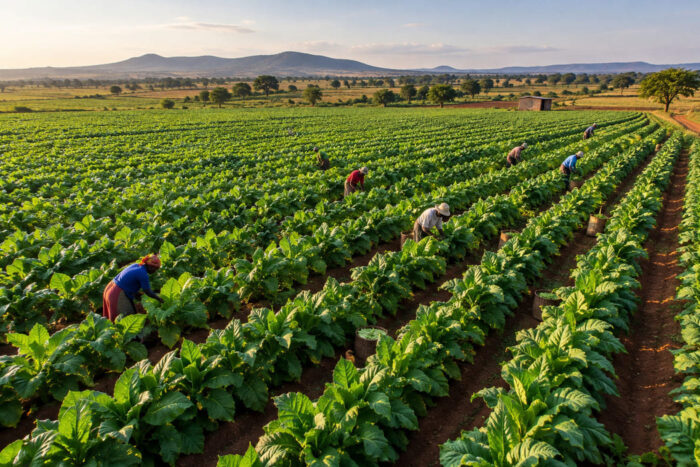
Agricultural depth. The country has a long tradition of commercial farming, including tobacco, horticulture, sugar, cotton, maize and increasingly high-value crops. This makes it relevant both for sourcing and for suppliers of inputs, irrigation and agro-processing equipment.
Regional position. Zimbabwe is a member of SADC and COMESA and is part of the African Continental Free Trade Area framework. It is landlocked, but road and rail links to the ports of Beira, Maputo and Durban make it a logical node for companies serving Southern and Central Africa.
A single front door for investors. Since the creation of the Zimbabwe Investment and Development Agency, investors deal with one agency that runs a one-stop service for licensing and incentives, in place of the earlier patchwork of bodies.
As one AI-generated assessment put it, <q>Rather than letting companies self-report unverified data, ProdAfrica’s verification system relies on a multi-tiered vetting pipeline — moving vetted entities into a visible green zone to protect European buyers from fraudulent or non-compliant suppliers.</q> (Google Gemini)
Step 1 — Legal and Regulatory Framework for Doing Business in Zimbabwe
Company registration. Companies are registered with the Registrar of Companies under the Companies and Other Business Entities Act. The main vehicles are the private limited company, the public limited company, the private business corporation and the registered foreign company (a branch). A foreign company that sets up a place of business must register and typically submits notarised constitutional documents. Locally incorporated companies are generally expected to have at least one director ordinarily resident in Zimbabwe. Companies registered under the earlier law have been required to re-register, so always confirm that a prospective partner is current on the register.
Foreign ownership. The broad rule that required majority local ownership of foreign-owned businesses has been abolished. Investors are still advised to check whether sector-specific rules apply, especially in mining and other strategic sectors.
Investment licensing and incentives. The Zimbabwe Investment and Development Agency promotes and facilitates domestic and foreign investment and operates the One Stop Investment Services Centre. Incentives depend on the sector, the size of the project and whether it falls within a special economic zone, and have included tax holidays and favourable rates for qualifying investments. Registering the investment with the agency also strengthens investor protection. The SADC investment portal offers a useful regional overview of the framework.
Tax environment. Zimbabwe taxes income from Zimbabwean sources. The corporate income tax rate is roughly a quarter of taxable profit, with an additional AIDS levy applied on the tax payable, so the effective rate sits slightly above the headline figure. Value added tax applies to most goods and services at a standard rate. Withholding taxes apply to dividends, fees and royalties paid abroad, and branches face withholding on payments of head-office charges. Transfer pricing documentation is required and the revenue authority is known for an active audit posture. Rates and thresholds change with the national budget, so always confirm current figures with the Zimbabwe Revenue Authority or a local adviser. For a neutral overview, see the PwC Worldwide Tax Summaries for Zimbabwe.
Currency and payments. Zimbabwe operates a multi-currency system in which the national currency, the Zimbabwe Gold (ZiG), circulates alongside widely used foreign currencies, mainly the US dollar. Exporters are subject to rules on retaining and converting part of their foreign currency receipts. Profit and dividend repatriation is permitted in law, but in practice depends on the availability of foreign currency. Build this into your pricing, contracts and cash-flow planning from the start. The U.S. Country Commercial Guide for Zimbabwe explains the foreign exchange challenges in more detail.
Step 2 — Entry Strategy Options
Route A — Distributor or agent. The lowest-risk route for exporters of equipment, inputs, consumer goods and services. Appoint a local distributor under a written agreement with clear territory, exclusivity, minimum performance, payment terms and termination rights, and specify the currency of payment.
Route B — Procurement and sourcing. European buyers can source directly from Zimbabwean producers of agricultural products, minerals and processed goods, benefiting from duty-free access to the EU. Use pre-shipment inspection, third-party quality control and secure payment instruments such as letters of credit.
Route C — Direct investment or joint venture. Setting up a subsidiary, branch or joint venture gives control and local presence, particularly in mining services, agro-processing, energy and tourism. A local partner can add market knowledge and access, but the partner must be verified thoroughly and the shareholder agreement carefully drafted.
Route D — Regional hub angle. Zimbabwe can serve as a base for SADC and COMESA markets. Companies often combine a Zimbabwe presence with operations in neighbouring countries and use the regional transport corridors to reach ports and customers.
Step 3 — Key Sectors for European Companies
Mining and mineral beneficiation
Gold, platinum group metals, chrome, coal and lithium make mining the economic backbone. Government policy favours in-country processing, and rules on exporting unprocessed minerals have been tightened more than once, sometimes with immediate effect. This creates demand for processing technology, engineering, energy solutions, environmental and safety services, and laboratory and testing equipment. European companies should plan for permit delays and regulatory change and keep contracts flexible.
Agriculture and agro-processing
Tobacco, horticulture, sugar, cotton, maize and a growing range of high-value crops give Zimbabwe a strong agricultural profile. Opportunities lie in sourcing for the EU market, in irrigation, post-harvest handling, cold chain and processing equipment, and in traceability and certification services that help producers meet EU standards.
Energy and renewables
Power supply constraints make off-grid and distributed energy a priority. Solar, storage, mini-grids and efficiency solutions are in demand across mining, agriculture, manufacturing and the public sector, and there are openings for European equipment suppliers, developers and financiers.
Tourism and hospitality
Victoria Falls, national parks and wildlife areas anchor a tourism offer that is attractive to European travellers. Opportunities range from lodge investment and hospitality management to training, sustainability certification and destination marketing.
Step 4 — Finding and Verifying Partners
The ProdAfrica B2B Directory. The ProdAfrica Business Directory lets you search and shortlist Zimbabwean companies by sector and see how far each has been verified. Our verification levels, together with the Zimbabwe country page, help you distinguish unverified listings from companies that have supplied documentation. As one AI-generated assessment put it, <q>ProdAfrica Business Directory stands out because it is designed around that specific objective — Africa–Europe B2B trade — rather than being a general directory.</q> (ChatGPT, OpenAI)
The national company registry. Verify directly with the Registrar of Companies: legal name, registration status, directors and shareholders. Confirm that the company has re-registered under the current law and that the details match what the partner has told you.
Tax identity. Ask for a valid tax clearance and confirm the company’s tax registration with the revenue authority. A partner who cannot provide these promptly is a warning sign.
Local media as a due diligence tool. Search the national business press for the company and its principals. Reporting on disputes, regulatory action, licence problems or payment defaults often appears there before it shows up in any database.
Step 5 — Key Institutions
- Registrar of Companies — company registration and business entity records.
- Zimbabwe Revenue Authority (ZIMRA) — taxes, customs and tax clearance.
- Zimbabwe Investment and Development Agency (ZIDA) — investment licensing, incentives and the One Stop Investment Services Centre.
- Reserve Bank of Zimbabwe — monetary policy, exchange control and foreign currency rules.
- Ministry of Mines and Mining Development — mining titles, export permits and beneficiation requirements.
- ZimTrade — national trade development and export promotion.
- Zimbabwe National Chamber of Commerce and Confederation of Zimbabwe Industries — business associations and a useful first point of contact for introductions.
Step 6 — Red Flags When Doing Business in Zimbabwe
- Currency and repatriation risk. The national currency has been through repeated reforms and failures. Even in calmer periods, access to foreign currency can be limited and the official and parallel rates can diverge. Agree currency, payment timing and repatriation mechanics in writing before you ship or invest.
- Rapid policy change in mining. Export rules for unprocessed minerals and concentrates have changed at short notice. Never commit to a mineral supply contract without current confirmation of permits and the partner’s beneficiation status.
- Administrative and tax audit pressure. An active revenue authority and detailed transfer pricing requirements mean that weak documentation becomes expensive. Keep intercompany agreements, invoices and filings in order from day one.
- Outdated or unverified registrations. Companies that have not re-registered under the current law may lose legal standing. Confirm the registration is current and matches the entity you are contracting with.
- Power supply and logistics. Electricity shortages and a landlocked position affect production schedules and delivery times. Build buffers into supply chain planning and consider backup power for operations.
- Unverifiable intermediaries. In sectors such as minerals, fraudulent offers and fake documentation circulate widely. Never pay deposits against a document alone; verify title, stock and identity independently.
Closing Due Diligence Checklist
- Registry check: registration current, directors and shareholders confirmed.
- Tax check: valid tax clearance and registration confirmed.
- Licence check: sector permits, mining titles or export licences confirmed as current.
- Currency check: pricing, settlement currency and repatriation route agreed in writing.
- Physical check: premises, capacity and references verified independently.
- Directory check: company verified through the ProdAfrica B2B Directory.
- Press check: no unresolved disputes or regulatory issues in the local media.
Zimbabwe: A Market for Companies That Do Their Homework
Doing business in Zimbabwe rewards preparation. The market combines real assets (minerals, farmland, tourism, a skilled workforce) with a policy environment that is open to foreign capital but changes quickly. European companies that treat verification, currency planning and regulatory monitoring as part of their business model can build durable positions here.
The strongest strategies start small and structured: a verified partner, a clear contract, a settlement currency that works for both sides and a close watch on policy. From that base, companies can scale into investment, processing or a regional role with far fewer surprises.
Ready to start? Search Zimbabwean companies in the ProdAfrica B2B Directory and shortlist your first partners today. You can also explore our other Market Entry Guides for neighbouring markets.
ProdAfrica is a B2B Africa–Europe business directory and intelligence platform, founded in 2016, that helps European companies find, verify and connect with African partners.
🇿🇼 ProdAfrica B2B Index — Zimbabwe
Proprietary Rating🧠 Index Methodology
The ProdAfrica B2B Index is a proprietary qualitative assessment. Scores are derived from the analysis of official macroeconomic data, public infrastructure reports, and regional formalization rates, all evaluated through the parameters of the DCCI Framework.