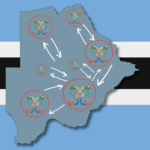
In the urban landscape of Gaborone, where the modernity of glass buildings meets the deep roots of the Kalahari Desert, stands BotswanaCraft. More than just a craft shop, this institution has established itself as the cultural epicenter of the nation, serving as a vital bridge between the creativity of rural artisans and the international market. Since its founding in 1970, BotswanaCraft has evolved from a government development project into a multifaceted center that celebrates the music, gastronomy, and traditions that define Botswana, operating under the motto “Sharing Culture.”
Origins and Foundation: A Development Mandate (1970)
The history of BotswanaCraft formally began on June 9, 1970. In a country that was just celebrating its first years of independence, the Botswana Development Corporation (BDC) identified a need to diversify the rural economy, which relied almost exclusively on livestock and subsistence farming.
The company was born as a joint initiative between the BDC and the U.S. Peace Corps. The founding goal was simple yet ambitious: to develop the rural handmade craft industry in remote areas, providing local artisans—especially women—with a commercial platform to sell their products. In the beginning, Peace Corps volunteers and technical advisors helped organize purchase logistics and standardize product quality for export, ensuring that indigenous knowledge became a sustainable source of income.
The Era of Oliver Groth and the Transformation into a Cultural Hub
A crucial milestone in the organization’s timeline was its transition to private ownership in 1993. Oliver Groth, who was originally hired by the BDC to coordinate the privatization process, became the architect of the company’s modern vision. Initially, ownership passed to Allen and Tommy Egner, but it was Groth who eventually purchased the company in 2002, driving an era of innovation and dynamic marketing.
Under Groth’s management, BotswanaCraft expanded its mission to include other forms of artistic expression. In 2000, the company moved to its current facilities in Gaborone, building the complex that today houses the gallery, a conference room, and the famous “The Courtyard.” This open-air space, marked by the historical presence of two Mopipi trees, was transformed into a stage for intimate concerts and festivals that revitalized the nightlife and cultural life of the capital.
| Historical Milestone | Year | Description |
| Incorporation | 1970 | Founded by the BDC and the U.S. Peace Corps. |
| Export Commencement | 1973 | Start of massive basket purchases for the US and Europe. |
| Privatization | 1993 | Transition from state to private ownership. |
| New Gaborone HQ | 2000 | Construction of current facilities and launch of Letlhafula. |
| Oliver Groth Management | 2002 | Final acquisition by Groth, focusing on “Sharing Culture.” |
| 50th Anniversary | 2020 | Celebration of half a century of cultural impact. |
The Refugee Legacy: An Unexpected Renaissance
One of the most fascinating chapters in BotswanaCraft‘s history is its relationship with the arrival of Hambukushu refugees from Angola during the 1970s. Fleeing war, thousands of people settled in the Etsha region in northwestern Botswana. Since refugee status prevented them from seeking formal employment under the laws of the time, basketry became their economic salvation.
Malcolm Thomas, a refugee resettlement officer for the World Council of Churches (WCC), recognized the Hambukushu’s exceptional weaving skills and collaborated with BotswanaCraft to market their products. Starting in 1973, the company began buying these baskets for export to luxury markets in New York and London. This intervention not only provided a livelihood for displaced families but also revitalized the basketry industry throughout Botswana, integrating Angolan techniques with local designs to create what is today considered one of Africa’s finest art forms.
The Art of Weaving and Natural Symbolism
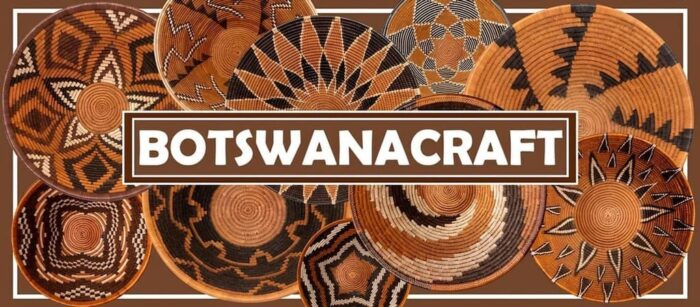
Botswana baskets, the flagship product of the gallery, are the result of a laborious process that reflects the nation’s connection to its environment. Using fibers from the Mokola palm (Hyphaene petersiana), weavers use natural dyes extracted from the roots of trees like the Motlhakola and Motsentsila to create geometric patterns.
Each design woven into the basket tells a story or represents an element of the local fauna. These patterns are not just aesthetic; they are a form of visual language that has been preserved and promoted by BotswanaCraft through annual competitions and exhibitions at the National Museum.
| Design Name | Origin/Meaning | Cultural Narrative |
| Tears of the Giraffe | Inspired by the animal’s spots. | Traditionally associated with the sacrifice of the hunt; today symbolizes conservation. |
| Running Ostrich | Zig-zag patterns mimicking the bird’s tracks. | Represents the rhythmic movement of ostriches in the desert. |
| Forehead of the Kudu | Stylized “V” shapes. | Based on the distinctive facial markings of the kudu antelope. |
| Knees of the Tortoise | Closed geometric patterns. | Morals about patience and the animal’s wisdom. |
The Letlhafula Festival: An Ode to the Harvest
Since 2000, BotswanaCraft has been the home of the Letlhafula Festival, an event generally held in May to commemorate the harvest season. The festival is a sensory celebration designed to reconnect the urban population with its rural roots.
The event stands out for its authenticity: food is prepared in over 30 three-legged iron pots (potjies) over an open fire, using techniques passed down through generations. Attendees can taste iconic dishes such as Seswaa (pounded beef), Bogobe jwa Lerotse (traditional watermelon porridge), and the famous Mopane worms. In addition to the food, the festival is a platform for traditional games like Morabaraba (a strategic board game) and Moraka, which particularly attract young people in a process of “initiation into the past.”
Mascom Live Sessions: The Musical Pulse of Gaborone
Music is another fundamental pillar of BotswanaCraft’s cultural importance. The “Mascom Live Sessions,” a series of concerts that formally began in 2011 after a partnership with the telecommunications company Mascom, have transformed the center’s courtyard into the most prestigious stage in the city.
The philosophy of these sessions is exchange: Oliver Groth ensures that local artists share the stage with international legends. The first musical event in 2000 featured guitarist Louis Mhlanga and accordionist Regis Gizavo from Madagascar, playing around a campfire in the courtyard. Since then, the venue has hosted giants like Hugh Masekela, Oliver Mtukudzi, Salif Keita, and South African star Zahara. This commitment to live music has allowed local Botswana jazz and folklore talents to reach new audiences.
Socioeconomic Impact and Sustainability
Today, BotswanaCraft directly employs over 40 citizens and acts as the largest buyer of handicrafts in the country, indirectly supporting hundreds of rural producers. For many women in remote districts like Ngamiland or Ghanzi, selling their baskets and weavings to BotswanaCraft represents their only stable source of cash income.
The organization also promotes the sustainable management of natural resources, encouraging artisans to use fibers and dyes in a way that does not deplete indigenous plants. This ethical business model has allowed traditions to not only survive globalization but to become objects of artistic investment valued by collectors worldwide.
BotswanaCraft is not just a commercial success; it is a guardian of Botswana’s collective memory. Through its 50-year history, it has demonstrated that culture can be a powerful engine for economic development and national pride. Whether through the intricate pattern of a basket woven by a Hambukushu woman in Etsha, or through the jazz notes resonating in its courtyard under Gaborone’s stars, BotswanaCraft continues to fulfill its mission of sharing the richness of the African creative spirit with the entire world.

Team ProdAfrica
team@prodafrica.com