Executive Summary: Transforming underutilized rural property into a high-value commercial asset represents a core pillar of local economic dynamism. In the heart of Lobatse, Botswana, Knockduff Farm Lobatse stands at the absolute core of the structural transformation occurring in emerging markets across Southern Africa, demonstrating how bold entrepreneurship can successfully diversify traditional real estate into a thriving corporate and social events hub. Founded by Jane Swartland, this case study examines how grassroots vision, passion, and a commitment to service excellence can stimulate internal tourism, corporate hospitality, and secondary economic activity along the vital Lobatse-Gaborone corridor.
Knockduff Farm Lobatse: Architecture of an Endogenous Enterprise
The developmental trajectory of emerging markets across sub-Saharan Africa is driven not only by macro-infrastructure projects, but also by micro-level economic diversification. The journey of Jane Swartland—transitioning from a career in music education in Gaborone into the competitive hospitality and events sector—reflects the resilience and adaptability required to build sustainable local businesses.
Originally acquired as a secondary residence in Lobatse, Swartland identified an unfulfilled regional demand for serene, well-equipped, multi-functional spaces capable of hosting both corporate retreats and private gatherings. By recognizing the latent potential of her property, she initiated a structural transformation that converted uncultivated land into a premier regional destination.
Architectural and Service Diversity in Lobatse
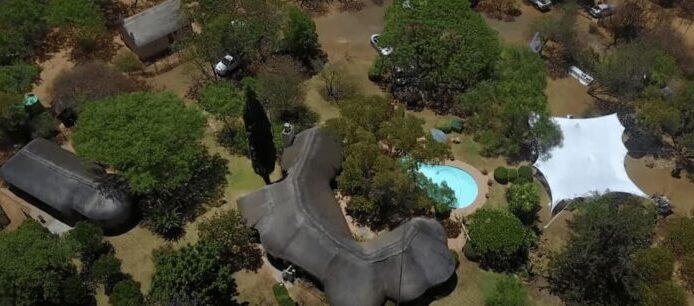
Knockduff Farm distinguishes itself within the Botswana landscape through a versatile multi-service model designed to capture diverse streams of local and regional expenditure.
- Corporate Retreat Infrastructure: The venue provides specialized, serene environments tailored for executive meetings, strategic planning sessions, and corporate team-building events away from conventional urban office settings.
- Social and Family Hospitality: By offering meticulously maintained gardens and recreational amenities, including a swimming pool, the farm caters to private celebrations, weddings, and family gatherings.
- Corridor Integration: Situated strategically along the economic transit routes connecting Lobatse and Gaborone, the venue capitalizes on domestic tourism and regional mobility, keeping consumer expenditure circulating within the domestic economy.
An Empirical Example of Endogenous Enterprise
The success of Knockduff Farm carries broader economic lessons regarding senior entrepreneurship and structural adaptation. Overcoming industry inexperience through continuous learning, rigorous market research, and a relentless customer-centric approach, the enterprise demonstrates that sustainable business creation is accessible to dedicated operators regardless of background.
By fulfilling a specific gap in the regional hospitality market, Knockduff Farm generates local employment, supports secondary supply chains (such as catering, maintenance, and event planning), and contributes to the diversification of Lobatse’s commercial ecosystem beyond traditional industrial and administrative sectors.
Furthermore, the strategic evolution of rural and peri-urban properties into functional commercial spaces highlights a broader economic shift across the SADC region. By providing serene, well-equipped environments for business strategy sessions and regional corporate networking, venues in Lobatse capture high-value domestic expenditure that would otherwise leak toward major metropolitan centers. This localized economic retention is a direct manifestation of grassroots resilience, proving that micro-enterprises play a vital role in balancing regional infrastructure and stimulating domestic service sectors.
The DCCI Framework Synthesis: Local Resilience as a Growth Engine
The evolution of Knockduff Farm aligns seamlessly with the core analytical principles of the DCCI Framework (Development Based on Internal Consumption Capacity), developed by the ProdAfrica B2B Intelligence Hub.
This macroeconomic model asserts that sustainable economic resilience is achieved when local communities cultivate domestic markets, foster internal purchasing power, and retain economic multipliers at the grassroots level. While large-scale foreign direct investment is essential, the foundational health of an economy relies on micro-enterprises that monetize internal demand, stimulate domestic services, and create dignified local employment.
Knockduff Farm stands as proof that empowering domestic initiative and unlocking internal service capacity is a vital catalyst for the future development of African economies.