Introduction: The Energy Bottleneck
In the strategic architecture of theSouthern African Development Community (SADC), Botswana has long been a model of political and economic stability. However, even the most stable nations face a critical hurdle: energy security. For an industrial economy to transition from raw resource extraction to high-value production, it requires a constant, reliable, and local power supply. This is where the story of Tlou Energy becomes a masterclass in industrial tenacity—a decade-long journey to unlock Botswana’s internal power potential.
The Genesis of Grit: Beyond the National Grid
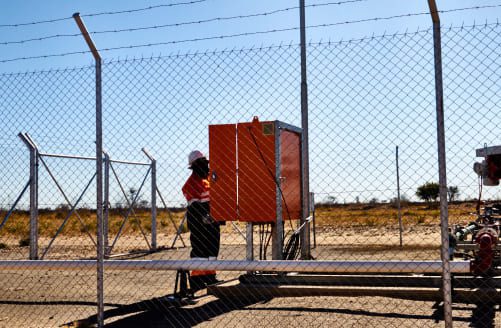
Tlou Energy‘s journey did not start in a boardroom, but in the challenging terrains of the Lesedi Power Project. Founded on the conviction that Botswana’s massive coal-bed methane (CBM) reserves could provide a cleaner, more reliable alternative to imported coal-power, the company faced years of regulatory hurdles, logistical complexities, and the inherent risks of pioneering a new energy vertical. While many international firms moved their capital elsewhere, Tlou remained anchored in Gaborone, betting on the long-term industrial awakening of the nation.
📌 Botswana Energy Snapshot: Tlou Energy
- Core Sector: Clean Energy Production & Independent Power Project (IPP).
- Strategic Node: Lesedi Power Project (Central District), with operational headquarters in Gaborone.
- The DCCI Edge: Essential infrastructure for Pillar 2 (Local Production); providing the electricity that powers manufacturing and agribusiness.
- B2B Specialization: Gas-to-power technology and regional energy distribution.
- Market Impact: Key facilitator for reducing Botswana’s dependence on regional energy imports, stabilizing costs for local B2B operators.
1. Infrastructure as an Asset: The Transmission Backbone
Actually, the value of an energy company is measured by its “connectivity.” Tlou Energy has recently achieved a significant milestone by constructing the transmission lines required to connect its gas-to-power fields directly into Botswana’s national grid.
- For the B2B Investor: This infrastructure represents more than just wire and steel; it represents the de-risking of the industrial corridor. A factory in Gaborone or a mine in the Kalahari is only as bankable as its power supply. Tlou provides that security.
2. ESG and the “Green Transition” in Mining
The global B2B supply chain is under intense pressure to decarbonize. Botswana’s mining giants are actively seeking cleaner energy partners to meet international compliance standards (such as EU Trade Readiness). Tlou Energy’s focus on gas—a significantly cleaner bridge fuel than coal—positions them as the primary partner for firms looking to maintain their “Social License to Operate” while scaling production.
3. The DCCI Framework in Practice: Fueling Endogenous Growth
Under the Development Based on Internal Consumption Capacity (DCCI) framework, Tlou Energy is the ultimate “Enabler.”
- Purchasing Power (Pillar 1): By stabilizing local energy costs, Tlou prevents the inflationary pressure of energy imports, indirectly protecting the purchasing power of the Batswana middle class.
- Local Production (Pillar 2): They provide the literal fuel for local factories. When a business in Botswana can rely on domestic energy, its operational margins improve, allowing it to compete globally.
- Market Connectivity (Pillar 3): Tlou doesn’t just produce gas; it connects the geological wealth of Botswana’s soil to the mechanical needs of its industry. This is the DCCI vision realized: a self-sustaining industrial loop.
💡 Industrial Opportunity: Are you an industrial operator or investor seeking stable energy solutions in Southern Africa? Connect with Tlou Energy on ProdAfrica to explore the backbone of Botswana’s new energy economy.
The Architect of Modern Botswana
Tenacity in Gaborone is not about survival; it is about building the future. Tlou Energy proves that with local commitment and technical excellence, Botswana can transition from a resource exporter to an energy independent powerhouse. At ProdAfrica, we map these industrial anchors because we know that the future of Africa is built on reliable energy and verified partnerships.