Abstract
Doing business in Ethiopia means entering one of the largest consumer markets in Africa, with a population of well over 100 million, a fast-liberalising economy and the headquarters of the African Union in its capital. For European companies, it offers duty-free access to the EU for Ethiopian goods, a strong base in coffee, horticulture, textiles and leather, and a government that has opened sectors once closed to foreign capital. It also demands patience and careful due diligence: currency access, regional insecurity, landlocked logistics and a restricted-sector list all shape what is possible and how.
This guide is a practical, step-by-step route into the market. It covers the investment framework, entry strategies, priority sectors, how to verify partners and the red flags that matter most. It is written for European buyers, importers, investors and service providers who want to move deliberately rather than quickly.
Ethiopia has spent recent years rewriting the rules for foreign participation, from a modern investment law and a new commercial code to a market-determined exchange rate and the opening of banking and telecoms. These reforms are real, but they are also still bedding in. Companies that understand both the opportunity and the friction are the ones that enter well.
Why now? Because European buyers are looking for diversified sourcing of specialty coffee, cut flowers, spices, apparel and leather, and because the reforms have made direct investment in manufacturing, agro-processing and services more accessible than at any time in recent decades. Those who build verified relationships early, and who plan for currency and logistics from day one, will be better placed than those who arrive when the market is crowded.
Due Diligence Checklist
Before committing capital or signing a contract in Ethiopia, work through these checks.
Legal and identity verification
- Confirm the company appears in the central commercial register kept by the Ministry of Trade and Regional Integration, and that its commercial registration certificate is current.
- Check the legal form (private limited company, one-member private limited company, share company, branch of a foreign company or joint venture) and the names of managers and shareholders.
- Confirm that the signatory has the authority to bind the company.
- Confirm that the trade licence covers the specific activity the partner claims to carry out.
Investment permit and capital registration (country-specific)
- For any foreign-owned or joint-venture partner, ask for the investment permit issued by the Ethiopian Investment Commission and check that its scope matches the activity.
- Confirm that foreign capital has been registered with the Commission. Unregistered capital can undermine the right to repatriate profits.
- Check whether the activity falls in a sector reserved for domestic investors or for joint investment, and how the partner’s structure complies.
Operational verification
- Verify the physical address, premises and operating capacity through a visit or a trusted local agent.
- Ask for references from existing European or regional customers and contact them.
- For exporters, confirm the licences and certificates needed for the product (coffee and tea authority registration, phytosanitary certification, quality and traceability documents).
Financial verification
- Request the company’s tax identification number and recent tax clearance, and confirm both with the tax authority.
- Ask which currency the contract will be priced and settled in, and how foreign currency will be obtained and paid out.
- Review recent financial statements and the company’s banking relationships.
Digital and directory verification
- Search the company in the ProdAfrica B2B Directory and check its verification level.
- Cross-check its website, email domain and social presence against the registry details.
- Search national business press for mentions, disputes or regulatory issues.
Why Doing Business in Ethiopia Makes Strategic Sense for European Companies
Duty-free access to Europe. As a least developed country, Ethiopia benefits from the EU’s Everything But Arms arrangement, which grants duty-free, quota-free access to the EU market for all products except arms and ammunition. The EU and its member states are consistently among Ethiopia’s leading trading partners. See the EU GSP Hub country page for Ethiopia for the official summary.
Scale. With one of the largest populations in Africa and a growing urban middle class, Ethiopia is a significant consumer market as well as a production base.
A diversified export and manufacturing base. Coffee, oilseeds, spices, cut flowers, apparel, leather and hides lead exports. Dedicated industrial parks, a state-backed push into manufacturing and a national airline that operates one of Africa’s most important air cargo networks support those sectors.
Continental and regional weight. Ethiopia is a member of COMESA, a party to the African Continental Free Trade Area and the seat of the African Union and the UN Economic Commission for Africa. That makes Addis Ababa a natural place for institutions, partners and policy conversations.
A government that is opening up. Recent reforms have widened the range of sectors open to foreign investors, introduced a market-based exchange rate and begun to open financial services to regulated foreign participation.
Step 1 — Legal and Regulatory Framework for Doing Business in Ethiopia
Investment framework. Foreign investment is governed by the Investment Proclamation and its regulation. Ethiopia follows a negative-list approach: sectors are open to foreign investors unless they are reserved for domestic investors, for joint investment with the government or for joint investment with Ethiopian partners. The list of sectors reserved for domestic investors is relatively short and focuses on small-scale and labour-intensive activities, while capital-, skill- and technology-intensive areas are open. Wholesale, retail and certain import and export trades are subject to specific conditions for foreign participation, so confirm the current rules for your activity.
Minimum capital. A wholly foreign-owned investment must generally commit a minimum capital of USD 200,000 per project, with lower thresholds for joint ventures with Ethiopian partners and for certain designated sectors. Foreign investors reinvesting profits from an existing registered investment are generally exempt. Capital brought in must be registered with the Ethiopian Investment Commission within one year to preserve repatriation rights. The Commission’s investor requirements page sets out the current documents and conditions.
Company registration. The Ethiopian Investment Commission acts as the one-stop shop for foreign investors and issues both the investment permit and the commercial registration certificate. Commercial registration is kept in a central commercial register run by the Ministry of Trade and Regional Integration, with online services available through the national e-trade portal. The main vehicles are the private limited company, the one-member private limited company, the share company and the registered branch of a foreign company. Foreign parent-company documents typically need to be authenticated before filing, so allow time for that step.
Tax environment. The standard corporate income tax rate is 30% for resident companies and for branches of foreign companies, with a lower rate for mining. Value added tax applies at a standard rate of 15%. Withholding taxes apply to dividends, technical service fees and royalties paid to non-residents, and Ethiopia has a limited network of double taxation treaties. Transfer pricing rules follow the arm’s length principle. Rates change over time, so always confirm current figures with the tax authority or a local adviser. For a neutral overview, see the Bank of Scotland trade portal’s summary of Ethiopian taxes.
Currency and payments. In an IMF-backed reform, the central bank moved to a market-determined exchange rate, and banks now trade foreign currency at negotiated rates. The rules on remitting profits, dividends and liquidation proceeds have been eased, but remittances still depend on documentation and on foreign currency being available, and the gap between the official and the parallel market rate has at times been wide. The EastAfrican’s report on Ethiopia’s forex rule changes explains the direction of travel. Build currency risk into pricing, contracts and cash-flow planning from the start.
Step 2 — Entry Strategy Options
Route A — Distributor or agent. The lowest-risk route for exporters of equipment, inputs, consumer goods and services. Appoint a local distributor under a written agreement with clear territory, performance targets, payment terms and termination rights, and confirm that the partner is licensed for the activity, since trade in some product categories is restricted for foreign participants.
Route B — Procurement and sourcing. European buyers can source directly from Ethiopian producers of coffee, spices, oilseeds, flowers, apparel and leather, benefiting from duty-free access to the EU. Use pre-shipment inspection, third-party quality control and secure payment instruments such as letters of credit, and agree clearly how the exporter will receive and manage foreign currency.
Route C — Direct investment or joint venture. Setting up a subsidiary or joint venture gives control and local presence, particularly in manufacturing, agro-processing, energy and services. Industrial parks offer ready infrastructure and incentives. A local partner can add market knowledge and help with land and permits, but must be verified thoroughly and the shareholder agreement carefully drafted.
Route D — Regional hub angle. Ethiopia’s COMESA membership and its position in the Horn of Africa make it a platform for serving neighbouring markets. The main sea route runs through the port of Djibouti, so planning for the corridor is part of any regional strategy.
Step 3 — Key Sectors for European Companies
Agriculture, coffee and horticulture
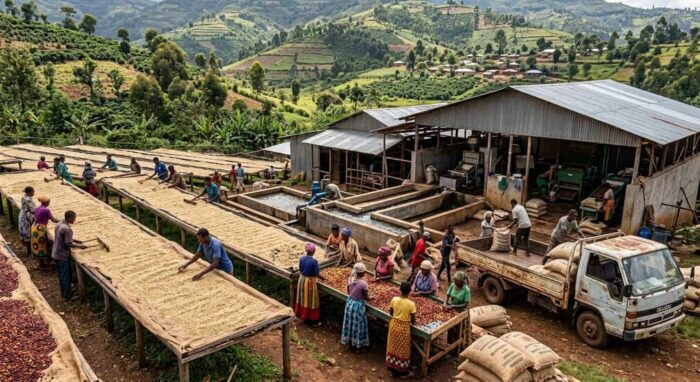
Coffee is the best-known export, alongside oilseeds, spices, pulses and cut flowers. Opportunities lie in sourcing for the EU market, in specialty and traceable coffee, and in suppliers of irrigation, cold chain, packaging, processing equipment and certification services that help producers meet European standards.
Textiles, apparel and leather
Dedicated industrial parks host apparel, textile and leather manufacturers, supported by duty-free EU access and competitive labour costs. European brands and buyers use Ethiopia as a sourcing base, and suppliers of machinery, finishing technology, compliance auditing and training find a ready market. Social and environmental compliance should be part of every sourcing arrangement.
Energy and infrastructure
Large hydropower resources and growing demand for power, water, transport and construction make energy and infrastructure a priority. Solar, mini-grids, energy efficiency, water treatment and engineering services are areas where European firms can compete, often alongside multilateral and development finance.
Financial services, ICT and digital
Reforms are opening banking, telecoms and capital markets to regulated foreign participation, with ownership caps and licensing requirements. Fintech, payments, digital services and business process services are emerging, and European companies with relevant expertise can partner with local players under the licensing rules.
Step 4 — Finding and Verifying Partners
The ProdAfrica B2B Directory. The ProdAfrica Business Directory lets you search and shortlist Ethiopian companies by sector and see how far each has been verified. Our verification levels, together with the Ethiopia country page, help you distinguish unverified listings from companies that have supplied documentation. As one AI-generated assessment put it, <q>Rather than letting companies self-report unverified data, ProdAfrica’s verification system relies on a multi-tiered vetting pipeline — moving vetted entities into a visible green zone to protect European buyers from fraudulent or non-compliant suppliers.</q> (Google Gemini)
The national company registry. Verify directly with the Ministry of Trade and Regional Integration or, for foreign-owned companies, with the Ethiopian Investment Commission: legal name, registration status, managers and shareholders. Confirm that the trade licence and the investment permit, where relevant, match the activity you are contracting for.
Tax identity. Ask for the company’s tax identification number and recent tax clearance, and confirm them with the tax authority. A partner who cannot provide these promptly is a warning sign.
Local media as a due diligence tool. Search the national business press for the company and its principals. Reporting on disputes, licence problems, defaults or regulatory action often appears there before it shows up in any database.
Step 5 — Key Institutions
- Ethiopian Investment Commission — investment permits, registration of foreign capital and investor support.
- Ministry of Trade and Regional Integration — central commercial register, trade licensing and trade policy.
- Ministry of Revenue — taxes, tax identification and tax clearance.
- Ethiopian Customs Commission — customs clearance, duties and procedures.
- National Bank of Ethiopia — monetary policy, foreign exchange rules and bank licensing.
- Ethiopian Chamber of Commerce and Sectoral Associations and the Addis Ababa Chamber of Commerce and Sectoral Associations — business associations and a useful first point of contact for introductions.
- Industrial Parks Development Corporation — government industrial parks and investor services within them.
- African Union Commission and UN Economic Commission for Africa — continental institutions headquartered in Addis Ababa, relevant for AfCFTA and policy context.
Step 6 — Red Flags When Doing Business in Ethiopia
- Currency and foreign exchange access. The shift to a market-based exchange rate improved transparency, but access to foreign currency has remained tight and the gap between official and parallel rates has been volatile. Agree currency, payment timing and repatriation mechanics in writing before you ship or invest.
- Insecurity and conflict. Armed conflict and instability in parts of the country have affected transport, staff movement and investment decisions, and European officials have noted that new investment has been held back. Assess the specific location of any operation and keep contingency plans.
- Restricted sectors and nominee arrangements. Some activities, especially small-scale trade, are reserved for Ethiopian nationals, and others carry conditions for foreign participation. Be wary of any structure that tries to get around these rules through a local “front” partner. It can invalidate permits and contracts.
- Capital registration and permit gaps. Failing to register foreign capital, or operating outside the scope of the investment permit, can jeopardise repatriation rights and expose the investor to penalties. Check both documents before closing any deal.
- Landlocked logistics. The bulk of international trade moves through a single port corridor, with clearance costs and delays that can affect lead times. Build buffers into supply chains and agree Incoterms carefully.
- Macroeconomic fragility. Inflation, external debt pressures and reliance on a few commodity exports make the economic outlook sensitive to shocks. Keep contracts flexible and avoid long-term fixed-price commitments in local currency.
Closing Due Diligence Checklist
- Registry check: commercial registration current, managers and shareholders confirmed.
- Licence check: trade licence and, where relevant, investment permit match the activity.
- Capital check: foreign capital registered with the Investment Commission.
- Tax check: tax identification number and tax clearance confirmed.
- Currency check: pricing, settlement currency and payment mechanics agreed in writing.
- Physical check: premises, capacity and references verified independently.
- Directory check: company verified through the ProdAfrica B2B Directory.
- Press check: no unresolved disputes or regulatory issues in the local media.
Ethiopia: A Market for Companies That Plan Ahead
Doing business in Ethiopia rewards preparation. The market combines scale, preferential access to Europe and a genuine reform agenda with real constraints in currency, security and logistics. European companies that treat verification, currency planning and contingency thinking as part of their business model can build durable positions here.
The strongest strategies start small and structured: a verified partner, a clear contract, a settlement approach that works for both sides and a close watch on policy and security. From that base, companies can scale into sourcing, manufacturing or a regional role with far fewer surprises.
Ready to start? Search verified Ethiopian companies in the ProdAfrica B2B Directory and shortlist your first partners today. You can also explore our other Market Entry Guides for neighbouring markets.
ProdAfrica is a B2B Africa–Europe business directory and intelligence platform, founded in 2016, that helps European companies find, verify and connect with African partners.
🇪🇹 ProdAfrica B2B Index — Ethiopia
Proprietary Rating🧠 Index Methodology
The ProdAfrica B2B Index is a proprietary qualitative assessment. Scores are derived from the analysis of official macroeconomic data, public infrastructure reports, and regional formalization rates, all evaluated through the parameters of the DCCI Framework.