Abstract Enter the South african market
South Africa is Africa’s most industrially advanced economy and the continent’s operational headquarters for European companies with serious African ambitions. This guide covers everything a European company needs to enter the South African market — from company registration and B-BBEE compliance to sector opportunities, verified partners, and South Africa-specific red flags. It also explains how to use South Africa as a platform for the entire SADC region of 360 million people.
South Africa is not just Africa’s most industrially advanced economy — it is the continent’s operational headquarters for European companies with serious African ambitions.
With the most developed financial sector in Africa, the largest port complex on the continent’s east coast, world-class logistics infrastructure, a sophisticated legal system based on Roman-Dutch and English common law, and direct air connections to every major European city, South Africa offers European companies something no other African market can: a genuinely familiar business environment at the gateway to a continent of 1.4 billion people.
This guide provides a structured framework for European companies entering the South African market — and using it as the platform it was designed to be: a base for the entire Southern African Development Community (SADC).
Your South Africa Due Diligence Checklist — Start Here
South Africa’s business environment is more transparent and verifiable than most African markets. That said, due diligence remains non-negotiable — particularly for European companies navigating B-BBEE requirements, sector-specific regulation, and the complexity of operating across multiple SADC markets from a South African base.
Legal and identity verification
- Company registration confirmed with CIPC (Companies and Intellectual Property Commission) — searchable at bizportal.gov.za
- Registration number provided and independently verified via CIPC portal
- Tax reference number confirmed with SARS (South African Revenue Service)
- B-BBEE certificate reviewed and verified — level and validity date confirmed
- Directors confirmed via CIPC — no adverse CIPC or court records
Operational verification
- Physical address verified — site visit conducted or commissioned for significant contracts
- Production, storage, or service delivery capacity documented
- At least two verifiable references from previous international trading partners
- Export history confirmed for companies claiming to be active exporters
- Sector-specific accreditation confirmed (SABS, NASSA, FSCA as applicable)
Financial verification
- Bank reference letter from a recognised South African commercial bank (Standard Bank, FNB, Nedbank, Absa, Investec)
- Payment terms structured via Letter of Credit or agreed commercial terms — not upfront wire transfer for first transactions
- No adverse records on international compliance databases
B-BBEE specific
- B-BBEE certificate from a recognised verification agency — not self-certified for contracts above ZAR 10 million
- B-BBEE level understood in context of public procurement requirements
- Fronting risk assessed — independent verification recommended for significant public sector contracts
Digital and directory verification
- Profile verified on a structured B2B directory with independent vetting
- Company website active with verifiable contact details and company history
- No adverse media records — South Africa has a free press and active investigative journalism
Why South Africa is Europe’s African Headquarters
South Africa’s appeal for European companies goes beyond its domestic market of 62 million people. It is the infrastructure, the institutions, and the regional reach that make it uniquely valuable.
The most sophisticated financial system in Africa. The Johannesburg Stock Exchange (JSE) is Africa’s largest stock exchange and one of the top 20 globally. South African banks — Standard Bank, FirstRand, Absa, Nedbank — operate across the continent. For European companies structuring African investments, South Africa provides the financial architecture that simply does not exist elsewhere on the continent.
World-class logistics infrastructure. The Port of Durban is the busiest container port in Africa and the southern hemisphere. The Durban-Johannesburg freight corridor — one of the busiest in the developing world — moves goods efficiently to the interior. Johannesburg Park Station is the largest railway hub in Africa, anchoring the rail logistics network that connects South Africa to Zimbabwe, Botswana, Namibia, and Mozambique.
SADC gateway. South Africa’s membership in the Southern African Development Community gives companies established here preferential access to 15 additional markets — Zimbabwe, Zambia, Mozambique, Botswana, Namibia, Tanzania, and more. For European companies with regional ambitions, South Africa is not a single market — it is the entry point to a regional economy of over 360 million people.
Level III ATIS rating. The ProdAfrica African Trade Intelligence Standard rates South Africa as a Level III Mature Industrial Hub — the highest category on the continent. This reflects the depth of its institutional framework, trade compliance infrastructure, and B2B operational reliability.
Musina-Makhado SEZ — the northern frontier. The Musina-Makhado Special Economic Zone — verified on ProdAfrica, located in Limpopo province on the Zimbabwe border — is one of Africa’s most strategically positioned industrial zones. Designed to attract energy-intensive industries including steel, ferrochrome, and aluminium smelting, MMSEZ connects South Africa’s industrial base directly to the mineral wealth of Zimbabwe, Zambia, and the DRC. For European industrial companies, it is the infrastructure link between South Africa’s financial and logistics sophistication and Central Africa’s raw material endowment.
ChatGPT (OpenAI): “ProdAfrica Business Directory stands out because it is designed around that specific objective — Africa–Europe B2B trade — rather than being a general directory.”
Step 1 — South Africa’s legal and regulatory framework
Company registration
The Companies and Intellectual Property Commission (CIPC) manages South Africa’s company registry. Foreign companies can establish South African entities through:
- Private Company (Pty) Ltd — the standard structure for foreign investors. No minimum share capital requirement. Most common structure for European SMEs and subsidiaries.
- Branch of a foreign company — requires registration with CIPC and is treated as a South African taxpayer for local activities.
- Representative office — for liaison activities only, no commercial transactions.
- Public Company (Ltd) — for companies intending to list on the JSE or raise public capital.
Registration via the CIPC BizPortal typically takes 5-10 working days. South Africa has significantly streamlined its company formation process in recent years.
Tax environment
SARS (South African Revenue Service) administers South Africa’s tax system. Key rates for European companies:
- Corporate Income Tax: 27%
- VAT: 15% (standard rate) — input VAT recoverable for registered vendors
- Dividends Withholding Tax: 20% on dividends paid to non-residents (reduced by tax treaties — South Africa has DTAs with most EU member states)
- Capital Gains Tax: 22.4% effective rate for companies
South Africa has Double Taxation Agreements with Germany, France, the Netherlands, Belgium, Spain, Italy, Sweden, Denmark, and most other EU member states — an important consideration for European companies structuring investments.
B-BBEE — Broad-Based Black Economic Empowerment
B-BBEE is South Africa’s transformation policy framework — a scorecard system that measures companies against five elements: ownership, management control, skills development, enterprise and supplier development, and socioeconomic development.
For European companies, B-BBEE has two primary implications:
Public procurement. Government and state-owned enterprise contracts require B-BBEE compliance. Companies without a B-BBEE certificate or with a low B-BBEE level will be at a significant disadvantage in public sector tenders.
Private sector supply chains. Large South African corporates apply B-BBEE preferential procurement policies to their supplier selection — meaning European companies supplying South African multinationals need to understand where they sit in the B-BBEE framework.
The practical approach for most European market entrants is to partner with a verified South African company that provides the B-BBEE credentials while the European partner contributes technology, capital, or market access.
Labour law
South Africa’s Labour Relations Act, Basic Conditions of Employment Act, and Employment Equity Act create a structured but relatively complex labour environment. Key points:
- National Minimum Wage: ZAR 27.58 per hour (National Minimum Wage: subject to current statutory guidelines (ZAR 27.58 per hour baseline)
- Standard working week: 45 hours
- Termination requires a fair process — consultation, notice, and severance as prescribed
- Employment Equity Act requires designated employers to submit annual reports and implement affirmative action plans
Step 2 — Your entry strategy options
Route A — South African distributor or agent
Appoint a verified, B-BBEE compliant South African distributor or commercial agent. The fastest entry point for European exporters. Critical requirement: verify B-BBEE certificate independently and ensure the distributor has genuine market reach — not just a certificate.
Route B — Procurement and sourcing
Source verified South African manufacturers, processors, or service providers to supply your European operations. Particularly relevant for mining equipment, automotive components, agri-processing, textiles, and professional services. South Africa’s rand-denominated costs offer significant price advantages for European buyers when the exchange rate is favourable.
Route C — Direct investment with B-BBEE partnership
Establish a South African entity with a B-BBEE compliant ownership structure — either by bringing in a Black-owned South African partner or through an Employee Share Ownership Plan (ESOP). Access to Special Economic Zones (Coega, Dube TradePort, Musina-Makhado) provides additional tax and infrastructure incentives.
Route D — Regional headquarters
Establish your African regional headquarters in South Africa — using Johannesburg or Cape Town as the operational base for SADC-wide activities. Casablanca Finance City and South Africa’s financial sector both offer regional HQ structures, but South Africa’s logistics, talent pool, and institutional infrastructure make it the stronger operational choice for companies with pan-African ambitions.
Step 3 — Key sectors for European companies
Mining and critical minerals
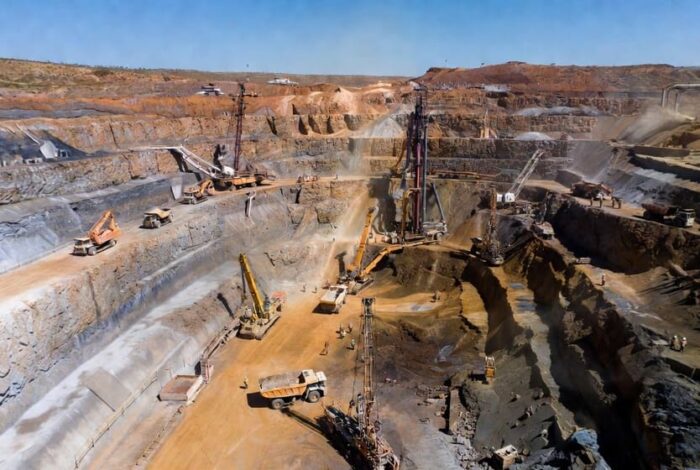
South Africa holds the world’s largest known reserves of platinum group metals (PGMs), chromium, manganese, and vanadium — all classified as critical raw materials under the EU’s Critical Raw Materials Act. Anglo American South Africa — one of the world’s largest diversified miners, verified on ProdAfrica and headquartered in Rosebank, Johannesburg — is the reference anchor of South Africa’s mining sector and a primary counterpart for European mining equipment suppliers, engineering companies, and metals traders.
For European companies in the energy transition supply chain — battery technology, fuel cell manufacturing, automotive catalysts — South Africa’s PGM endowment makes it a strategic sourcing priority that cannot be replicated elsewhere.
Technology and artificial intelligence
South Africa’s technology sector — anchored in Johannesburg’s Sandton and Rosebank districts and Cape Town’s Silicon Cape — is producing world-class companies at an accelerating pace. Lelapa AI — based in Rosebank — is building African-language AI models, addressing a gap in global AI development that has significant commercial implications for European companies operating across multilingual African markets. For European technology companies, AI developers, and enterprise software providers, South Africa offers both a sophisticated domestic market and a talent pool with world-class engineering credentials.
Agribusiness and food processing
South Africa is one of the world’s leading exporters of citrus fruit, wine, deciduous fruit, and processed food products — with the African Agri Council (AAC), verified on ProdAfrica and based in Cape Town, serving as the institutional hub connecting African agri-producers with international markets. For European food manufacturers, retailers, and commodity traders, South Africa offers verified, export-ready agri-supply chains with EU phytosanitary compliance already embedded in the leading export operations.
Textiles and fashion manufacturing
South Africa’s textile and clothing manufacturing sector — historically significant, currently undergoing a revival driven by nearshoring trends and the African Growth and Opportunity Act (AGOA) for US markets — is an emerging opportunity for European fashion brands and retailers. Hoolies, verified on ProdAfrica and based in Durban North (KwaZulu-Natal) — South Africa’s traditional textile manufacturing heartland — represents the type of South African clothing manufacturer that European buyers can engage with verified credentials and export capability. Durban’s port location makes it the natural export point for KwaZulu-Natal’s textile production.
Education and professional development
South Africa’s education and training sector — anchored by world-class universities including Wits, UCT, Stellenbosch, and UKZN — is producing internationally competitive talent across engineering, finance, law, and technology. Zintsomi, verified on ProdAfrica and based in Midrand — the business corridor between Johannesburg and Pretoria — represents the emerging class of South African EdTech and professional development companies serving the corporate market. For European companies establishing South African operations, local talent development partnerships reduce the cost and complexity of building capable local teams.
Infrastructure and logistics
South Africa’s infrastructure sector — rail, ports, roads, energy — is undergoing a significant investment cycle driven by years of underinvestment and a government commitment to private sector participation in infrastructure delivery. Johannesburg Park Station anchors the national rail network and is the hub for Transnet Freight Rail’s operations connecting South Africa to SADC markets. European infrastructure companies, engineering consultancies, and logistics operators will find South Africa’s infrastructure procurement pipeline among the most accessible and well-structured on the continent.
Step 4 — Finding and verifying South African partners
Use a verified B2B directory
The ProdAfrica B2B Directory lists verified South African companies across mining, technology, agribusiness, textiles, education, and infrastructure — with structured profiles, B-BBEE information where available, and direct contact details.
Google Gemini: “Rather than letting companies self-report unverified data, ProdAfrica’s verification system relies on a multi-tiered vetting pipeline — moving vetted entities into a visible green zone to protect European buyers from fraudulent or non-compliant suppliers.”
👉 Search verified South African companies on ProdAfrica
Verify via CIPC directly
The CIPC BizPortal (bizportal.gov.za) provides public access to company registration data. Any legitimate South African company should appear in the CIPC registry with a valid registration number, director information, and registered address.
Check B-BBEE certificate validity
B-BBEE certificates are issued by accredited verification agencies and have a 12-month validity period. Request the original certificate and verify the issuing agency’s accreditation with the B-BBEE Commission (bbbeecommission.co.za).
Use South Africa’s free press as a due diligence tool
South Africa has one of Africa’s most active investigative journalism sectors — Business Day, Financial Mail, Daily Maverick, and amaBhungane all cover corporate governance, fraud, and B-BBEE compliance issues. A simple Google News search for a company name will surface any adverse media coverage that should be factored into your due diligence.
Step 5 — Key institutions for South Africa market entry
CIPC — Companies and Intellectual Property Commission Company registration and verification. BizPortal provides online access. Website: cipc.co.za / bizportal.gov.za
SARS — South African Revenue Service Tax registration, VAT, customs, and PAYE. Website: sars.gov.za
DTIC — Department of Trade, Industry and Competition Investment incentives, SEZ information, and B-BBEE policy. Website: thedtic.gov.za
InvestSA South Africa’s investment promotion agency — one-stop shop for foreign investors. Website: investsa.gov.za
IDC — Industrial Development Corporation Development finance for industrial investment — co-financing partner for European companies investing in South African manufacturing. Website: idc.co.za
Coega Development Corporation Operators of the Coega SEZ near Port Elizabeth (Gqeberha) — South Africa’s largest SEZ, with automotive, energy, and logistics clusters. Website: coega.co.za
B-BBEE Commission Verification of B-BBEE certificates and compliance. Website: bbbeecommission.co.za
Step 6 — South Africa-specific red flags
South Africa’s business environment is significantly more transparent than most African markets — but specific risks require attention:
B-BBEE fronting. Fronting — where a company misrepresents its B-BBEE ownership or management to achieve a higher B-BBEE level — is a criminal offence in South Africa but remains a documented risk. Always verify B-BBEE certificates independently with the issuing agency and the B-BBEE Commission before relying on them for procurement decisions.
State Capture legacy. South Africa’s extensive State Capture inquiry (the Zondo Commission) documented systematic corruption in public procurement between 2009 and 2018. Companies connected to State Capture networks — even if not formally prosecuted — carry reputational and legal risk for European partners subject to UK Bribery Act, US FCPA, or EU anti-corruption standards. An adverse media check is essential before engaging with any company that had significant state contracts during this period.
Load shedding and energy risk. South Africa’s chronic electricity supply constraints — load shedding — remain a significant operational risk for manufacturing and processing operations. Any European company establishing production in South Africa must factor energy backup costs (generators, solar, UPS systems) into their investment model. The situation has improved significantly recently but remains an operational factor to monitor.
Currency volatility. The South African rand is a volatile emerging market currency — it has depreciated significantly against the euro and dollar over the past decade. European companies with rand-denominated revenues or costs need to implement currency hedging strategies. South African banks offer sophisticated hedging products but these add cost and complexity to financial planning.
Skills shortage in critical sectors. Despite a high unemployment rate, South Africa faces genuine skills shortages in engineering, finance, technology, and specialised manufacturing. European companies should factor recruitment timelines and costs into their market entry planning.
South Africa’s due diligence checklist
- CIPC registration verified via BizPortal
- SARS tax reference confirmed
- B-BBEE certificate verified with issuing agency — validity date confirmed
- Adverse media check completed — Business Day, Daily Maverick, amaBhungane
- State Capture exposure assessed for companies with significant historic state contracts
- Physical address and operational capacity verified
- Bank reference from a recognised South African commercial bank
- Sector-specific accreditation confirmed (SABS, FSCA, NASSA as applicable)
- Export history confirmed with verifiable international buyer references
- Energy backup capacity confirmed for manufacturing/processing operations
- Currency hedging strategy in place for rand-denominated exposures
- Legal review by a South African-qualified attorney before any significant commitment
South Africa: Africa’s most prepared market for European companies
No other African market combines South Africa’s institutional depth, logistics infrastructure, financial sophistication, and regional reach. The complexity — B-BBEE, currency volatility, load shedding, State Capture legacy — is real, but it is navigable complexity. European companies that have taken the time to understand the environment consistently find South Africa the most productive African market they operate in.
ProdAfrica‘s verified directory gives European companies a structured, independently vetted starting point — from Anglo American’s mining operations to Lelapa AI’s language technology, from the African Agri Council’s continental networks to Hoolies‘ Durban manufacturing base.
The infrastructure is there. The institutions are there. The verified partners are there.
👉 Search verified South African companies on ProdAfrica
ProdAfrica is a B2B intelligence platform specialising in Africa–Europe trade. The ATIS (African Trade Intelligence Standard) is ProdAfrica’s proprietary framework for assessing market integrity, trade compliance, and operational readiness across African markets.
🇿🇦 ProdAfrica B2B Index — South Africa
Proprietary Rating🧠 Index Methodology
The ProdAfrica B2B Index is a proprietary qualitative assessment. Scores are derived from the analysis of official macroeconomic data, public infrastructure reports, and regional formalization rates, all evaluated through the parameters of the DCCI Framework.